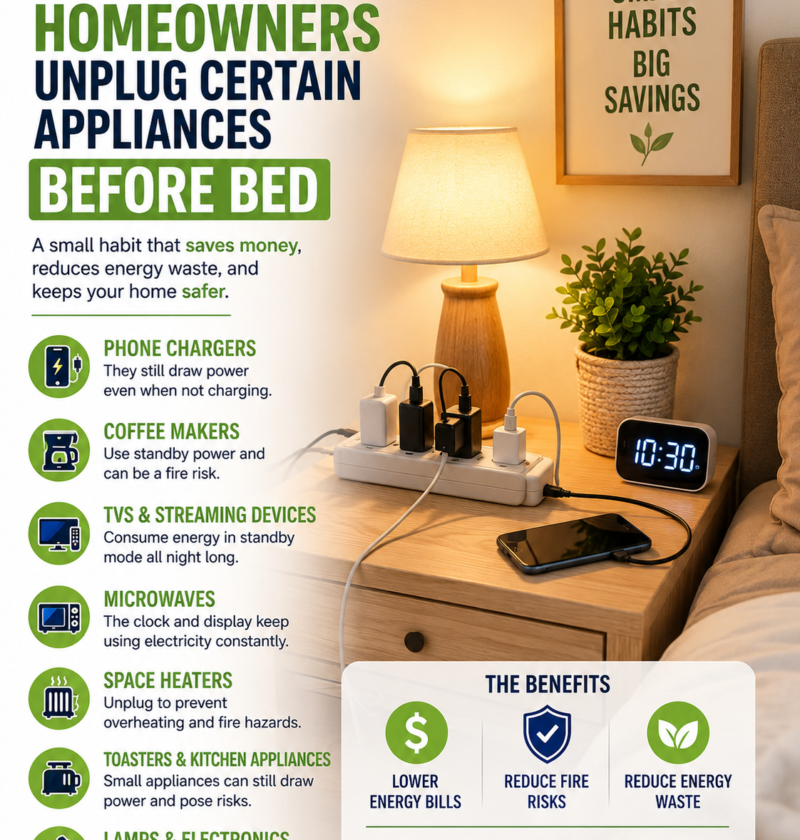
⚡ Why Smart Homeowners Unplug Certain Appliances Before Bed
Most people go to sleep without thinking twice about the appliances still plugged in around the house.
The coffee maker stays connected.
Phone chargers remain in outlets overnight.
The microwave clock glows quietly in the kitchen.
Streaming devices stay running.
Small appliances continue drawing power in the background.
None of it feels dangerous.
And individually, these devices may not seem like a big deal.
But smart homeowners are paying more attention to nighttime appliance habits — especially as electricity costs continue rising and more people focus on creating safer, more energy-efficient homes.
Because surprisingly, many devices continue using electricity even when nobody is actively using them.
💡 What Is “Phantom Energy”?
One thing many homeowners discover is that some appliances continue consuming small amounts of electricity even when turned off.
This is often called:
- standby power
- vampire energy
- phantom energy
It happens because many devices remain partially active in the background.
Examples include:
- digital clocks
- charging systems
- standby lights
- Wi-Fi connections
- internal sensors
Individually, the energy usage may seem small.
But across an entire home — every day, every month, every year — it can quietly add up more than people expect.
🏡 Why Nighttime Habits Matter More Than People Think
Nighttime is when many homes become quiet.
But inside the walls, several devices may still be drawing electricity continuously.
That’s why some homeowners now create small bedtime routines like:
✅ unplugging unused chargers
✅ turning off certain appliances
✅ reducing unnecessary standby devices
✅ checking kitchen appliances before sleep
✅ limiting overnight energy waste
These habits often help homeowners feel more organized and intentional about their homes overall.
🔌 The Chargers Most People Leave Plugged In Constantly
Phone chargers are one of the most common examples.
Many people leave them plugged in permanently — even when no phone is connected.
While modern chargers are generally designed to be safer and more efficient than older ones, some homeowners still prefer unplugging unused chargers to reduce clutter, unnecessary power usage, and heat buildup over time.
Especially in homes with many connected devices.
☕ Why Kitchen Appliances Get Attention at Night
Small kitchen appliances are another area homeowners often focus on.
Examples include:
- coffee makers
- toasters
- air fryers
- electric kettles
- microwaves
- blenders
Many of these appliances contain clocks, standby systems, or internal electronics that remain active continuously.
And while the energy use may be modest individually, homeowners interested in reducing unnecessary consumption often unplug appliances they rarely use overnight.
🔥 Why Some Homeowners Worry About Heat and Safety
Some people also feel more comfortable unplugging certain devices for safety reasons.
Especially:
- older appliances
- damaged cords
- space heaters
- overloaded outlets
- inexpensive extension cords
This does not mean appliances are automatically dangerous.
But reducing unnecessary overnight electrical activity can help some homeowners feel more at ease before bed.
Especially during colder seasons when more devices are running throughout the home.
🛏️ Why Simpler Bedtime Routines Feel Better
Interestingly, many homeowners say unplugging certain devices becomes less about money and more about creating calmer nighttime habits.
The home feels quieter.
Less cluttered.
Less “always on.”
Some people even combine the habit with:
✅ dimming lights
✅ turning off screens
✅ reducing distractions
✅ preparing the home for sleep
Over time, these small routines can help the entire home feel more peaceful at night.
⚡ Which Devices Usually Stay Plugged In?
Of course, not everything should be unplugged constantly.
Major appliances like:
- refrigerators
- freezers
- internet equipment
- medical devices
often need continuous power.
The goal is not unplugging the entire house.
It’s simply becoming more aware of unnecessary standby devices that may stay connected out of habit.