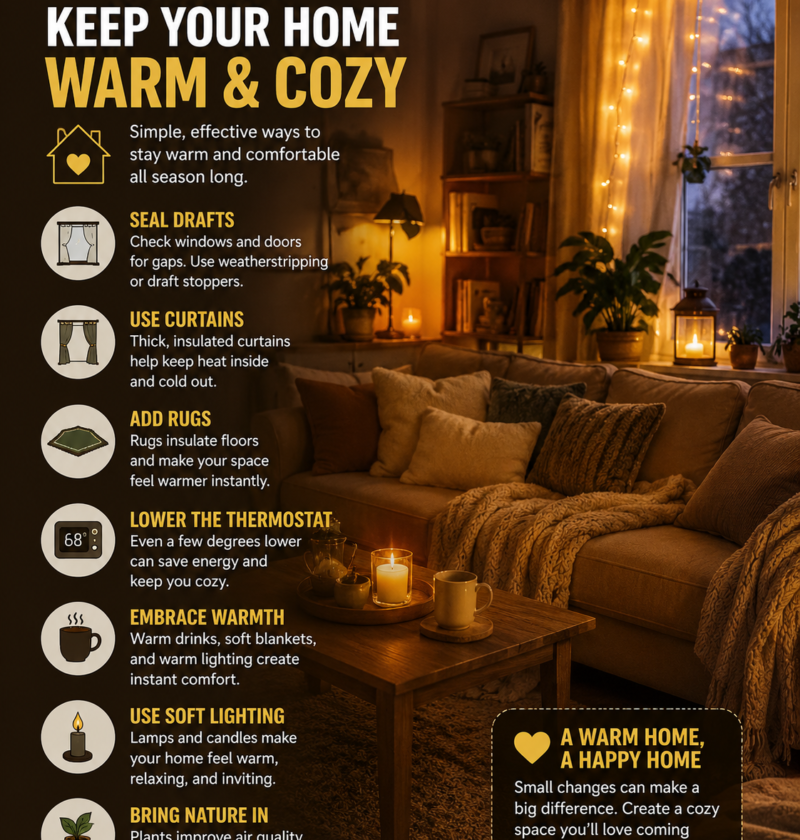
🏡 Why Some Homes Always Feel Warmer and Cozier During Cold Weather
Have you ever walked into a home during winter and immediately felt comfortable?
Not just warm…
But calm, soft, cozy, and relaxing.
Meanwhile, other homes can feel cold, empty, or uncomfortable even when the heater is running constantly.
Smart homeowners have started realizing something important:
Creating a warmer home feeling is not only about turning up the heat.
In many cases, small details inside the home make a much bigger difference than people expect.
And surprisingly, some of the coziest homes are not the most expensive ones at all.
🛋️ Why “Cozy” Homes Feel Different
Warm homes usually combine several small elements together:
- lighting
- textures
- airflow
- colors
- fabrics
- room layout
- humidity
- comfort habits
When these things work together properly, the entire home starts feeling calmer and more inviting.
That’s why some homes naturally encourage people to relax the moment they walk in.
🌬️ The Hidden Reason Some Homes Always Feel Colder
One of the biggest reasons homes feel cold is not always the temperature itself.
It’s air movement.
Tiny drafts around:
- windows
- doors
- floors
- vents
- hallways
can quietly make rooms feel much colder than they actually are.
That’s why smart homeowners often focus first on reducing cold airflow before increasing heating.
Simple changes can make a surprisingly big difference.
🪟 Why Curtains Matter More Than People Think
Many people treat curtains mainly as decoration.
But during colder months, thicker curtains can help rooms feel noticeably warmer and softer.
Especially in rooms with large windows.
Heavy fabrics can help reduce the feeling of cold air near windows and create a more insulated atmosphere inside the room.
And visually, curtains also make spaces feel more comfortable and private — which adds to the cozy feeling psychologically.
🧺 Soft Textures Change the Entire Mood of a Room
One thing cozy homes almost always have in common is texture.
For example:
- blankets
- pillows
- rugs
- knitted fabrics
- soft throws
- fabric baskets
These details make spaces feel warmer even before the temperature changes.
The human brain naturally associates soft layered textures with comfort and relaxation.
That’s why many smart homeowners use fabrics intentionally during colder seasons.
💡 Warm Lighting Creates a Bigger Difference Than Expensive Decor
Lighting strongly affects how a home feels emotionally.
Bright white lighting can sometimes make rooms feel colder and harsher.
Meanwhile, softer warm lighting often creates:
- calmer spaces
- relaxing evenings
- cozy atmosphere
- softer shadows
- more comfortable rooms
Many homeowners now prefer:
✅ warm lamps
✅ soft corner lighting
✅ layered lighting
✅ warm-toned bulbs
✅ candles or candle-style lighting
These small changes can completely transform the feeling of a room at night.
🪵 Why Rugs Help Rooms Feel Warmer
Floors affect comfort more than many people realize.
Cold flooring can make an entire room feel colder instantly.
That’s why rugs are often used not only for decoration but also for comfort.
Rugs help:
- soften rooms visually
- reduce the cold feeling underfoot
- make spaces quieter
- create warmth psychologically
And layered rugs have become especially popular in cozy home design styles.
☕ Cozy Homes Often Encourage Slower Routines
One interesting thing many people notice is that cozy homes often change behavior naturally.
People tend to:
- relax more
- stay off their phones longer
- enjoy evenings more
- spend more time together
- feel calmer indoors
That’s because environment strongly affects mood.
Small comfort details quietly shape the atmosphere of daily life.