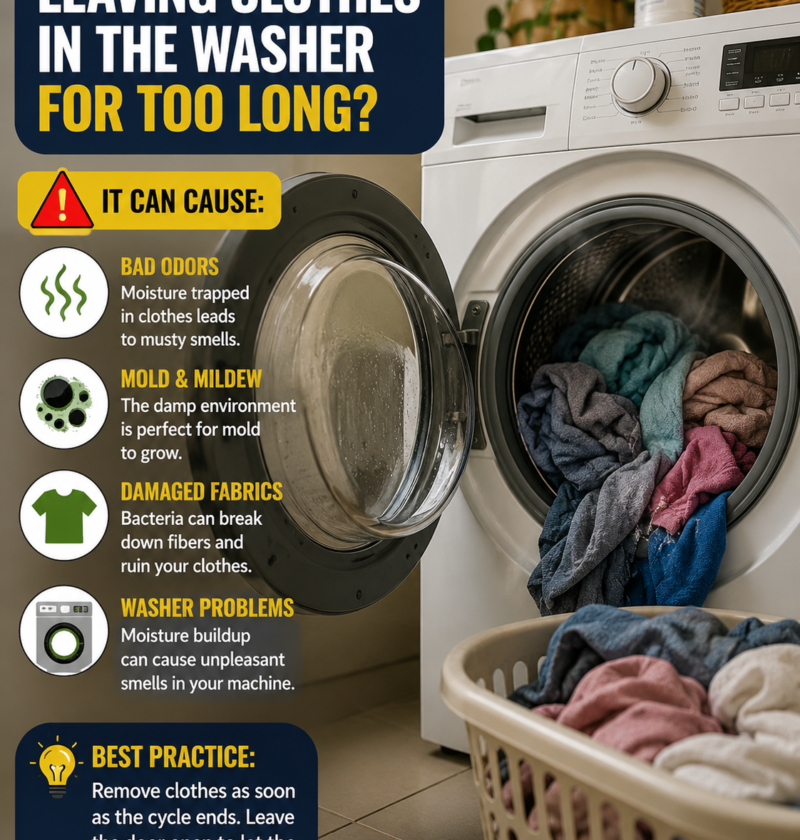
🧺 Why Smart Homeowners Never Leave Wet Clothes Sitting in the Washing Machine Too Long
Almost everyone has done it at least once.
You start a load of laundry…
Get distracted by work, dinner, the kids, or a phone call…
And hours later, the wet clothes are still sitting inside the washing machine.
At first, it doesn’t seem like a big deal.
Most people simply restart the cycle or throw the clothes into the dryer and move on.
But smart homeowners have started paying much closer attention to this habit — because repeated moisture buildup inside washing machines can quietly create unpleasant smells, fabric issues, and hidden moisture problems over time.
And surprisingly, many people don’t realize how quickly damp laundry environments can affect both clothing and the laundry area itself.
🏡 Why Wet Laundry Becomes a Problem So Quickly
Washing machines create a warm, damp environment.
And when wet clothes remain trapped inside for too long, moisture gets locked into:
- fabrics
- rubber seals
- detergent residue
- hidden corners
- machine interiors
That combination of warmth, moisture, and limited airflow creates conditions where unpleasant odors can develop surprisingly fast.
Especially during warmer months or in humid homes.
This is why many homeowners notice that “musty laundry smell” even after clothes appear clean.
👕 The Smell Problem Most People Recognize Immediately
One of the first warning signs is odor.
Clothes may smell:
- sour
- damp
- stale
- musty
- “not fully fresh”
And unfortunately, drying the clothes doesn’t always remove the smell completely.
Sometimes the odor becomes trapped deeper into towels, workout clothes, blankets, or thicker fabrics.
That’s why many homeowners end up rewashing laundry repeatedly without realizing the real issue started hours earlier when the wet clothes sat too long.
💧 Why Moisture and Poor Airflow Matter
Moisture alone is not always the issue.
The bigger problem is trapped moisture without airflow.
Inside a closed washing machine:
- air circulation is limited
- humidity stays trapped
- fabrics remain compressed together
- dampness lingers longer
This creates the perfect environment for unpleasant smells to build inside the machine itself.
And over time, homeowners may notice the washing machine starts smelling bad even when empty.
🦠 What Happens Inside the Washing Machine Over Time
Many people clean their clothes regularly…
But forget the washing machine itself also needs attention.
Over time, moisture and detergent buildup can collect around:
- rubber door seals
- detergent drawers
- drain areas
- internal surfaces
- machine edges
This buildup can contribute to recurring odors if the machine stays damp frequently.
That’s why smart homeowners often leave the washer door slightly open after use to help air circulate and reduce trapped humidity.
🧽 Small Laundry Habits That Make a Big Difference
Many homeowners now follow simple routines to keep laundry areas fresher.
For example:
✅ moving clothes to the dryer quickly
✅ leaving the washer door open afterward
✅ wiping excess moisture from rubber seals
✅ washing towels regularly
✅ avoiding overloaded laundry loads
✅ cleaning the machine periodically
These habits may seem small…
But repeated consistently, they help reduce moisture buildup significantly.
🚫 The Mistake Many People Make With Towels
Towels hold moisture longer than many other fabrics.
Especially thick bath towels.
If towels sit damp inside the machine for too long, odors can develop quickly and become difficult to remove completely.
Some homeowners notice that towels start smelling “off” immediately after getting wet again.
That’s often a sign the fabric held onto trapped odor from previous moisture exposure.
⚡ Why Overloading the Washer Makes Things Worse
Stuffing too many clothes into the washing machine creates another common problem.
When loads become too crowded:
- water may not circulate properly
- detergent may not rinse fully
- fabrics stay wetter longer
- airflow becomes even more limited
This can increase the chance of lingering moisture and stale smells.
Smart homeowners often focus more on balanced loads than simply washing as much as possible at once.