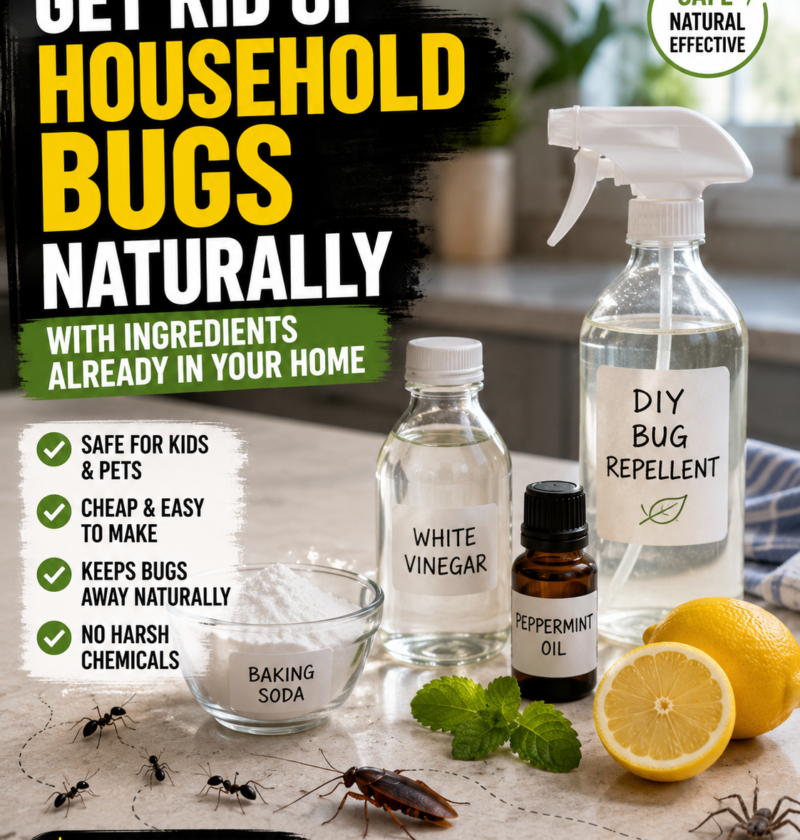
🪳 Why Smart Homeowners Are Using Simple Kitchen Ingredients to Help Keep Household Bugs Away
Most people don’t think about household bugs until they suddenly appear.
One ant on the counter.
A tiny trail near the sink.
A small bug by the trash can.
A strange spot near the pantry.
At first, it feels random.
But smart homeowners know something important:
Bugs usually show up for a reason.
And many times, the reason is not a dirty home. It can be moisture, crumbs, open food packages, trash habits, warm corners, or tiny entry points people never notice.
That’s why many homeowners are now using simple kitchen ingredients and smarter daily habits to make their homes less attractive to pests before the problem grows.
🏡 Why Bugs Come Into Homes in the First Place
Most household bugs are looking for three things:
✅ food
✅ water
✅ shelter
A few crumbs under the toaster, a damp sink area, a sticky trash can lid, or an open cereal box can be enough to attract them.
The biggest mistake many people make is only spraying after they see bugs.
But smart homeowners focus first on prevention.
Because if the home keeps offering food and moisture, bugs may keep coming back no matter what product is used.
🍋 Why Simple Ingredients Can Help
Many common kitchen ingredients can support a cleaner, less bug-friendly home.
For example:
- white vinegar can help clean sticky residue
- baking soda can help deodorize areas
- lemon can freshen surfaces
- peppermint scent may help discourage some pests
- dish soap can help remove grease and food film
These ingredients are not magic.
But they can be useful as part of a regular cleaning routine.
The real power comes from using them consistently in the places bugs are most likely to explore.
🧽 The First Step: Remove What Attracts Bugs
Before using any homemade mixture, homeowners should start with the basics.
Bugs are much harder to manage when food sources are easy to find.
Focus on:
✅ wiping counters every night
✅ cleaning under small appliances
✅ sealing cereal, flour, rice, and sugar
✅ rinsing sticky bottles and jars
✅ taking trash out regularly
✅ drying the sink area
✅ cleaning pet bowls after feeding
This may sound simple, but it makes a big difference.
A clean-looking kitchen can still have hidden crumbs in the places bugs love most.
🐜 Common Places Bugs Hide in the Kitchen
Many bugs don’t stay in the open for long.
They often hide in warm, dark, or damp places like:
- behind the refrigerator
- under the sink
- inside lower cabinets
- near trash cans
- behind the stove
- around pantry shelves
- near pet food areas
- around window frames
These are the areas smart homeowners check first.
Because once you find where bugs are coming from, it becomes much easier to reduce the problem.
🧴 A Simple Cleaning Spray Many Homeowners Use
A basic kitchen cleaning spray can help remove food smells and sticky residue.
A simple version is:
✅ white vinegar
✅ water
✅ a few drops of dish soap
✅ optional lemon peel for scent
Use it on counters, trash can lids, pantry shelves, and non-stone surfaces.
Important note:
Do not use vinegar on natural stone surfaces like marble or some granite countertops, because acidic cleaners can damage them.
For stone counters, use a gentle cleaner made for that surface.
🌿 Why Peppermint Is Popular
Peppermint scent is often used in homes because many people believe it helps discourage certain bugs from lingering.
Homeowners commonly use it near:
- windows
- doors
- trash areas
- pantry corners
- under-sink spaces
But it should be used carefully.
Essential oils can be irritating to pets and children if used incorrectly, so they should be diluted, kept away from food, and never sprayed directly where pets lick or children touch frequently.
A safer approach is to use a light scent in limited areas and focus more on cleaning and sealing food.
🧊 Pantry Habits That Make a Big Difference
The pantry is one of the easiest places for bugs to appear.
Especially when dry goods are stored in thin bags or open boxes.
Smart homeowners often switch to:
✅ sealed containers
✅ clear jars
✅ labeled bins
✅ regular pantry checks
✅ older food placed in front
✅ damaged packages removed quickly
This helps stop crumbs, odors, and open food from attracting pests.
It also makes the kitchen feel cleaner and more organized.