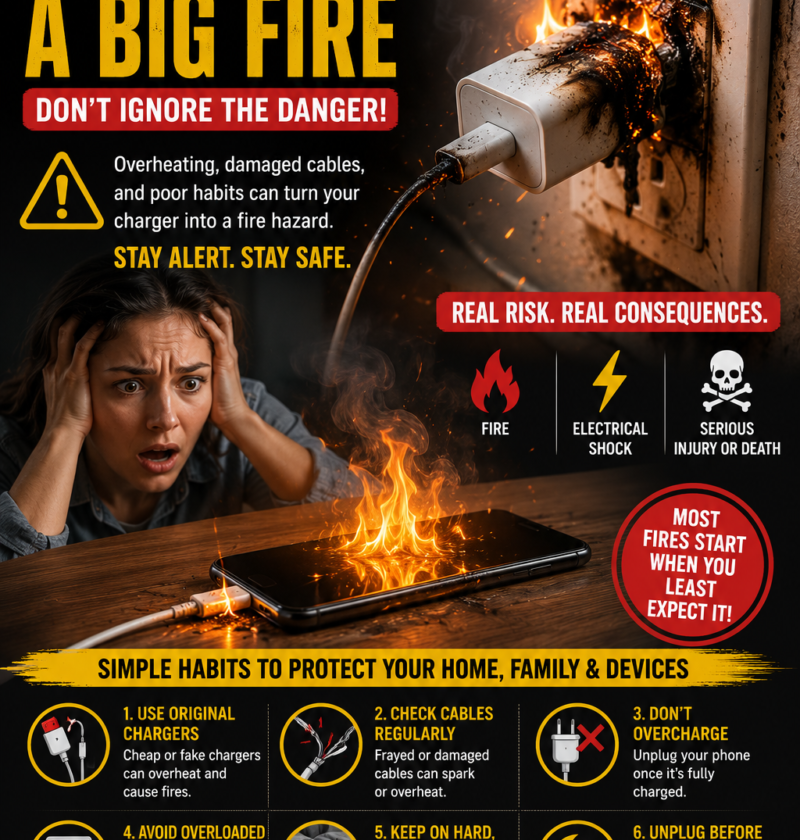
🔥 Why Smart Homeowners Never Ignore Overheating Phone Chargers
Most people plug in their phones every single day without thinking twice about it.
The charger stays connected overnight.
The cable gets bent near the bed.
The adapter feels slightly warm.
The phone charges under a pillow or blanket.
It all feels normal.
But smart homeowners are paying much closer attention to charging habits after seeing how small electrical problems can quietly become dangerous over time.
Because while phone chargers are small, overheating, damaged cables, overloaded outlets, and poor charging habits can sometimes create serious fire and safety risks inside the home.
And surprisingly, many people ignore the warning signs until something scary happens.
⚡ Why Chargers Become Hot in the First Place
Some warmth during charging can be normal.
Phones and adapters naturally generate heat while transferring power.
But excessive heat is different.
When chargers become unusually hot, several things may be involved:
- damaged cables
- cheap low-quality adapters
- poor airflow
- overloaded outlets
- charging under blankets or pillows
- aging accessories
- bent connectors
Heat trapped repeatedly over time can place stress on both the charger and nearby materials.
That’s why homeowners are increasingly paying attention to where and how devices charge inside the home.
🛏️ The Dangerous Habit Many People Ignore at Night
One very common mistake is charging phones on soft surfaces while sleeping.
For example:
- beds
- couches
- blankets
- pillows
- mattresses
Soft materials trap heat.
And when airflow becomes limited around the charger or phone, temperatures may rise more than expected.
That’s why many safety experts recommend charging devices on hard flat surfaces where heat can escape more easily.
🔌 Why Damaged Cables Should Never Be Ignored
Many people continue using charging cables even after noticing:
- exposed wires
- bent connectors
- loose charging tips
- frayed insulation
- cracked adapters
But damaged cables can create sparks, unstable charging, or overheating.
Especially when repeatedly bent near the connector area.
Smart homeowners often replace damaged charging accessories quickly instead of waiting for them to completely fail.
🧯 Why Cheap Chargers Worry Many Homeowners
Very inexpensive or poorly made chargers sometimes lack the same safety protections found in higher-quality products.
That’s one reason many homeowners prefer:
✅ original chargers
✅ certified accessories
✅ trusted brands
✅ properly rated cables
Cheap accessories may appear identical on the outside while using lower-quality internal components.
And because chargers stay plugged in frequently, many people feel more comfortable investing in safer, more reliable options.
⚠️ Overloaded Outlets Create Another Common Problem
One outlet powering too many devices at once can also become risky.
Especially near:
- beds
- entertainment centers
- desks
- nightstands
Common examples include:
- phone chargers
- tablets
- smartwatches
- lamps
- fans
- extension cords
When too many devices compete in one area, heat buildup and electrical stress can increase.
That’s why smart homeowners often simplify charging setups instead of overcrowding outlets.
🌙 Why Overnight Charging Makes Some Homeowners Nervous
Many people charge devices overnight out of convenience.
And modern phones often include safety systems designed to manage charging automatically.
Still, some homeowners prefer limiting overnight charging habits when possible — especially with damaged chargers, older accessories, or devices charging near fabrics.
The goal is not fear.
It’s simply reducing unnecessary risk inside the home.
🏡 Small Charging Habits That Can Make a Big Difference
Many homeowners now follow simple routines like:
✅ unplugging damaged chargers immediately
✅ avoiding cheap unknown accessories
✅ charging on hard surfaces
✅ keeping chargers away from water
✅ avoiding tangled cables
✅ unplugging unused adapters
✅ checking cords regularly
These habits may seem small…
But repeated consistently, they help create safer and more organized charging spaces.