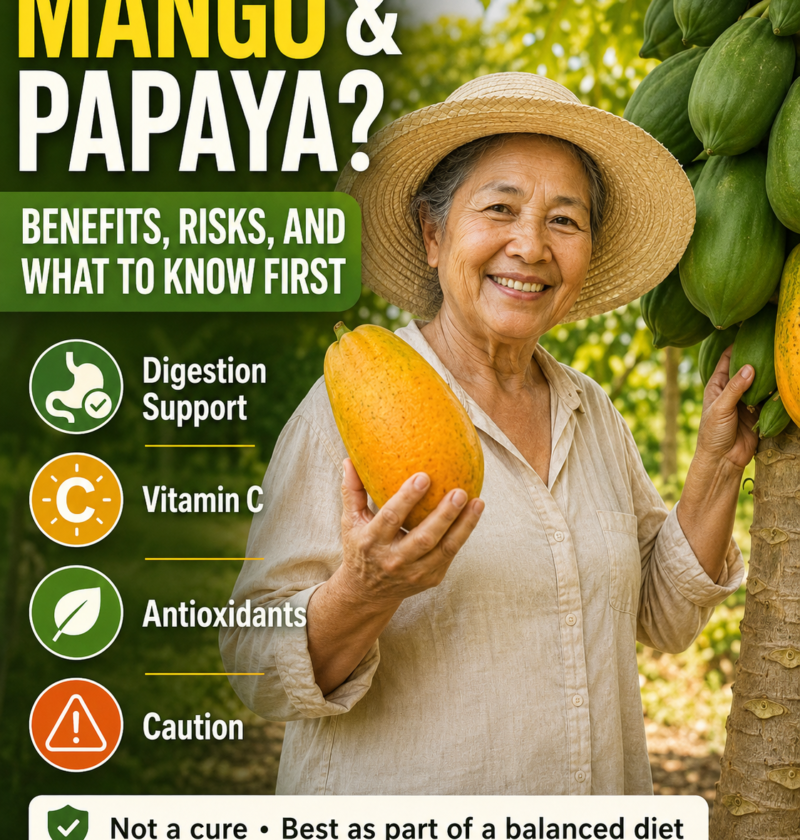
⚡ Mango & Papaya for Wellness? Benefits, Risks, and What to Know First
Mangoes and papayas look simple.
They are colorful, sweet, tropical fruits that many people enjoy in smoothies, fruit bowls, salads, and fresh summer snacks.
But online, they are often described like “natural treasures” for digestion, skin, energy, or wellness.
That can make people curious.
It can also make people confused.
Are mangoes and papayas actually healthy?
Can they support digestion?
Are they good for vitamin C?
And is there anything you should know before eating them often?
The responsible answer is simple:
Mangoes and papayas can be part of a healthy diet.
They contain water, fiber, vitamins, and plant compounds.
But they are not a cure.
They do not replace medication.
And some people need to be careful, especially if they have allergies, blood sugar concerns, digestive sensitivity, pregnancy questions, or take daily medication.
This guide explains the benefits, risks, and what to know first.
🥭 Why Mangoes and Papayas Became So Popular Online
Mango and papaya are both tropical fruits with a strong wellness reputation.
They are bright.
They taste sweet.
They look “natural.”
And they are easy to use in simple routines.
People add them to:
Smoothies
Fruit bowls
Breakfast plates
Yogurt
Salads
Salsas
Fresh juices
Hydrating summer snacks
Because they are colorful and naturally sweet, many people see them as a better option than candy, pastries, or sugary desserts.
That can be true in many cases.
Whole fruit usually gives you more fiber, more water, and more nutrients than many highly processed sweet snacks.
But the key word is “whole.”
Eating fresh mango or papaya is different from drinking large cups of sweetened juice, bottled fruit drinks, or fruit smoothies loaded with sugar.
That difference matters.
🍊 What Mangoes May Offer
Mango is best known for its sweet taste and bright yellow-orange flesh.
It contains vitamin C, fiber, and plant pigments called carotenoids. USDA FoodData Central lists raw mango as a fruit that provides vitamin C and dietary fiber, along with natural carbohydrates.
Vitamin C supports normal immune function and helps the body make collagen.
Fiber supports digestion and helps make fruit more filling than fruit juice.
Mango also contains natural plant compounds that contribute to its color and antioxidant activity.
But mango is still a sweet fruit.
That does not make it bad.
It simply means portion size matters.
A small bowl of mango can fit well into a balanced diet.
A very large mango smoothie with added sugar, sweet yogurt, honey, and juice can become more like a dessert.
🍈 What Papaya May Offer
Papaya is softer, lighter, and often less dense than mango.
It is naturally rich in water and contains vitamin C, fiber, and folate. Papaya also contains enzymes such as papain, which is one reason people often connect papaya with digestion. USDA FoodData Central identifies raw papaya as a fruit that contributes vitamin C and other nutrients.
Ripe papaya is commonly eaten fresh.
Unripe green papaya is often used in cooked dishes or salads in some cuisines.
But when people talk about papaya for wellness online, they are usually talking about ripe papaya fruit, not concentrated papaya enzyme supplements.
That difference is important.
Eating a reasonable portion of ripe fruit is not the same as taking strong extracts, enzyme pills, or concentrated products.
🌿 Why People Connect Papaya With Digestion
Papaya contains papain, an enzyme that can break down proteins.
That is why papaya enzymes are sometimes used in food processing, meat tenderizers, or digestive enzyme products.
This does not mean papaya “fixes” digestion for everyone.
It also does not mean papaya should replace medical advice for stomach pain, bloating, reflux, constipation, IBS, or ongoing digestive symptoms.
For many people, papaya may simply be a gentle fruit that feels light and easy to eat.
For others, fruit sugars or fiber can cause gas or discomfort, especially if eaten in large amounts.
So the safest message is:
Papaya may support a digestion-friendly eating pattern for some people.
But it is not a treatment.
And if symptoms are frequent, painful, or sudden, it is better to speak with a doctor or pharmacist.
🍽️ Mango and Papaya as Part of a Balanced Diet
The best way to use mango and papaya is simple.
Eat them as food.
Not as a miracle routine.
Not as a medical replacement.
Not as a “detox.”
A balanced plate may include:
Fresh fruit
Protein
Healthy fats
Whole grains
Vegetables
Enough water
Mango and papaya can fit into that pattern.
For example:
Papaya with plain Greek yogurt
Mango slices with cottage cheese
Papaya in a breakfast bowl with oats
Mango salsa with grilled fish or chicken
Papaya with lime as a refreshing snack
Mango cubes added to a salad
These combinations are better than eating fruit alone in huge amounts because protein and fiber can make the meal more balanced.
⚠️ Common Online Claim / Safer Truth
| Common Online Claim | Safer Truth |
|---|---|
| Mango and papaya cure disease | They are nutritious fruits, but they are not cures |
| Papaya fixes digestion instantly | It may feel gentle for some people, but digestive issues can have many causes |
| Mango is bad because it is sweet | Mango contains natural sugar, but portion size and overall diet matter |
| Papaya enzymes work for everyone | Some people may tolerate papaya well, while others may have sensitivity or allergies |
| Fruit can replace medication | Fruit should not replace prescribed treatment or medical advice |
| More fruit means better results | Too much fruit can cause stomach discomfort or raise sugar intake |
| Natural means risk-free | Natural foods and supplements can still cause reactions or interact with health conditions |
🧃 Whole Fruit vs Juice
Whole mango and papaya are usually better choices than fruit juice.
Why?
Whole fruit contains fiber.
Juice removes or reduces much of the fiber.
It is also easier to drink a large amount of sugar quickly when fruit is juiced.
For example, eating a bowl of papaya may feel filling.
But drinking a large glass of papaya-mango juice can be much easier to overconsume.
This is especially important for people watching blood sugar, calories, or weight.
A safer routine:
Choose whole fruit more often.
Keep juice small.
Avoid adding sugar.
Do not drink fruit juice as a “cleanse.”
Pair fruit with protein when possible.
🩺 Blood Sugar: What to Know First
Mango and papaya contain natural sugars.
For most healthy people, that can fit into a normal diet.
But people with diabetes, prediabetes, insulin resistance, or blood sugar concerns should be more careful with portion size.
This does not mean mango and papaya are forbidden.
It means they should be planned.
Helpful tips:
Choose a small portion.
Eat fruit with a meal, not always alone.
Pair it with protein or healthy fat.
Avoid sweetened dried mango.
Avoid large fruit juices.
Track how your body responds.
Speak with your doctor or dietitian if you are unsure.
A safe article should never tell people that mango or papaya “lowers blood sugar” or “cures diabetes.”
That kind of claim is risky and irresponsible.