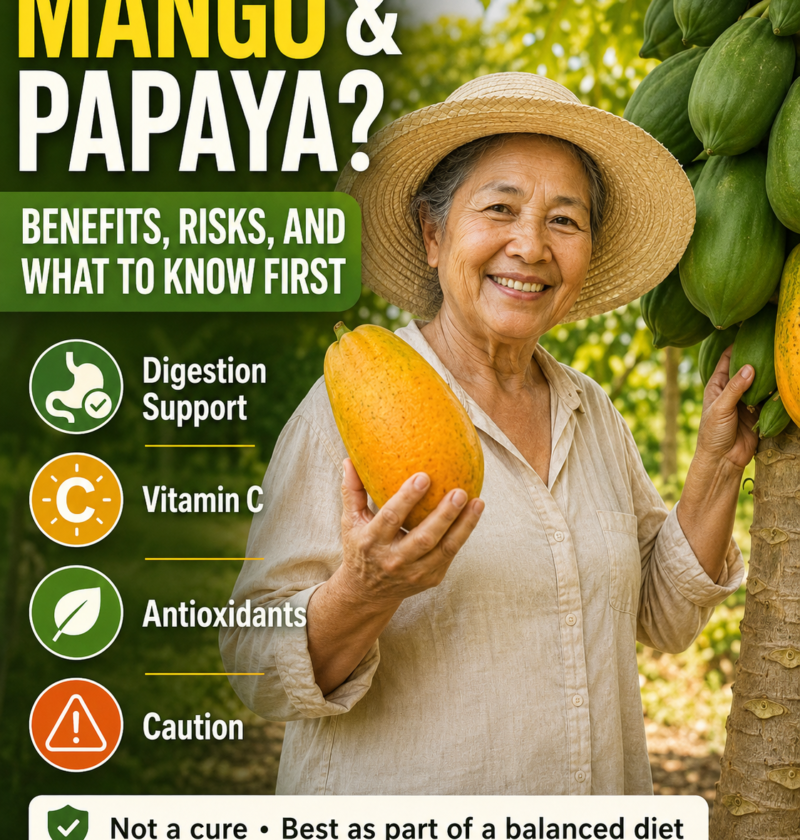
⚠️ Who Should Be Careful With Mango and Papaya?
Mango and papaya are common foods.
Many people enjoy them safely.
But some people should be more careful.
This includes people who:
Have fruit allergies
React to latex
Have sensitive digestion
Are pregnant or breastfeeding
Take daily medication
Have diabetes or blood sugar concerns
Have kidney disease or a restricted diet
Have been told to limit certain nutrients
Have a history of severe allergic reactions
For these people, “natural” does not automatically mean safe.
It is better to ask a doctor, pharmacist, or registered dietitian before making big changes.
🤧 Allergy and Sensitivity Concerns
Mango can cause reactions in some people.
The peel, sap, or skin contact may irritate certain people, especially those sensitive to compounds related to poison ivy.
Some people may tolerate peeled mango flesh but react to the peel.
Papaya can also trigger allergic reactions in sensitive individuals.
Papaya contains proteins such as papain, and papain has been discussed in safety literature as a potential allergen, especially in people exposed to it through food enzymes or occupational settings.
Signs of a food reaction may include:
Itching
Swelling
Rash
Hives
Mouth irritation
Stomach discomfort
Trouble breathing
If breathing problems, swelling of the face or throat, or severe symptoms happen, that is urgent and needs emergency medical help.
🤰 Pregnancy and Breastfeeding Caution
Ripe papaya and unripe papaya are not the same.
Unripe or semi-ripe papaya contains more latex.
A PubMed-indexed study reported concern that unripe or semi-ripe papaya latex may produce uterine contractions in animal research, and the authors advised caution during pregnancy.
Because of that, pregnant people should avoid unripe or semi-ripe papaya unless their healthcare provider says otherwise.
Ripe papaya is often eaten as food in many places, but pregnancy is not the time to experiment with strong papaya enzyme products or concentrated extracts.
Breastfeeding people should also ask a healthcare provider before using papaya supplements, papaya enzyme pills, or large amounts of unfamiliar products.
Food portions are different from concentrated supplements.
💊 Medication Interactions: Why You Should Ask First
Mango and papaya as normal foods are usually simple.
But medication questions can be personal.
If you take daily medications, especially blood thinners, diabetes medication, blood pressure medication, or medication with diet restrictions, ask a pharmacist before using concentrated fruit powders, papaya enzyme supplements, or “wellness detox” products.
For people taking warfarin, Mayo Clinic explains that vitamin K can affect how warfarin works, and people on warfarin should keep vitamin K intake consistent rather than making sudden diet changes.
Mango and papaya are not the same as leafy greens, but the bigger safety lesson is important:
Do not make sudden major diet or supplement changes when taking medication without asking a professional.
🧂 What About Dried Mango and Sweetened Papaya?
Dried fruit can be tasty.
But it is much easier to overeat.
Dried mango often has added sugar.
Candied papaya can be very sweet.
A small bag can contain more sugar than people expect.
This does not mean dried fruit is always bad.
But for wellness content, fresh fruit is usually the safer and better recommendation.
Look for:
No added sugar
Simple ingredient list
No artificial coloring
Small serving size
Unsulfured options if you are sensitive to sulfites
Clear nutrition label
For blood sugar concerns, fresh fruit in a controlled portion is usually easier to manage than sweet dried fruit.
🛒 What to Look for When Buying Mangoes and Papayas
This section matters because quality changes the experience.
A good fruit routine starts with good fruit.
For mangoes:
Choose fruit that gives slightly when gently pressed.
Smell near the stem for a sweet aroma.
Avoid fruit with large bruises or leaking spots.
Do not judge only by color because mango varieties look different.
For papayas:
Choose papaya that is mostly yellow-orange for ripe eating.
It should feel slightly soft, not mushy.
Avoid papaya with deep bruises, mold, or sour smell.
If it is green and firm, it may be unripe.
Wash the outside before cutting.
Use a clean knife and cutting board.
Store cut fruit in the fridge.
Eat cut fruit within a safe time.
Food safety matters, even with natural fruit.
🛍️ What to Look for When Buying Papaya Enzyme or Fruit Supplements
Some people do not buy fresh fruit.
They buy powders, capsules, enzymes, gummies, or drink mixes.
This is where caution becomes more important.
Supplements are not the same as fruit.
A mango gummy is not the same as mango.
A papaya enzyme tablet is not the same as fresh papaya.
Before buying any supplement, look for:
Third-party testing
Clear supplement facts label
No extreme claims
No “cure” promises
No “detox disease” language
Clear dosage instructions
Trusted brand reputation
Allergen information
Medication warning
Pregnancy warning
Customer reviews that seem real
Avoid products that promise:
Instant results
Disease reversal
Guaranteed weight loss
Cure for diabetes
Cancer prevention or treatment
“Doctor-hated secret”
“Works better than medicine”
Those are red flags.
🥣 Simple Ways to Eat Mango and Papaya
Here are safe, realistic ideas.
Mango breakfast bowl:
Mango cubes
Plain yogurt
Oats
Chia seeds
A few nuts
Papaya digestion-friendly snack:
Ripe papaya cubes
Lime juice
A little mint
No added sugar
Balanced smoothie:
Small mango portion
Small papaya portion
Plain yogurt or protein
Ice
Water or milk
No sweet syrup
Fresh salsa:
Mango cubes
Papaya cubes
Red onion
Cilantro
Lime
Serve with fish, chicken, or beans
Simple fruit plate:
Mango
Papaya
Kiwi
Berries
Pumpkin seeds
These ideas keep the fruit in a balanced eating pattern.
🚫 Mistakes to Avoid
Do not use mango and papaya as a medical cure.
Do not eat huge amounts because a post said it is “natural.”
Do not replace meals with fruit-only bowls every day.
Do not use papaya enzyme supplements during pregnancy without medical advice.
Do not ignore allergies or mouth irritation.
Do not drink large sweet juices and call it wellness.
Do not mix supplements with medication without asking a pharmacist.
Do not believe posts that promise “instant healing.”
The safest wellness habits are usually simple, steady, and realistic.
🧠 The Real Wellness Takeaway
Mango and papaya can be great additions to a healthy diet.
They are colorful.
They are hydrating.
They provide vitamin C.
They can help make meals more enjoyable.
They may support a fiber-rich eating pattern when eaten as whole fruit.
But they are not magic.
They are not medicine.
And they are not risk-free for everyone.
The smartest way to enjoy them is simple:
Eat reasonable portions.
Choose whole fruit.
Avoid added sugar.
Be careful with supplements.
Watch your personal reaction.
Ask a doctor or pharmacist if you have medical conditions or take daily medication.
Natural foods can be helpful.
But responsible wellness always comes first.
✅ Final Answer: Should You Try Mango and Papaya?
Yes, mango and papaya can be part of a healthy routine for many people.
They work best as simple foods, not as miracle remedies.
Try them fresh.
Keep portions reasonable.
Pair them with balanced meals.
And remember the most important rule:
Mango and papaya may support wellness, but they do not cure disease or replace medical care.
If you are pregnant, breastfeeding, allergic, managing blood sugar, or taking daily medication, talk to a healthcare professional before using concentrated papaya enzymes, powders, or supplement products.
Fresh fruit is simple.
Miracle claims are not.
Choose the fruit.
Skip the hype.