🏡 Simple Ways Smart Families Help Protect Their Homes During Seasonal Illnesses
Seasonal illnesses can spread quickly inside a home.
One person comes home with a cough.
A child touches a doorknob after school.
Someone forgets to wash their hands before eating.
A shared remote, phone, or kitchen counter becomes part of the daily routine.
At first, it feels like nothing.
But during cold and flu season, small habits inside the home can make a big difference.
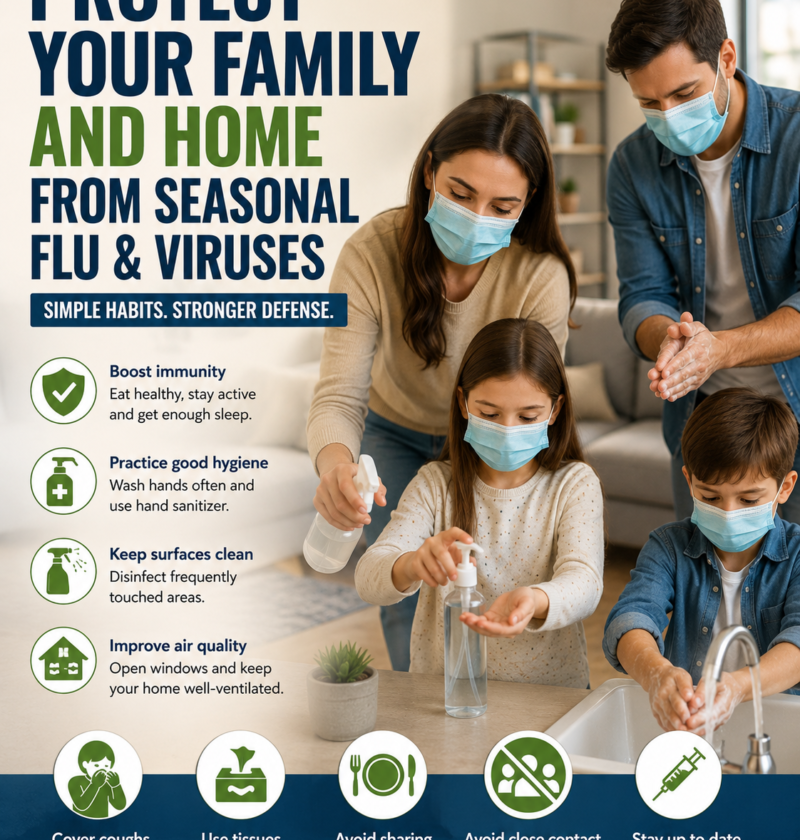
Smart families know that protecting the home is not about fear. It is about simple routines, cleaner spaces, better airflow, and small daily choices that help everyone feel safer and more comfortable.
🧼 Why Home Habits Matter During Seasonal Illnesses
Most families focus on medicine only after someone gets sick.
But many helpful steps happen before that.
The home environment matters because family members share:
- air
- surfaces
- towels
- cups
- door handles
- phones
- bedding
- bathroom spaces
- kitchen areas
When these areas are cleaned and managed properly, the home becomes easier to maintain during illness season.
The goal is not perfection.
The goal is reducing unnecessary exposure and keeping the home calmer when seasonal sickness is circulating.
👐 1. Handwashing Is Still One of the Strongest Habits
Handwashing sounds simple, but it remains one of the most useful daily habits.
Families should wash hands:
✅ after coming home
✅ before eating
✅ after using the bathroom
✅ after coughing or sneezing
✅ after touching shared surfaces
✅ before preparing food
A quick rinse is not enough.
The most helpful routine is washing with soap and water carefully, especially around fingers, nails, and wrists.
For busy families, placing hand soap where it is easy to see can help everyone remember.
🚪 2. Create a “Coming Home” Routine
One powerful habit is having a simple routine when everyone enters the house.
For example:
✅ wash hands
✅ put bags in one place
✅ avoid placing school/work items on kitchen counters
✅ change clothes if needed
✅ clean phones or frequently touched items occasionally
This helps prevent the outside world from spreading across the entire home.
It also gives children a clear habit they can repeat every day.
🧽 3. Focus on High-Touch Surfaces
Not every part of the home needs constant deep cleaning.
The most important areas are usually the surfaces people touch repeatedly.
Examples include:
- doorknobs
- light switches
- remote controls
- phones
- faucets
- refrigerator handles
- cabinet handles
- toilet handles
- stair rails
- kitchen counters
Cleaning these areas regularly can help reduce germs on shared surfaces.
This is especially important when someone in the home is already sick.
🌬️ 4. Improve Airflow Inside the Home
Fresh air matters more than many people realize.
When homes stay closed all day, indoor air can feel heavy and stale.
Simple airflow habits can help:
✅ open windows briefly when weather allows
✅ use bathroom fans
✅ use kitchen exhaust fans
✅ avoid blocking air vents
✅ replace filters when needed
✅ keep rooms from becoming too humid
Good airflow can make the home feel fresher and more comfortable, especially during illness season.
🛏️ 5. Keep Sick Areas More Separate
When one family member is sick, it helps to reduce sharing.
That can mean:
- giving them their own cup
- using separate towels
- washing bedding more often
- keeping tissues nearby
- placing a small trash bag beside the bed
- cleaning nearby surfaces daily
This does not need to feel extreme.
It is simply a way to stop one person’s illness from spreading easily through the home.
🍽️ 6. Be Careful With Shared Kitchen Items
The kitchen is one of the easiest places for germs to spread.
During seasonal illness, families should avoid sharing:
- cups
- forks
- spoons
- plates
- water bottles
- towels
- food containers
It is also helpful to wash dishes well and avoid leaving used cups around the house.
Small kitchen habits can protect the whole family.