💧🌱 Rainwater Harvesting System — The Smart Way to Save Water and Grow More
Water is one of the most valuable resources in any home or garden. Yet every time it rains, thousands of liters of clean, usable water simply flow off rooftops and disappear into drains. For homeowners, gardeners, and anyone interested in sustainability, this represents a missed opportunity.
Rainwater harvesting systems offer a simple and effective way to capture, store, and reuse this natural resource. Instead of relying entirely on municipal water supplies, you can collect rainwater and use it for irrigation, gardening, and even certain household tasks.
This method is not only environmentally friendly, but it can also significantly reduce water bills and support healthier plant growth.
By understanding how a basic rainwater harvesting system works, you can turn every rainfall into a valuable resource for your home.
🌧️ Why Rainwater Harvesting Matters
Rainwater is naturally soft, free from many chemicals found in treated water, and ideal for plants. When used correctly, it can improve soil health and reduce dependency on external water sources.
In many regions, water restrictions and rising costs make efficient water use more important than ever. Harvesting rainwater allows homeowners to take control of their water usage while supporting sustainable living practices.
🏡 How a Rainwater Harvesting System Works
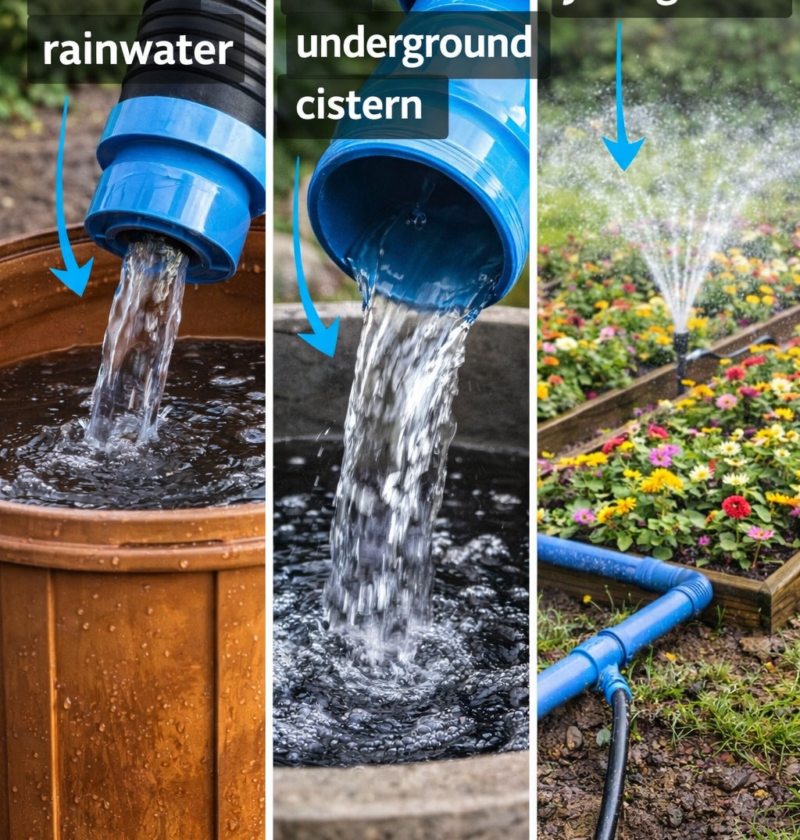
A complete rainwater harvesting system follows a simple but highly effective flow. Each component plays a role in collecting, filtering, storing, and distributing water.
1️⃣ Roof Collection
The process begins at the roof. When it rains, water is captured as it falls onto the roof surface. Gutters and downspouts direct this water toward a collection point.
The size of the roof directly affects how much water can be collected. Even a small roof can capture hundreds of liters during a single rainfall.
2️⃣ Pre-Storage Control
Before entering long-term storage, water often passes through a rain barrel or filtration stage. This step helps slow down the flow and remove larger debris such as leaves and dirt.
This simple pre-treatment helps keep the system clean and efficient.
3️⃣ Underground Cistern
The collected water is stored in an underground tank, known as a cistern. This protects the water from sunlight, which helps prevent algae growth and reduces evaporation.
Underground storage also maintains a more stable temperature, preserving water quality over time.
🌿 Advantages of Underground Storage
Storing water below ground provides several important benefits.
🌱 Reduced Evaporation
Water stored underground is protected from heat and sunlight, minimizing loss.
🌱 Improved Water Quality
Cool, dark conditions help keep water cleaner for longer periods.
🌱 Space Efficiency
Underground tanks do not take up valuable surface space in your yard.