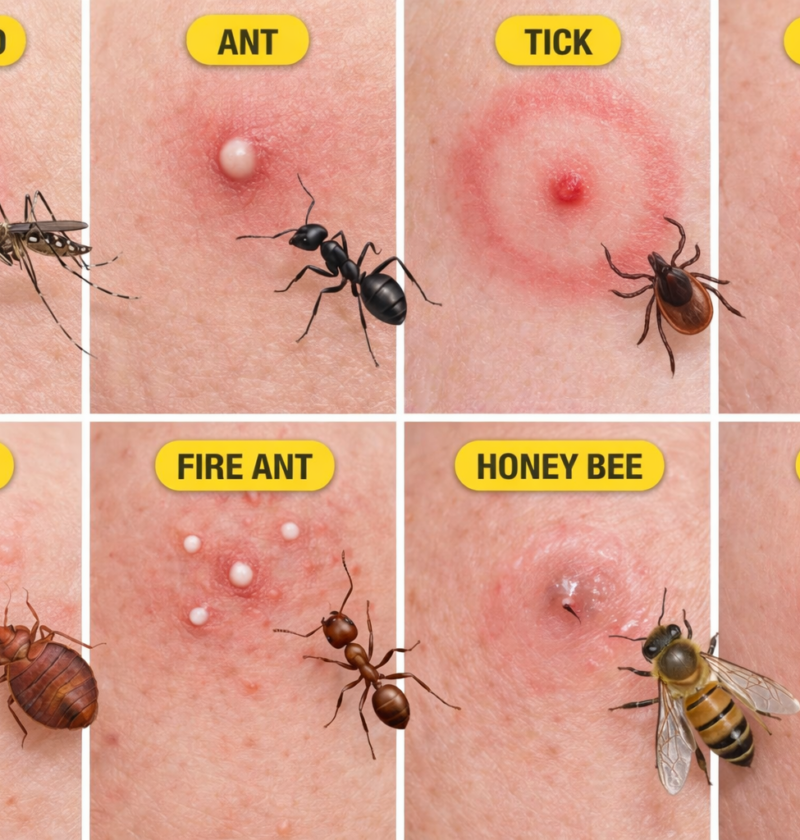
🐞 9 Bug Bites You Should Never Ignore — What Your Skin Is Trying to Tell You
⚠️ When a Bug Bite Is More Than Just an Itch
Most insect bites are harmless and disappear within a few days. However, certain bites can indicate something more serious. In some cases, a bite may carry bacteria, parasites, or viruses that can affect the body beyond the skin.
Your skin often acts as the first warning system. Redness, swelling, unusual patterns, or persistent pain can signal that something unusual is happening. Paying attention to these signals can help you react quickly and prevent complications.
While the majority of bites simply cause mild itching, there are several types that should never be ignored. Knowing how to recognize them can help protect your health and ensure you seek help when necessary.
🕷️ 1. Tick Bites and the “Bullseye” Rash
Tick bites can sometimes transmit bacteria that cause Lyme disease. One of the most recognizable signs is a circular rash that gradually expands outward from the bite, sometimes resembling a bullseye.
The rash may appear days after the bite and is often accompanied by fatigue, fever, or joint pain. Because ticks are small and painless when they bite, many people never notice the moment it happens.
If you notice an expanding circular rash or flu-like symptoms after spending time outdoors, it is important to seek medical advice quickly.
🦟 2. Mosquito Bites That Cause Severe Swelling
Mosquito bites are extremely common and usually harmless. However, some individuals experience strong allergic reactions known as “Skeeter syndrome.”
In these cases, the bite may become very swollen, warm, and painful. The swelling may extend several inches around the bite and last longer than normal.
Severe swelling, fever, or worsening redness may indicate infection or an allergic response that requires medical attention.
🕷️ 3. Spider Bites That Cause Tissue Damage
Most spider bites cause only mild irritation. However, certain species such as brown recluse spiders can cause more serious reactions.
A brown recluse bite may initially appear mild but gradually develop into a painful blister or ulcer. The surrounding skin may darken or become damaged over time.
Prompt medical evaluation is recommended if a bite worsens instead of improving.
🐜 4. Fire Ant Stings
Fire ants deliver painful stings that often produce burning sensations and small pustules on the skin. These bites can become very itchy and uncomfortable.
In some individuals, fire ant stings can trigger severe allergic reactions, including swelling of the throat, dizziness, or difficulty breathing.
Such symptoms require immediate medical attention.
🪰 5. Bites That Develop Blisters
Some insect bites may produce fluid-filled blisters rather than simple red bumps. Blistering may occur when the skin reacts strongly to insect saliva or venom.
Blisters that continue growing, become painful, or show signs of infection should not be ignored.
🐝 6. Bee or Wasp Stings with Allergic Reaction
Bee and wasp stings are common during outdoor activities. Most cause temporary pain and swelling.
However, people who are allergic to venom may experience anaphylaxis, a serious reaction that includes difficulty breathing, swelling of the face, or rapid heartbeat.
This is a medical emergency requiring immediate care.
🛏️ 7. Bed Bug Bites
Bed bug bites often appear in clusters or lines on exposed areas of the skin. These bites may cause itching and irritation, particularly during the night.
Although bed bugs do not usually spread disease, persistent bites may indicate an infestation that requires professional treatment.
🐛 8. Caterpillar Stings
Some caterpillars have tiny hair-like structures that release toxins when touched. Contact may produce burning sensations, rash, or swelling.
Washing the area carefully and avoiding scratching can help reduce irritation.
🦗 9. Bites That Become Infected
Even ordinary insect bites can become infected if bacteria enter through broken skin. Signs of infection include increased redness, warmth, pus, or spreading swelling.
If a bite becomes increasingly painful or fails to heal after several days, medical evaluation may be necessary.
🧴 How to Care for Most Bug Bites
For typical bites, simple home care is often sufficient. Washing the area with mild soap and water helps reduce the risk of infection.
Cold compresses can help relieve swelling and itching. Over-the-counter antihistamines or soothing creams may also provide relief.
Avoid scratching bites, as this can break the skin and increase the risk of infection.
🌿 Prevention Tips
Preventing bites is often easier than treating them. Wearing protective clothing, using insect repellent, and avoiding areas with heavy insect activity can significantly reduce exposure.
Keeping living spaces clean and sealing cracks where insects may enter also helps minimize the risk of bites indoors.
🌱 Listening to Your Skin
Your skin often reveals valuable information about your health. While most insect bites are harmless, unusual reactions should not be ignored.
By recognizing warning signs and responding quickly, you can protect yourself and ensure that minor bites do not turn into larger health concerns.
Staying aware of your body’s signals is one of the most effective ways to maintain overall well-being and safety when dealing with insects and outdoor environments.