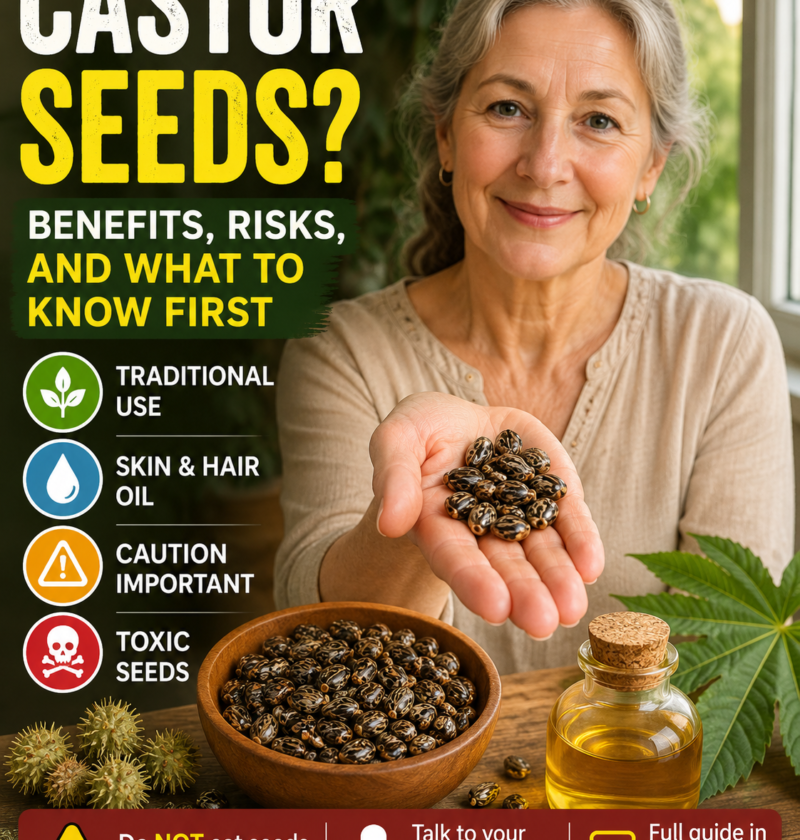
Castor Seeds vs Castor Oil: Benefits, Risks, and What to Know First
Castor seeds are going viral online.
Some posts show dark shiny seeds in someone’s hand and claim they can remove harmful cells, stop disease, protect vision, or fix serious health problems.
That kind of message is dangerous.
Castor seeds are not a home remedy to eat.
They are not a cure.
They are not a detox.
They should not be used as a recipe.
The safest way to talk about this topic is very clear:
Castor seeds may be toxic if chewed and swallowed.
Castor oil is different from castor seeds.
And anyone considering castor oil for skin, hair, constipation, or wellness should understand the risks first.
Natural does not always mean safe.
And viral health posts are not medical advice.
🌿 Why Castor Seeds Became Popular Online
Castor seeds come from the castor plant.
They are often shiny, brown, black, and beautifully patterned.
Because they look natural, many people assume they must be safe.
That is a mistake.
Some traditional wellness posts talk about castor oil for skin, hair, massage, or constipation.
But then people confuse castor oil with castor seeds.
That confusion matters.
Castor oil and castor seeds are not the same thing.
Commercial castor oil is processed.
Raw castor seeds can contain a toxic substance.
That is why the first rule is simple:
Do not eat castor seeds.
Do not chew castor seeds.
Do not make homemade drinks, powders, or recipes from castor seeds.
⚠️ The Most Important Safety Warning
Castor seeds can contain ricin.
Ricin is a poison found naturally in castor beans.
If castor seeds are chewed and swallowed, the toxin may be released and can cause serious harm.
This is not a small warning.
It is the main point of the whole topic.
Some online posts make castor seeds look like a miracle cure.
But a responsible wellness guide should say the opposite:
Castor seeds should not be eaten.
They are not safe as a homemade health recipe.
If someone accidentally eats castor seeds, they should contact poison control or emergency medical help.
🧠 Common Online Claim / Safer Truth
| Common Online Claim | Safer Truth |
|---|---|
| Castor seeds remove harmful cells | This is not a safe or proven claim |
| Castor seeds stop disease | Castor seeds can be toxic and should not be eaten |
| Castor seeds protect eyesight | There is no safe reason to eat castor seeds for vision |
| Natural seeds are safe | Some natural seeds can be poisonous |
| Castor seeds and castor oil are the same | They are not the same |
| Castor oil can be used by everyone | Castor oil may not be safe for everyone |
| More natural products mean better results | More does not mean safer |
| A viral recipe is enough | Toxic plants require professional safety advice |
🧴 Castor Seeds vs Castor Oil
This is where many people get confused.
Castor seeds are the raw seeds.
Castor oil is an oil made from the castor plant after processing.
The seed itself is the risky part.
The oil sold in stores is processed differently and is commonly used in some products.
But even castor oil should be used carefully.
Castor oil may be found in:
Hair oils
Skin products
Massage oils
Cosmetic products
Laxative products
Traditional home routines
But using castor oil on skin or hair is not the same as eating castor seeds.
Never turn castor seeds into a homemade wellness drink or powder.
💧 Castor Oil for Skin and Hair: What to Know
Many people use castor oil on the skin or hair.
They may apply it to dry areas, scalp, eyebrows, or hair ends.
Some people like the thick texture.
Others find it too heavy.
Possible issues include:
Skin irritation
Clogged pores
Scalp buildup
Itching
Redness
Allergic reactions
Greasy hair
Eye irritation if it gets too close to the eyes
A safer approach is to patch test first.
Apply a tiny amount to a small area of skin and wait.
If redness, itching, burning, swelling, or rash happens, stop using it.
Do not put castor oil inside the eyes.
Do not use castor oil on broken skin.
Do not use it on children without medical advice.
🚽 Castor Oil as a Laxative: Be Careful
Castor oil is known as a stimulant laxative.
That means it can increase bowel movement.
But it should not be used casually or frequently.
Laxatives can cause problems if overused.
Possible side effects may include:
Cramping
Diarrhea
Nausea
Dehydration
Electrolyte imbalance
Urgent bowel movements
Dependence if misused
This is why castor oil should not be used as a daily wellness drink.
It should not be used for weight loss.
It should not be used as a cleanse.
And it should not be used longer than directed on a product label unless a doctor says so.
🤰 Pregnancy Warning
Pregnant people should be very careful with castor oil.
Castor oil has been used historically to try to induce labor.
That does not make it safe.
Using castor oil during pregnancy can be risky and should only happen under medical supervision if a healthcare provider specifically advises it.
Pregnant people should not experiment with castor oil, castor seeds, or castor seed products.
The safest rule is simple:
During pregnancy, do not use castor oil or castor seeds for wellness unless your healthcare provider tells you to.
💊 Medication and Health Condition Caution
People with health conditions should ask a doctor or pharmacist before using castor oil.
This is especially important for people with:
Digestive disorders
Abdominal pain
Nausea
Vomiting
Diarrhea
Kidney problems
Heart conditions
Medication use
Pregnancy or breastfeeding
History of allergic reactions
Children and older adults may also be more sensitive.
If someone has unexplained stomach pain, they should not take a laxative without medical advice.
Stomach pain can have many causes.
A laxative may make some problems worse.