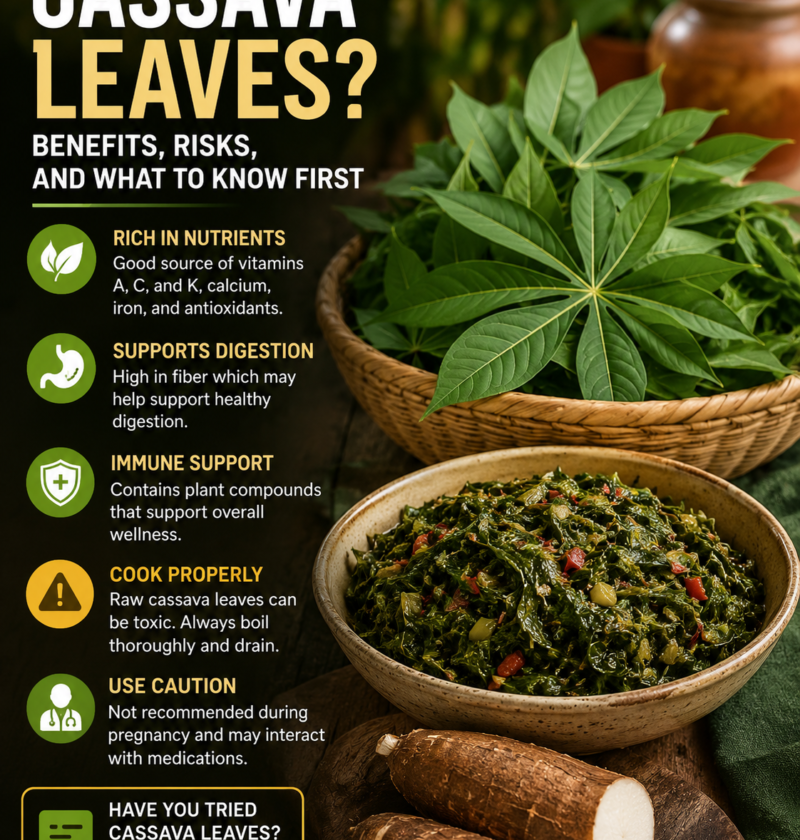
⚡ Cassava Leaves? Benefits, Risks, and What to Know First
Cassava leaves are used in many traditional dishes around the world.
Some people cook them like greens.
Some add them to stews.
Some mix them with spices, fish, meat, or vegetables.
And online, many posts make cassava leaves look like a powerful natural remedy.
Some posts connect them with digestion.
Some connect them with blood pressure.
Some connect them with weight management.
Others make them sound like they can support almost every health concern.
At first, it sounds simple.
Green leaves.
A familiar root.
A traditional food.
A natural recipe.
But before using cassava leaves at home, there is one very important thing to understand:
Cassava leaves can be nutritious when prepared properly.
But raw or poorly prepared cassava leaves can be unsafe.
And they should never be treated like medicine.
🌿 Why Cassava Leaves Became Popular
Cassava is a staple food in many parts of Africa, Latin America, the Caribbean, and Asia.
The root is often used to make flour, fufu, garri, tapioca, and other foods.
The leaves are also eaten in some traditional recipes.
People like cassava leaves because they feel natural, filling, and connected to old family cooking.
They may also contain nutrients such as:
- protein
- fiber
- vitamins
- minerals
- plant compounds
- antioxidants
This is why cassava leaves can look interesting from a nutrition point of view.
But nutrition is only one side of the story.
Safety matters just as much.
⚠️ The Big Mistake Many People Make
The biggest mistake is thinking cassava leaves can be used raw or casually like lettuce.
They cannot.
Cassava leaves are not the same as spinach or salad greens.
Cassava plants contain natural compounds called cyanogenic glycosides.
If cassava is not prepared properly, these compounds can release cyanide, which can be dangerous.
The CDC explains that cassava contains cyanogenic glycosides and can cause cyanide poisoning if it is not properly detoxified before eating.
That is why cassava leaves need proper preparation.
They should not be eaten raw.
They should not be blended into raw green juice.
They should not be added to smoothies.
They should not be used as a quick homemade remedy.
They must be cooked correctly.
🍲 Why Proper Cooking Is So Important
Proper preparation helps reduce the toxic compounds in cassava.
Traditional cooking methods often include:
- washing
- pounding or chopping
- soaking
- boiling
- draining
- cooking thoroughly
Research on cassava detoxification notes that for cassava leaves used as human food, pounding the leaves and cooking the mash in water is an effective preparation method.
This is important because a short rinse is not enough.
A quick warm-up is not enough.
Raw preparation is not enough.
Cassava leaves must be treated as a food that requires proper cooking.
🥬 Cassava Leaves as Food, Not Medicine
Cassava leaves can be part of traditional meals.
But they should not be promoted as medicine.
They should not be described as a cure for:
- headaches
- migraines
- serious illness
- high blood pressure
- digestive disease
- vision problems
- joint disease
- circulation problems
- cancer
- diabetes
Food can support health.
But food is not a replacement for medical care.
The FDA explains that products such as dietary supplements are not intended to diagnose, treat, cure, or prevent disease.
So the safe message is simple:
Cassava leaves may be a nutritious traditional food when cooked properly.
But they are not a cure.
💧 Cassava Leaves and Digestion
Cassava leaves may contain fiber.
Fiber can support digestion as part of a balanced diet.
That is one reason leafy greens are often included in healthy eating routines.
But digestive discomfort can happen for many reasons.
It may be connected to:
- low fiber
- dehydration
- food intolerance
- stress
- eating too fast
- gut conditions
- infection
- medication
- gallbladder issues
- acid reflux
Cassava leaves should not be used to ignore ongoing digestive symptoms.
If stomach pain, bloating, diarrhea, constipation, or vomiting keeps returning, the cause needs attention.
A cooked green can be food.
It is not a diagnosis.
🩺 Cassava Leaves and Serious Health Claims
Some posts make cassava leaves sound like they can help serious illnesses.
This is risky.
Serious illnesses need professional care.
A traditional food should not delay treatment.
Cassava leaves should not replace:
- medication
- doctor visits
- blood pressure care
- diabetes care
- cancer treatment
- infection treatment
- eye care
- migraine care
- joint disease treatment
If someone has a serious symptom or chronic condition, they should talk to a healthcare professional.
Natural food can be part of a lifestyle.
But it cannot replace treatment.
🔥 Why Raw Cassava Leaves Are Risky
Raw cassava leaves can contain higher levels of toxic compounds.
This is why raw use is dangerous.
Do not use raw cassava leaves in:
- smoothies
- green juices
- salads
- raw herbal drinks
- raw pastes
- quick detox recipes
- uncooked home remedies
Even if a recipe looks natural online, it may not be safe.
A green color does not mean harmless.
A plant can be nutritious and still require careful cooking.
Cassava is a perfect example.
🧊 Food Safety Matters
Food safety is very important with cassava leaves.
Use clean leaves.
Wash them well.
Cook them thoroughly.
Drain cooking water when needed.
Do not use leaves from unknown sources.
Do not use plants sprayed with chemicals.
Do not use spoiled or wilted leaves.
Do not keep cooked cassava leaves at room temperature for many hours.
Refrigerate leftovers properly.
A healthy-looking food can still become unsafe if handled badly.