✅ A Safer Way to Use Cassava Leaves
Cassava leaves should be treated as a cooked traditional food.
Not a raw remedy.
Not a detox drink.
Not a medicine.
Not a cure.
A safer approach is simple:
Use known edible cassava leaves.
Prepare them correctly.
Cook them thoroughly.
Eat them as part of a balanced meal.
Do not use them to replace medical care.
🧼 Step 1: Start With Clean Leaves
Before cooking, clean the leaves well.
Remove damaged parts.
Rinse thoroughly.
Do not use leaves that look spoiled.
Do not use leaves from roadsides or polluted areas.
Do not use leaves from a plant you cannot identify clearly.
This matters because the wrong plant or contaminated leaves can cause problems.
🔪 Step 2: Chop or Pound the Leaves
Cassava leaves are often chopped or pounded before cooking.
This helps prepare them for traditional cooking methods.
It also helps make them easier to cook evenly.
Do not leave thick, raw leaves barely cooked.
Proper preparation matters.
Traditional methods exist for a reason.
🍲 Step 3: Boil and Cook Thoroughly
Cassava leaves should be cooked thoroughly.
Boiling and cooking help reduce harmful compounds.
Do not just warm them lightly.
Do not steam them quickly and assume they are safe.
Do not eat them raw.
Cooking time and preparation style may vary depending on the traditional recipe, but the key message is clear:
Cassava leaves must be properly prepared before eating.
⚠️ Step 4: Do Not Use as a Daily “Cure”
Even when cooked properly, cassava leaves should not be treated like medicine.
Do not eat them every day because a post promised disease support.
Do not use them to treat high blood pressure.
Do not use them to treat migraines.
Do not use them to treat serious illness.
Do not stop medication because of a food recipe.
Use them as food.
Not treatment.
💊 Step 5: Be Careful With Medical Conditions
Some people should be extra careful.
Talk to a healthcare professional before using cassava leaves often if you:
- are pregnant
- are breastfeeding
- have thyroid problems
- have kidney disease
- have liver disease
- have chronic illness
- take daily medication
- have a history of food sensitivity
- are giving it to children
- have unexplained symptoms
This does not mean cassava leaves are always bad.
It means your situation matters.
📌 Quick Comparison Table
| Common Online Claim | Safer Truth |
|---|---|
| Cassava leaves cure serious illness | They should not be treated as medicine |
| Raw leaves are natural and safe | Raw cassava leaves can be toxic |
| A quick rinse is enough | Proper preparation and cooking are important |
| Cassava leaves fix blood pressure | Blood pressure needs medical monitoring |
| Cassava leaves help every condition | No food works for everyone |
| Green leaves are always healthy | Some plants need careful cooking |
| Natural means harmless | Natural foods can still carry risks |
🛒 What to Look for When Buying Cassava Leaves
For USA readers, this section helps with stronger food and grocery intent.
If buying cassava leaves, look for:
- trusted grocery source
- clearly labeled cassava leaves
- fresh-looking leaves
- no strong bad smell
- no mold
- no slimy texture
- no unknown wild leaves
- cooking instructions if packaged
- frozen cassava leaves from reliable brands
- no exaggerated health claims
Frozen cassava leaves may be easier for some people because they are often prepared for cooking.
But always follow package instructions.
Do not assume every product is ready to eat.
🍽️ How Cassava Leaves Are Often Used in Meals
Cassava leaves are commonly used in cooked dishes.
They may be combined with:
- onion
- garlic
- peppers
- fish
- meat
- palm oil
- peanut paste
- spices
- rice
- cassava root
- plantains
These meals are often rich, filling, and traditional.
The healthiest version depends on the full recipe.
For example, too much oil or salt can change the nutrition of the dish.
Balance matters.
🚫 Claims to Avoid
Avoid saying:
- cassava leaves cure disease
- cassava leaves treat cancer
- cassava leaves fix blood pressure
- cassava leaves cure migraines
- cassava leaves heal vision problems
- cassava leaves replace medicine
- cassava leaves detox the body
- cassava leaves work for everyone
These claims are unsafe and misleading.
A better title is:
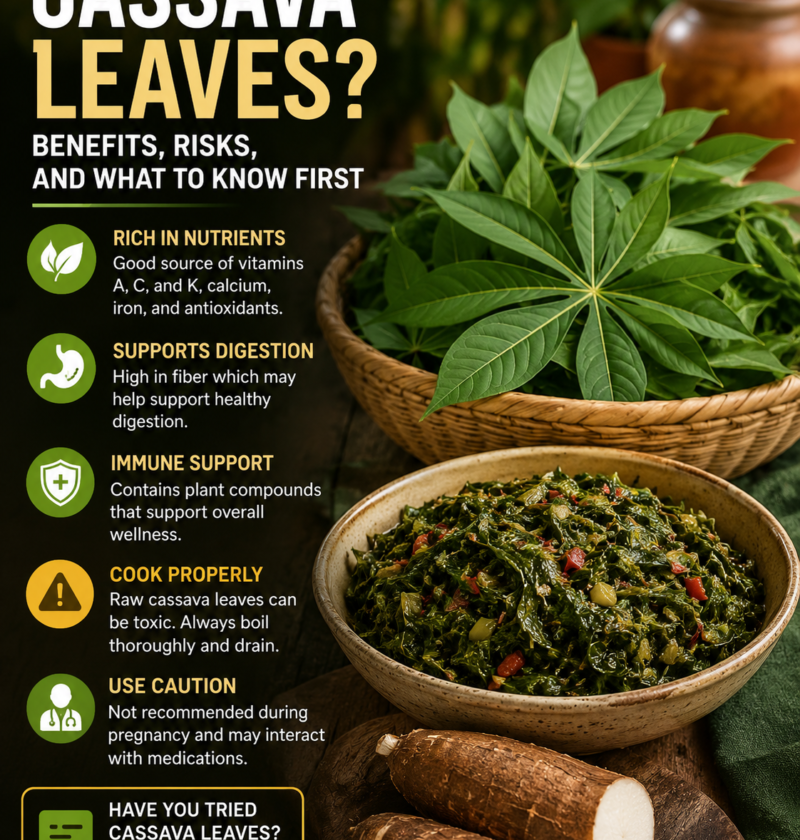
Cassava Leaves? Benefits, Risks, and What to Know First
It still creates curiosity.
But it is safer and more trustworthy.
🧠 The Smart Food Safety Rule
Here is the simple rule:
If a plant food requires special preparation, respect the preparation.
Do not rush it.
Do not copy random raw recipes.
Do not eat unknown leaves.
Do not turn risky foods into quick remedies.
Cassava leaves can be part of traditional cooking.
But they need proper handling.
Safety comes first.
🩺 When to Talk to a Doctor
Talk to a healthcare professional if you experience symptoms after eating cassava leaves, especially:
- vomiting
- dizziness
- weakness
- confusion
- stomach pain
- headache
- breathing difficulty
- fainting
- severe diarrhea
- symptoms after eating undercooked cassava
Also talk to a professional if you have ongoing health concerns that people online say cassava leaves can “fix.”
Do not delay proper care.
🌿 Final Thoughts
Cassava leaves are interesting.
They are traditional.
They can be nutritious when prepared correctly.
They may be part of flavorful cooked meals.
But they are not a miracle remedy.
They are not safe raw.
They should not replace medicine.
And they require proper preparation because cassava can contain toxic compounds if not handled correctly.
The smartest approach is simple:
Use cassava leaves as cooked food.
Prepare them properly.
Avoid raw recipes.
Avoid miracle claims.
Follow medical advice when needed.
And remember:
Real wellness comes from safe food, balanced meals, and honest information.