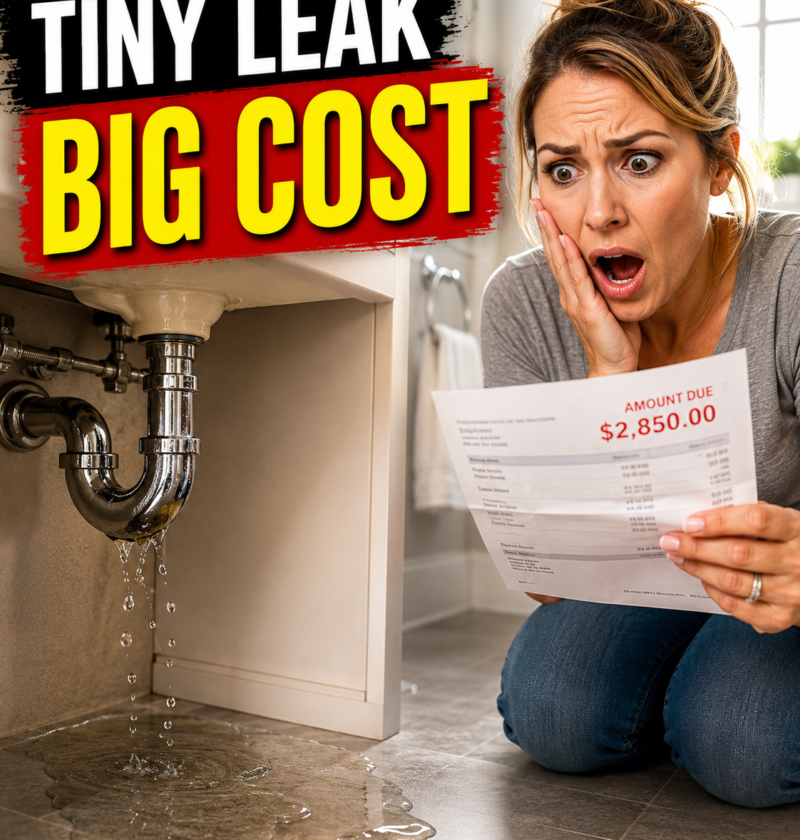
🚰 The Tiny Bathroom Leak That Can Cost Homeowners Thousands
A tiny bathroom leak can look harmless at first.
One slow drip under the sink.
A small wet spot near the pipe.
A little moisture on the floor.
Most homeowners wipe it once and move on.
But smart homeowners know that small bathroom leaks can quietly become expensive problems when they are ignored too long.
Water does not need to flood the whole room to cause damage. Sometimes the biggest repair bills begin with one small leak that nobody checks carefully.
💧 Why Small Bathroom Leaks Are So Easy to Miss
Bathroom leaks often hide in places people rarely inspect.
They may appear under:
- sinks
- toilets
- bathtubs
- shower edges
- cabinets
- pipe connections
- floor corners
At first, the leak may only create a few drops.
But if the moisture stays there every day, it can slowly affect nearby surfaces.
Wood can swell.
Paint can bubble.
Cabinets can weaken.
Floors can stain.
Mold-friendly conditions can develop.
That is why smart homeowners take even tiny leaks seriously.
🧼 The Under-Sink Area Is One of the First Places to Check
Under the bathroom sink is a common leak zone.
Pipes, valves, and drain connections can loosen over time.
Warning signs include:
✅ water droplets on pipes
✅ damp cabinet floors
✅ musty smells
✅ swollen wood
✅ peeling cabinet surface
✅ stains near plumbing connections
A quick check every few weeks can help homeowners catch problems early before they spread.
🚽 Why Toilet Leaks Can Become Expensive
Toilet leaks are especially easy to ignore.
Sometimes the leak is visible around the base.
Sometimes it is hidden inside the tank.
Sometimes the toilet runs quietly without stopping.
Small toilet leaks may waste water and increase bills over time.
Leaks around the base can also damage flooring if moisture sits underneath.
That is why homeowners should pay attention to rocking toilets, soft flooring, water marks, or strange smells near the toilet area.
🛁 Shower and Tub Leaks Can Hide Behind Walls
Shower leaks can be tricky because the damage may happen behind the surface.
Loose caulking, cracked grout, or poor sealing around tubs can allow water to slowly reach:
- drywall
- framing
- flooring
- baseboards
- nearby rooms
The bathroom may look fine from the outside while moisture builds behind the scenes.
This is why smart homeowners never ignore cracked caulk or recurring damp spots around showers.
⚠️ The First Warning Signs Most People Miss
Small leaks usually give clues before they become major repairs.
Watch for:
- damp smells
- bubbling paint
- soft flooring
- water stains
- loose tiles
- swollen cabinet wood
- higher water bills
- mold spots
- dripping sounds
These signs may seem minor, but they often mean moisture is already affecting the area.