💧 Why Smart Homeowners Are Changing Small Habits to Lower Water and Electricity Bills
Many families feel shocked when utility bills suddenly rise.
The water bill looks higher than expected.
Electricity costs keep increasing.
Monthly expenses slowly become harder to control.
And surprisingly, many homeowners discover that small everyday habits — repeated constantly — quietly waste far more water and electricity than they ever realized.
That’s why smart homeowners are now focusing less on extreme lifestyle changes and more on simple daily routines that reduce waste naturally without making the home uncomfortable.
And in many cases, the biggest savings come from fixing the small things people ignore every day.
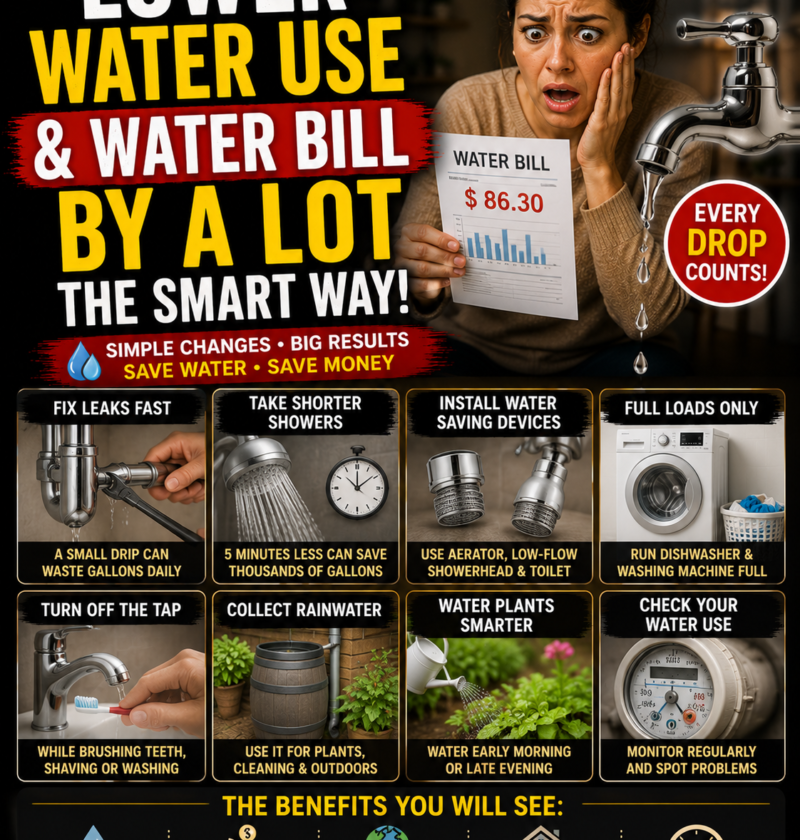
🚰 Small Water Leaks Quietly Waste More Than People Think
A tiny dripping faucet may not seem serious.
But small leaks running constantly can slowly waste large amounts of water over time.
Especially:
- bathroom faucets
- kitchen sinks
- outdoor hoses
- toilet tanks
- shower heads
Many homeowners are surprised how much their water usage drops after fixing small leaks they ignored for months.
🚿 Why Shower Habits Affect Water Bills So Much
Showers are one of the biggest daily water users in many homes.
Long hot showers use both:
- water
- electricity or heating energy
That’s why many smart homeowners now focus on:
✅ shorter showers
✅ efficient showerheads
✅ reducing unnecessary hot water use
✅ turning water off during certain routines
Small changes repeated daily often create noticeable savings over time.
💡 Why Lights and Electronics Quietly Increase Electricity Costs
Many devices continue using power even when nobody notices.
For example:
- lights left on
- chargers
- TVs
- gaming systems
- kitchen appliances
- standby electronics
Individually the energy usage may seem small.
But combined across an entire home every day, these habits can slowly increase electricity bills significantly.
🧺 Why Washing Machines Matter More Than People Realize
Laundry habits strongly affect both water and electricity usage.
Running small half-empty loads repeatedly often wastes:
- water
- detergent
- heating energy
- machine efficiency
That’s why many homeowners now try to:
✅ wash fuller loads
✅ use cooler water when possible
✅ avoid unnecessary laundry cycles
✅ dry clothes more efficiently
These small adjustments often reduce bills more than expected.
🌡️ Why Heating and Cooling Costs Rise So Easily
Heating and air conditioning are major energy users in many homes.
And surprisingly, small habits can affect efficiency a lot.
For example:
- doors left open
- poor insulation
- running systems unnecessarily
- blocked vents
- extreme thermostat settings
That’s why smart homeowners increasingly focus on reducing wasted airflow before simply increasing heating or cooling.
☀️ Why Natural Light Helps Reduce Electricity Use
One simple habit many homeowners overlook is using daylight more intentionally.
Opening curtains during daytime often reduces the need for artificial lighting completely in many rooms.
Natural light can also make homes feel:
- larger
- cleaner
- warmer
- more comfortable
while quietly lowering electricity usage at the same time.
🏡 Why Efficient Homes Often Feel More Organized
Interestingly, homeowners who monitor utility usage often create more organized homes overall.
Because awareness naturally changes habits.
People become more careful about:
✅ wasted water
✅ unnecessary lighting
✅ forgotten electronics
✅ leaking fixtures
✅ heating efficiency
And over time, these routines become automatic.