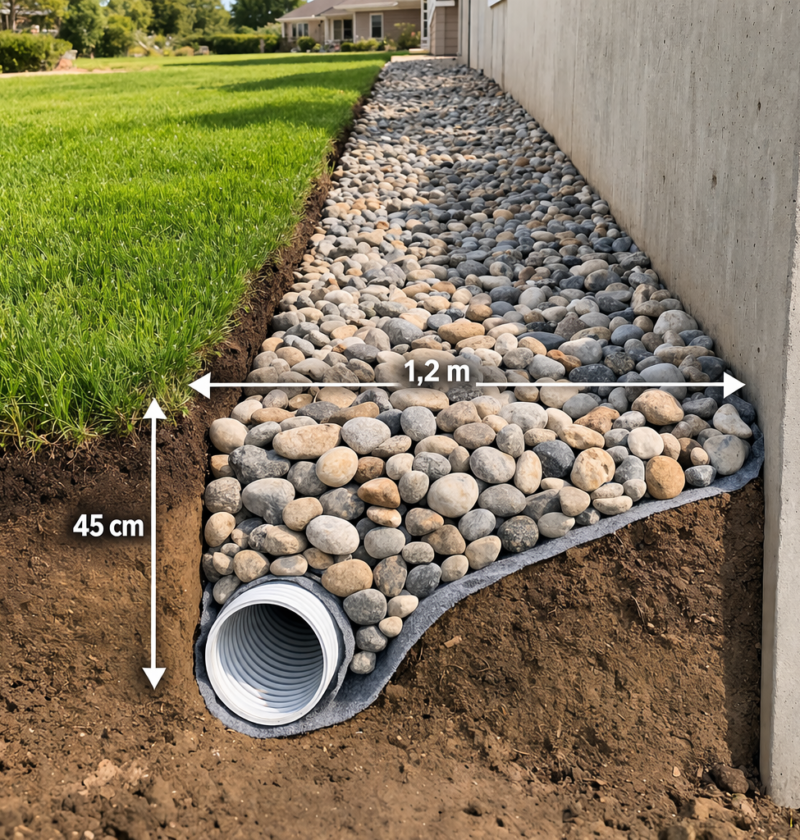
🪵 How the System Works Step by Step
1️⃣ Water Enters the System
Rainwater or groundwater flows into the trench instead of accumulating near the foundation.
2️⃣ Filtration Layer Protects the System
The geotextile fabric prevents soil from mixing with the gravel, ensuring long-term efficiency.
3️⃣ Water Moves Through Gravel
The stone layer allows water to flow quickly downward toward the pipe.
4️⃣ Pipe Collects and Redirects Water
The perforated pipe gathers water and channels it away from the structure.
5️⃣ Safe Discharge
Water is released into a drainage area, away from the building.
🏡 Benefits for Homeowners
💧 Prevents Basement Flooding
By removing excess water, the system reduces the risk of water entering basements.
🧱 Protects Structural Integrity
Reducing pressure on foundation walls helps prevent cracks and damage.
🌬️ Improves Indoor Air Quality
Keeping moisture away reduces the risk of mold growth inside the home.
📉 Reduces Long-Term Costs
Preventing damage is far more affordable than repairing it.
⚠️ Common Mistakes to Avoid
• Incorrect slope that prevents proper drainage
• Missing or damaged filter fabric
• Using fine soil instead of proper gravel
• Poor pipe placement
• Blocking the discharge outlet
These mistakes can reduce the effectiveness of the system.
🌿 Maintenance Tips
Although this system requires minimal maintenance, occasional checks are recommended.
• Ensure the discharge area remains clear
• Inspect for signs of clogging
• Monitor water flow during heavy rain
🌍 Final Thoughts
A foundation perimeter drainage system is one of the most important yet often overlooked parts of a building. It works silently underground, protecting your home from water damage day after day.
By controlling how water moves around your property, this system prevents costly repairs and helps maintain the stability of your structure.
Sometimes, the strongest protection is the one you never see — but that works continuously to keep your home safe.