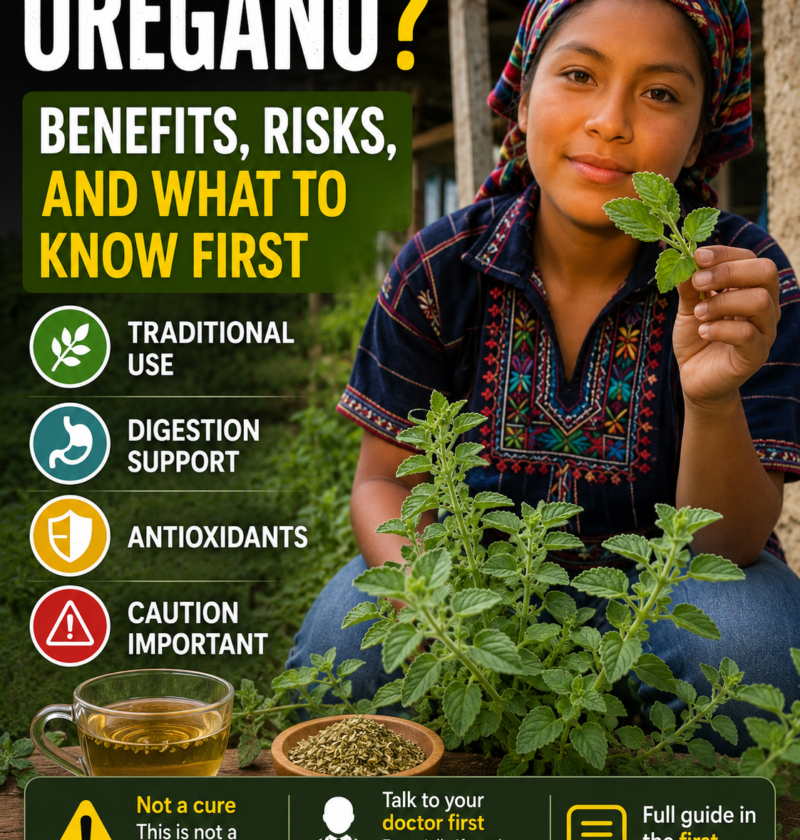
⚡ Oregano for Wellness? Benefits, Risks, and What to Know First
Oregano is getting a lot of attention online.
Some posts say it is stronger than lemon.
Some compare it to garlic.
Others claim it can kill bacteria, remove infections, fight fungus, or work like a natural antibiotic.
That sounds powerful.
But it is not the safe truth.
Oregano is a common herb.
It can be used in food, tea, and traditional wellness routines.
It contains plant compounds and antioxidants.
It may support a healthy eating pattern.
But oregano is not a cure.
It is not a treatment for infection.
It does not replace antibiotics, antifungal medicine, or medical care.
And oregano oil can be strong, irritating, and unsafe for some people.
Before using oregano as a daily wellness routine, it is important to understand the benefits, risks, and what to know first.
🌿 Why Oregano Became Popular Online
Oregano is familiar.
Many people use it in pizza, pasta, soups, salads, sauces, and herbal teas.
Because it is natural and aromatic, it feels like a powerful plant.
Some people also hear about oregano oil and assume it works like medicine inside the body.
That is where confusion starts.
Oregano as a food herb is different from oregano oil.
A sprinkle of dried oregano in food is not the same as taking concentrated oregano oil drops.
Oregano tea is not the same as a supplement capsule.
And no oregano routine should be promoted as a cure for bacteria, fungus, viruses, or disease.
The safest angle is simple:
Oregano may be part of a healthy diet.
Oregano oil needs caution.
Medical problems need medical care.
🍃 What Oregano May Offer as a Food Herb
Oregano is used around the world as a culinary herb.
It adds flavor without needing much salt or sugar.
That alone can make it useful in a balanced diet.
Oregano contains plant compounds, including phenols such as carvacrol and thymol, which are often studied for antioxidant activity.
But studies on plant compounds do not mean oregano cures disease in people.
There is a big difference between lab research and a safe human health claim.
As food, oregano may help people:
Add flavor to meals
Use less salt
Enjoy more home-cooked food
Add plant compounds to their diet
Make teas or soups feel soothing
Support a Mediterranean-style eating pattern
That is a safe, realistic way to talk about it.
🍵 Oregano Tea: What to Know
Oregano tea is usually made by steeping dried or fresh oregano leaves in hot water.
Some people drink it because it feels warm and soothing.
Others use it after heavy meals because they feel it supports digestion.
For many people, a mild herbal tea may be fine.
But it should not be described as medicine.
Oregano tea does not cure infection.
It does not remove fungus from the body.
It does not replace medical treatment.
And some people may not tolerate it well.
Possible issues include:
Stomach upset
Heartburn
Nausea
Allergic reaction
Mouth irritation
Medication concerns
If oregano tea causes discomfort, stop using it.
Wellness should not hurt.
⚠️ Common Online Claim / Safer Truth
| Common Online Claim | Safer Truth |
|---|---|
| Oregano kills bacteria and fungi in the body | Oregano is not a replacement for antibiotics or antifungal medicine |
| Oregano is stronger than lemon or garlic | This is a viral comparison, not a safe medical claim |
| Oregano tea cures infection | Infections need proper medical diagnosis and care |
| Oregano oil is safe because it is natural | Concentrated oregano oil can irritate skin, stomach, and interact with medications |
| Anyone can drink oregano daily | Some people should avoid medicinal amounts |
| More oregano means better results | More can increase side effects |
| Oregano can replace medicine | It should never replace prescribed treatment |
| Traditional use means risk-free | Traditional use does not guarantee safety for everyone |
🧴 Oregano Oil Is Different From Oregano Leaves
This is one of the most important points.
Oregano oil is concentrated.
It is much stronger than oregano leaves used in food.
Some oregano oils are essential oils.
Essential oils are not automatically safe to swallow.
They can irritate the mouth, throat, stomach, and skin.
They may also interact with medications.
WebMD notes that oregano may interact with medications that slow blood clotting and with diabetes medications. It also warns that oregano oil should be avoided in large amounts during pregnancy.
That is why the safe rule is:
Do not take oregano oil internally unless a qualified healthcare professional tells you it is safe for you.
💊 Medication Interactions: Ask First
Oregano may affect some medications.
This matters most when oregano is used in medicinal amounts, supplements, extracts, or oils.
Be careful if you take:
Blood thinners
Antiplatelet medication
Diabetes medication
Lithium
Diuretics
Blood pressure medication
Medication before surgery
Herbal supplements that affect bleeding
WebMD lists oregano as possibly interacting with blood-clotting medications and diabetes medications. It also advises avoiding oregano before surgery because it may affect clotting.
If you take daily medication, ask a pharmacist before using oregano oil or oregano supplements.
Food amounts in cooking are different from concentrated products.
🤰 Pregnancy and Breastfeeding Caution
Pregnancy and breastfeeding need extra caution.
Oregano as a food seasoning is usually different from medicinal amounts or oregano oil.
LactMed notes that oregano and oregano oil are generally recognized as safe as food ingredients, but it also says there is no data on the safety and effectiveness of oregano in nursing mothers or infants.
Large amounts, supplements, or oregano oil should not be used casually during pregnancy or breastfeeding.
Pregnant or breastfeeding people should ask a healthcare provider before using oregano oil, strong oregano tea, or oregano supplements.