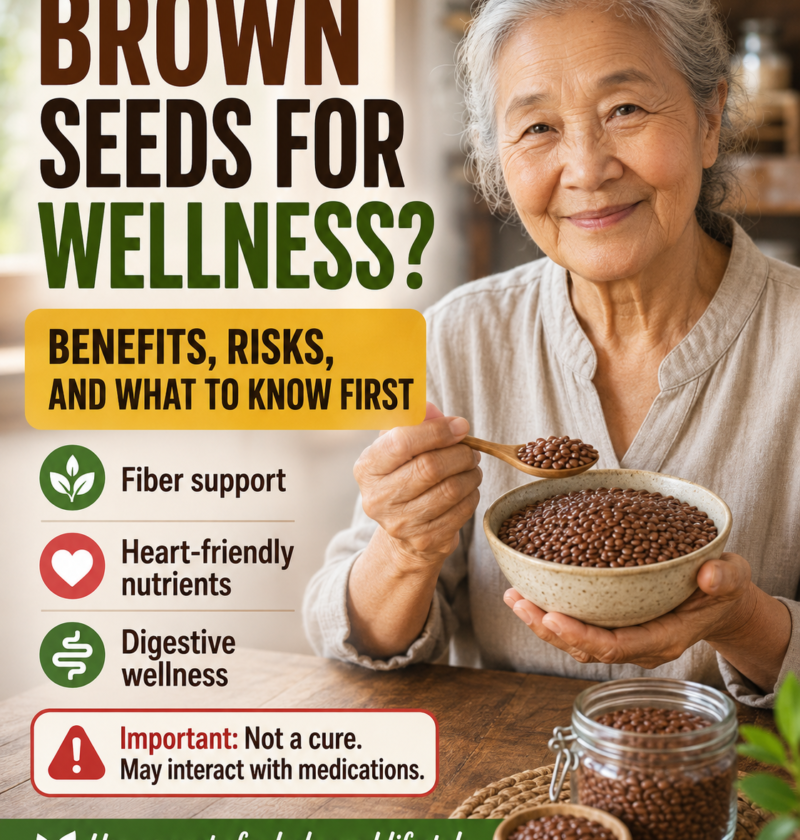
⚡ Brown Seeds for Wellness? Benefits, Risks, and What to Know First
Brown seeds are getting attention online again.
Some people add them to breakfast.
Some mix them into smoothies.
Some soak them in water.
Some sprinkle them on yogurt, oatmeal, or salads.
And many posts make these tiny seeds look like a secret for digestion, heart health, weight support, and daily wellness.
At first, it sounds simple.
A spoonful of seeds.
A bowl of warm food.
A natural routine.
A healthy-looking habit.
But before using brown seeds every day, there is one important thing to understand:
These seeds may support a healthy lifestyle.
But they do not cure everything.
They do not replace medicine.
And they are not safe for every person in every situation.
🌱 What Are These Brown Seeds?
In many wellness posts, the “brown seeds” are often flaxseeds.
Flaxseeds are small brown or golden seeds that come from the flax plant.
They are popular because they contain fiber, plant-based omega-3 fat, and lignans.
Mayo Clinic says flaxseed is commonly used to improve digestive health or relieve constipation, and it may help lower total cholesterol and LDL “bad” cholesterol levels.
That is why flaxseeds are often connected with:
- digestion
- fiber support
- cholesterol support
- heart-friendly eating
- fullness
- plant-based omega-3s
- balanced meals
- daily wellness
But there is a big difference between supporting health and curing disease.
Flaxseeds are food.
They are not magic.
⚠️ The Big Mistake Many People Make
The biggest mistake is believing that one seed can cure everything.
Some online posts say brown seeds can cure cancer, diabetes, high blood pressure, poor circulation, and hundreds of diseases.
That is not safe.
No seed should be promoted as a cure for serious disease.
No seed should replace prescribed medication.
No seed should replace cancer treatment, diabetes care, blood pressure medication, heart treatment, or medical advice.
The FDA explains that dietary supplement products cannot claim they are intended to diagnose, treat, cure, or prevent disease unless they are regulated as drugs.
So the safer message is simple:
Brown seeds may support a wellness routine.
But they are not a cure.
💧 Why Fiber Makes Flaxseeds Popular
One reason flaxseeds are popular is fiber.
Fiber helps support digestion.
It can help with regular bowel movements.
It can help people feel full longer.
It may also support cholesterol control as part of a healthy diet.
Mayo Clinic Health System explains that flaxseed contains fiber, lignans, and alpha-linolenic acid, a plant-based omega-3 fat; fiber can help relieve constipation, support cholesterol control, and keep you feeling full longer.
This is why flaxseeds are often added to:
- oatmeal
- yogurt
- smoothies
- whole-grain bread
- muffins
- salads
- soups
- cereal
- protein bowls
A small amount can make a meal more filling.
But too much at once can upset the stomach.
🍽️ Brown Seeds and Digestion
Many people use flaxseeds for digestion.
They may help some people feel more regular.
They may add fiber to low-fiber meals.
They may help replace processed snacks with something more nutrient-dense.
But digestion is not always simple.
Bloating, constipation, gas, stomach pain, or diarrhea can have many causes.
They may be connected to:
- low water intake
- low fiber intake
- stress
- medication
- food intolerance
- eating too fast
- gut conditions
- lack of movement
- dehydration
- too much fiber too quickly
So flaxseeds may help some people.
But they are not the answer for every stomach problem.
If digestive symptoms continue, the cause needs attention.
🥄 Why Ground Flaxseed Is Often Better Than Whole
Many people eat whole flaxseeds.
But whole seeds can sometimes pass through the digestive system without being fully broken down.
That means the body may not absorb as much from them.
Mayo Clinic notes that ground flaxseed is generally easier to digest than whole flaxseed, and whole seeds may pass through the intestine undigested.
That is why many people choose ground flaxseed.
You can buy it already ground.
Or you can grind whole seeds at home with a coffee grinder or food processor.
Ground flaxseed is easier to mix into foods.
It also makes the nutrients more available.
❤️ Brown Seeds and Heart-Friendly Eating
Flaxseeds are often discussed for heart health because they contain fiber and alpha-linolenic acid, a plant-based omega-3 fat.
They may support cholesterol levels as part of a healthy diet.
But this does not mean they replace heart medication.
They do not replace a doctor’s plan.
They do not fix high blood pressure overnight.
A heart-friendly lifestyle usually includes:
- balanced meals
- less added sugar
- less excess sodium
- regular movement
- healthy weight management
- enough sleep
- not smoking
- stress management
- regular checkups
- following medical advice
Flaxseeds can be one small part of that routine.
They are not the full treatment plan.
🍯 Should You Soak Brown Seeds?
Some people soak flaxseeds in water.
When soaked, they can become thick and gel-like.
This happens because flaxseeds contain mucilage, a type of soluble fiber.
Some people like this texture.
Others do not.
Soaked seeds may be easier for some people to add to drinks or recipes.
But soaking does not turn flaxseed into medicine.
It is still food.
If the texture bothers your stomach, use a smaller amount or add ground flaxseed to meals instead.
⚠️ Possible Side Effects
Flaxseeds are generally safe for many people when used in normal food amounts.
But they can still cause side effects.
Mayo Clinic says large amounts of flaxseed with too little water may cause bloating, gas, and diarrhea.
This is why water matters.
Fiber needs fluid.
If you suddenly add a lot of flaxseed without drinking enough water, your stomach may feel uncomfortable.
Start small.
Increase slowly.
Pay attention to your body.
🚫 Raw or Unripe Flaxseeds
This part matters.
Raw or unripe flaxseeds should be avoided.
Mayo Clinic says not to eat raw or unripe flaxseeds.
Most people buy flaxseeds from grocery stores or health food stores.
That is usually different from picking random seeds or using unknown seeds.
Use food-grade products from trusted sources.
Do not eat unknown seeds from random plants.