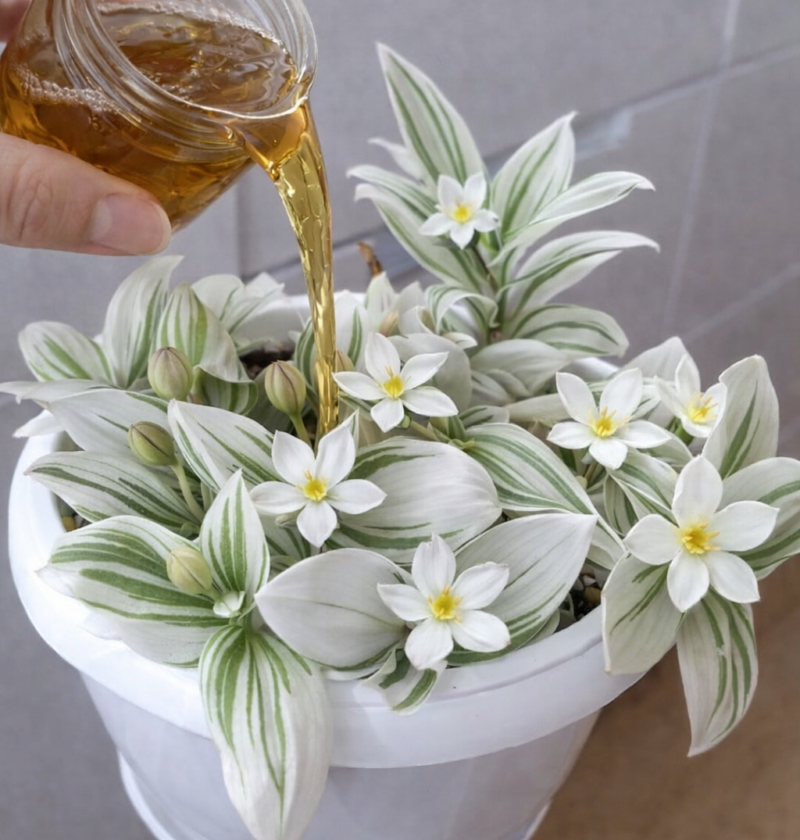
The Simple Rice Water Trick That Makes Indoor Plants Bloom Like Crazy
Indoor gardeners are always looking for safe, affordable ways to encourage stronger growth and more frequent blooms. While commercial fertilizers are widely available, many plant lovers are rediscovering a simple kitchen leftover that has been used in homes for generations: rice water.
Although rice water is not a miracle solution, when used correctly and in moderation, it can provide mild nutrients and beneficial starches that support soil microbes. Healthier soil biology often leads to stronger roots — and stronger roots naturally support better blooming performance indoors.
🌿 Why Rice Water Can Support Indoor Plants
When rice is rinsed or soaked, small amounts of starch, trace minerals, and nutrients are released into the water. This diluted solution can lightly nourish soil microorganisms, which help break down organic matter and improve nutrient availability.
- Contains small amounts of nitrogen and potassium
- Provides mild carbohydrate content
- Supports beneficial soil microbes
- Acts as a gentle supplemental feeding method
Healthy soil can encourage:
- ✔️ Stronger root development
- ✔️ Improved nutrient absorption
- ✔️ Thicker foliage
- ✔️ More consistent blooming cycles
According to Dr. Leila Nour, “Rice water is not a complete fertilizer, but in diluted form it may gently support soil activity, which plays an indirect role in plant health.”
✨ What Makes Indoor Plants Struggle to Bloom?
Before applying any natural booster, it’s important to understand why indoor plants may fail to flower.
- • Insufficient light
- • Overwatering
- • Nutrient imbalance
- • Compacted soil
- • Lack of seasonal feeding
Rice water works best when light, drainage, and basic care are already optimized.
🥄 Step-by-Step: How to Use Rice Water Safely
1. Rinse Uncooked Rice
Use the first rinse water from plain white or brown rice.
2. Strain the Liquid
Remove rice grains to prevent mold growth.
3. Dilute the Water
Mix 1 part rice water with 1–2 parts regular water.
4. Apply to Moist Soil
Never use on dry soil. Lightly water first if needed.
5. Use Once Every 3–4 Weeks
Moderation prevents buildup or fermentation.
6. Discard Leftovers
Use fresh; do not store for more than 24 hours.
📊 Safe Usage Guidelines Table
| Factor | Recommended Practice | Why It Matters |
|---|---|---|
| Dilution Ratio | 1:1 or 1:2 with water | Prevents overconcentration |
| Frequency | Every 3–4 weeks | Avoids starch buildup |
| Soil Condition | Well-draining mix | Reduces mold risk |
| Application Method | At root level only | Protects foliage |
⚖️ Rice Water vs Commercial Bloom Fertilizer
Rice Water
- Very low cost
- Mild nutrient contribution
- Gentle on sensitive roots
- Supports soil microbes
Commercial Bloom Fertilizer
- Precise nutrient ratios
- Stronger phosphorus levels
- Faster visible results
- Higher risk of root burn if misused
For indoor plants like peace lilies, orchids, and African violets, gentle feeding combined with proper lighting often yields the best long-term results.
🚫 Common Mistakes to Avoid
- Using salted rice water
- Applying weekly
- Letting rice water ferment
- Using on waterlogged soil
- Replacing balanced fertilizer entirely
Professor Mark Benson explains, “Natural kitchen solutions can support plant care, but they must complement proper lighting and balanced feeding routines.”
❓ Rice Water FAQ
- Can rice water replace fertilizer?
No, it supplements but does not replace balanced nutrition. - Is it safe for all indoor plants?
Most tolerate it in diluted form. - Does it cause mold?
Only if overused or applied to poorly draining soil. - Can I use boiled rice water?
Yes, if unsalted and cooled. - How soon will I see blooms?
Results vary depending on overall plant health. - Is brown rice better?
Both can work when diluted properly. - Can I use it on orchids?
Yes, lightly and infrequently. - Should I filter it?
Yes, remove rice particles. - Can I mix with fertilizer?
Avoid combining on the same day. - Does it smell?
Fresh rice water should not have a strong odor.