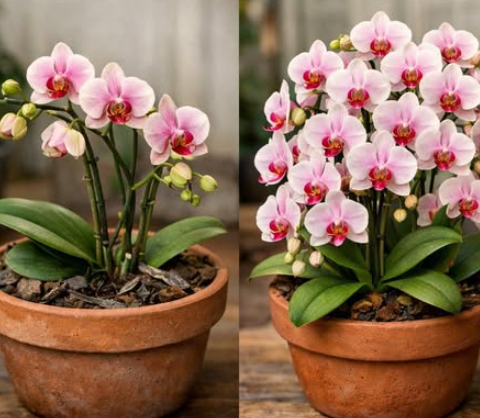
The Orchid Coffee Method: What Most Growers Get Wrong
Orchids have a reputation for being delicate, mysterious plants that require special treatment. In reality, most orchid problems stem from overcare rather than neglect. Among the many trending plant hacks circulating online, one stands out: the “orchid coffee method.” Some growers swear by it. Others warn against it. The truth lies somewhere in between.
Coffee can play a role in orchid care — but not in the way most people assume. Used incorrectly, it can damage roots and disrupt delicate growing media. Used thoughtfully, in very diluted form and under the right conditions, it can complement an already balanced routine. Understanding what most growers get wrong is the key to using this method safely.
⸻
🌿 Why Orchids Are Different from Other Houseplants
Unlike typical houseplants, many popular orchids (such as Phalaenopsis types) grow naturally on trees in tropical environments. Their roots are exposed to air, light, and fast-draining conditions.
Orchids require:
✔️ Excellent airflow around roots
✔️ Fast-draining bark-based media
✔️ Indirect bright light
✔️ Controlled watering cycles
✔️ Gentle, diluted feeding
Treating orchids like standard soil plants is the first mistake many growers make.
⸻
✨ What Most People Get Wrong About Coffee
The biggest misconception is that pouring leftover coffee directly into orchid pots will “boost blooming.” Fresh coffee is acidic and concentrated. Orchid roots are sensitive and can easily burn under strong solutions.
Common mistakes include:
• Using undiluted brewed coffee
• Applying too frequently
• Pouring over dry roots
• Using sweetened or flavored coffee
• Ignoring drainage
Orchids prefer mild, diluted feeding — not strong organic residues.
⸻
🥄 Step-by-Step Routine for Using Coffee Safely
1. Only Use Plain Black Coffee
No sugar, milk, or flavoring. Additives can cause mold and root damage.
2. Dilute Heavily
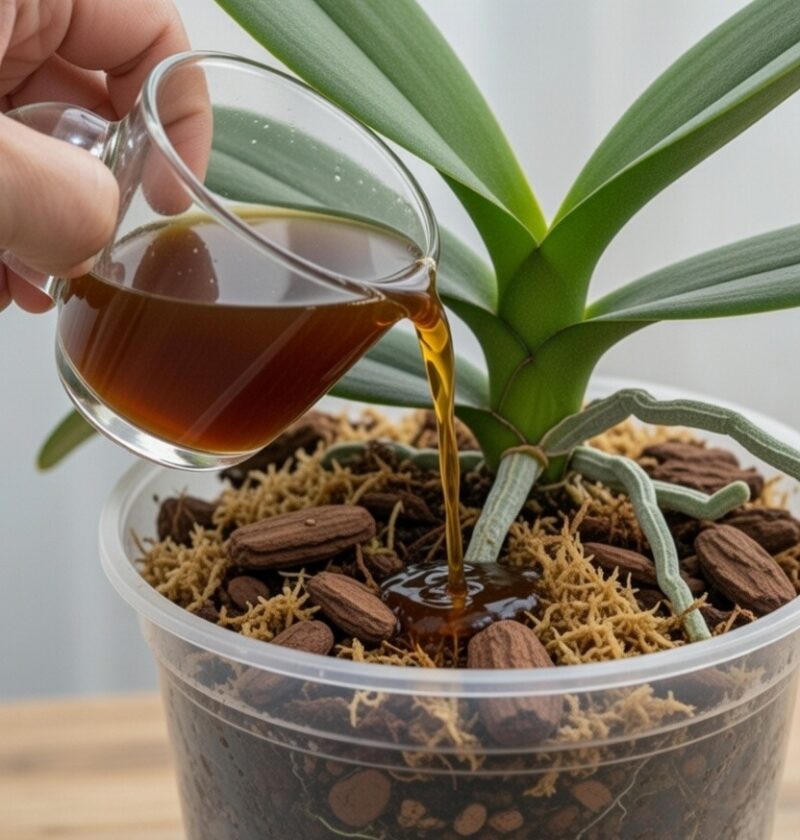
Mix one part cooled coffee with three to four parts water. The solution should be very light in color.
3. Apply During Active Growth
Use only in spring or early summer when orchids are producing leaves or roots.
4. Water First with Plain Water
Moisten the bark medium before applying diluted coffee solution to prevent root shock.
5. Allow Full Drainage
Never let orchids sit in liquid. Empty saucers completely.
6. Use Sparingly
Once every 4–6 weeks is more than enough.
Less is always safer when experimenting with natural supplements.
⸻
📊 Plant Care Table — Orchid Feeding Balance
Factor | Ideal Setup | Why It Helps
Light | Bright, indirect | Supports flowering cycles
Watering | Soak and drain method | Prevents root rot
Medium | Bark-based mix | Encourages airflow
Fertilizing | Weak, diluted solution | Protects sensitive roots
Humidity | 40–60% | Mimics tropical conditions
Frequency | Light monthly feeding | Avoids buildup
Balanced care supports blooms more than any single “hack.”
⸻
❓ Plant Care FAQ (Garden Section)
1. Does coffee guarantee orchid blooms?
No, light and maturity are more important.
2. Can coffee replace orchid fertilizer?
No, it lacks complete nutrients.
3. Is acidity harmful?
Strong acidity can stress roots.
4. Can I use coffee grounds instead?
Not recommended for bark-based media.
5. Should I test on one plant first?
Yes, always experiment cautiously.
6. What if roots turn brown?
Stop immediately and flush with water.
7. Does coffee increase leaf growth?
Only mildly when diluted properly.
8. Is rainwater better?
Yes, orchids prefer low-mineral water.
9. How often should orchids bloom?
Typically once a year under stable care.
10. Is skipping coffee safer?
Yes — orchids bloom well without it.
⸻
🌿 Premium Indoor Styling Transition
Orchids are more than houseplants — they are sculptural living accents. When cared for properly, their arching stems and delicate blooms elevate interiors with understated elegance. Healthy orchids reflect thoughtful, refined living.