How to Build a Cattle Panel Arch Tunnel for Cucumbers, Squash & Melons 🌿
If you’ve ever watched cucumber or squash vines sprawl across your garden and wished for a neater, more productive way to grow them—this is it. A cattle panel arch tunnel isn’t just functional; it transforms your garden into a vertical oasis with healthier plants, cleaner fruit, and easier harvesting.
This guide walks you through every step to build a DIY tunnel using cattle panels and T-posts—perfect for growing cucumbers, squash, and melons in less space, with better airflow and bigger yields. Let’s get building!
🌞 Step 1: Choose the Right Location
Your arch tunnel needs full sun—at least 6 to 8 hours per day—for the best results. Sunlight fuels flowering and fruiting, especially for fruiting vines like cucumbers and melons. Also choose a garden bed with good drainage to prevent root rot and fungal issues.
Tip: The arch can be placed over an existing path between two raised beds, or along a straight row—wherever your garden has room for a tunnel about 4–6 feet wide and 6–7 feet tall.
🛠️ Step 2: Drive T-Posts Deep Into the Soil
Use four heavy-duty T-posts—two on each side of the arch—to hold the cattle panel securely. Space each pair about 4–6 feet apart, depending on the width of your panel.
- ✅ Drive each post at least 12–18 inches into the ground
- ✅ Use a post driver or mallet for best results
- ✅ Ensure posts are vertically aligned and sturdy
This creates a strong base that can handle the weight of mature vines and fruit, especially for larger squash and melons.
🌀 Step 3: Bend and Secure the Cattle Panel
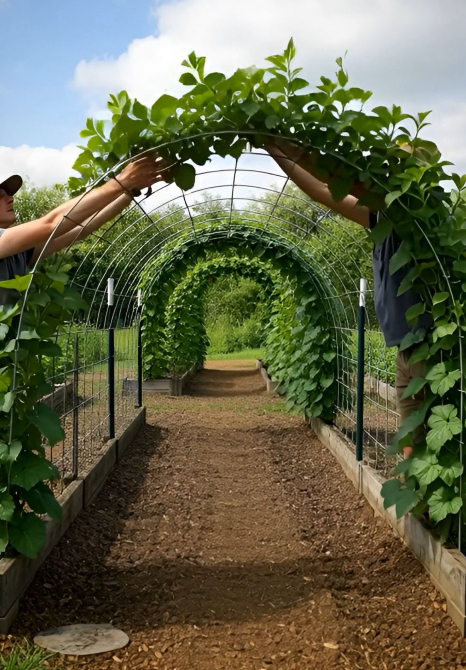
Carefully bend the cattle panel into an arch and position it between the T-posts. This part works best with two people. Attach the ends of the panel to each T-post using zip ties, wire, or U-bolts.
The final structure forms a tunnel-like arch that supports climbing plants while also creating a visually stunning focal point in your garden. Plus, cattle panels are strong enough to last many seasons.
🌱 Step 4: Plant Seedlings at the Base
Now it’s time to plant! Place cucumber, squash, or melon seedlings at the base of the arch on both sides. Give each plant enough room:
- 🥒 Cucumbers: 12 inches apart
- 🎃 Squash: 18–24 inches apart
- 🍈 Melons: 24 inches apart
Proper spacing improves air circulation, reduces disease risk, and allows each vine enough space to thrive and climb.
🧗 Step 5: Guide Young Tendrils Early
As the plants start growing, guide their first few tendrils gently onto the cattle panel. Early support and guidance help the vines establish a climbing habit—especially important for heavier crops like squash and melons.
Use soft garden ties or clips if needed, but most plants will naturally latch onto the panel as they grow.
⬆️ Step 6: Train Vines Up the Arch
Continue to train the vines vertically. As they grow, the arch will fill in, creating a lush, living tunnel that shades the soil and keeps fruit elevated off the ground.
Vertical gardening offers key benefits:
- ☀️ Improved sunlight exposure for every leaf
- 💨 Better airflow to reduce mildew and pests
- 🍃 Cleaner, healthier fruit (no soil contact)
- 📈 Increased yield per square foot
🧺 Step 7: Enjoy Easy Upright Harvesting
Once your plants begin to fruit, the arch makes harvesting a breeze. No bending, crawling, or searching through dense ground vines—fruits hang conveniently at eye level.
Melons and heavier squash may need support (like mesh slings or hammocks) as they develop to avoid stem breakage. Lightweight fruits like cucumbers and small squash won’t need extra help.
📊 Functional Value of Cattle Panel Arch Tunnels
| Feature | Benefit | Impact on Plant Health | Gardener Advantage |
|---|---|---|---|
| Vertical growth support | Encourages climbing vines to grow upward | Reduces disease and improves airflow | Saves ground space |
| Sturdy cattle panel | Lasts for years, supports heavy fruit | Minimizes breakage or sagging vines | Durable and cost-effective |
| Easy access | Fruits hang at eye level | Reduces damage from stepping or pests | Simple, no-bend harvesting |
| Airflow & sun exposure | Improves drying and photosynthesis | Less powdery mildew and rot | Healthier, more productive plants |
❌ Common Mistakes to Avoid
- ❌ Choosing a shady spot: Cucumbers, squash, and melons all need full sun to thrive.
- ❌ Planting too close together: Overcrowding reduces airflow and increases disease risk.
- ❌ Skipping early training: If vines aren’t guided early, they’ll sprawl or snap.
- ❌ Not securing the arch: An unstable tunnel can collapse under the weight of fruit-loaded vines.
- ❌ Forgetting fruit support for melons: Large fruits need cradling to avoid damage.
❓ Frequently Asked Questions (FAQs)
1. How much does it cost to build a cattle panel arch tunnel?
Most gardeners can build one for $30–$70. Cattle panels typically cost $20–$30, and T-posts are around $5–$10 each. Zip ties or wire are inexpensive.
2. What are the dimensions of a standard cattle panel?
Standard panels are 16 feet long by 50 inches tall. When bent into an arch, the structure is about 6–7 feet tall in the center and 4–6 feet wide.
3. What crops grow best on an arch tunnel?
Cucumbers, pole beans, indeterminate tomatoes, squash (summer and winter), and melons. Avoid bush-type or low-vine crops.
4. Can this setup handle heavy melons?
Yes, with support. Use mesh bags, slings, or old pantyhose to cradle large fruits as they develop.
5. Do I need special tools?
No fancy tools needed. A post driver or mallet, wire cutters, and heavy-duty gloves are helpful but optional.
6. How long does it take to build?
With two people, the full setup can be installed in about 30–60 minutes.
7. Does the arch need to be dismantled every season?
Nope! Cattle panels are weather-resistant and can stay up year-round, or be moved seasonally if needed.
8. Will it work in a raised bed?
Absolutely. Place T-posts inside or alongside the bed for support. Just ensure the panel is stable and anchored well.
9. Can I plant on both sides?
Yes! That’s one of the biggest benefits. Doubling up increases yield without increasing your footprint.
10. Is it kid- or pet-safe?
Yes, if built securely. Always clip sharp edges and keep the base clear for walking access.
🍽️ Harvest & Recipe Ideas
Once your arch is producing, use your fresh cucumbers in cool cucumber salads, grill your squash into savory skewers, or turn melons into refreshing summer smoothies. Homegrown produce never tasted so sweet!
✅ Final Thoughts: Why a Cattle Panel Arch Tunnel Belongs in Every Garden
Whether you’re a first-time gardener or a seasoned grower, a cattle panel arch is one of the smartest investments for growing vertical crops. It saves space, reduces disease, supports heavier fruits, and makes gardening more enjoyable and productive.
If you’re ready to turn wasted ground space into a lush, vertical harvest tunnel—grab a panel, bend it into place, and watch your garden transform 🌿