Potato Towers: How to Grow More Potatoes in Less Space 🥔
Dreaming of a bountiful potato harvest but short on garden space? You’re not alone. Most home gardeners face the same challenge—how to grow more food in less room. The good news? You don’t need acres of land to grow a mountain of delicious, homegrown potatoes.
Enter the potato tower—a brilliant, space-saving gardening method that allows you to grow vertically instead of outward. In this detailed guide, you’ll learn how to build one, why it works so well, and how to avoid common beginner mistakes. Let’s dig in! 🌱
🥔 What Is a Potato Tower?
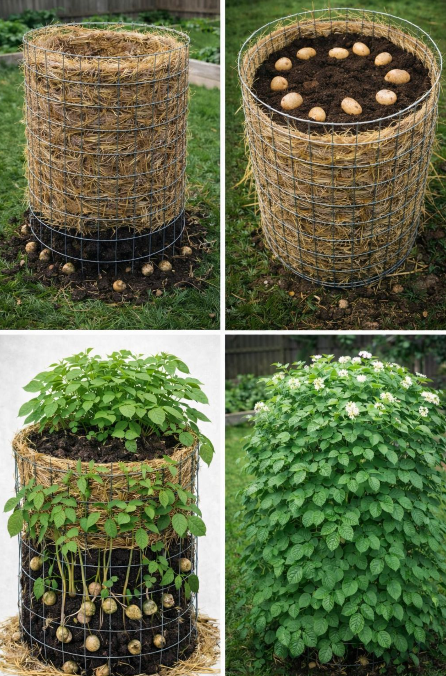
A potato tower is exactly what it sounds like: a vertical structure, usually made from wire mesh or fencing, filled with layers of soil, straw, and seed potatoes. Instead of planting in rows across a large bed, you stack growth upward—making it ideal for small yards, patios, or even balconies.
This technique is based on the natural growth behavior of potato plants. When covered with loose soil and straw, potato stems can produce tubers along their buried lengths—meaning the more you build up, the more potatoes you can harvest.
🔨 How to Build a Potato Tower (Step-by-Step)
1. Build the Structure
Start by forming a cylinder using wire mesh, chicken wire, or hardware cloth. A height of 2–3 feet and a diameter of 2–3 feet is usually ideal for home gardeners. Secure the ends using zip ties, garden wire, or sturdy clips.
💡 Pro Tip: Place your tower on well-draining ground or atop a raised bed tray to catch runoff and simplify cleanup.
2. Create a Strong Base Layer
Add a 6–8 inch layer of rich, well-draining soil or compost at the bottom. This is where you’ll plant your seed potatoes. Arrange them near the outer edge of the tower, eyes facing outward. This placement encourages outward growth and makes future harvesting easier.
3. Add Soil + Straw in Layers
Once sprouts begin to emerge, gradually add alternating layers of soil and straw as the plant grows. Keep the center fairly loose and avoid over-packing the tower, as potatoes grow best in airy, well-ventilated media.
Straw provides insulation, promotes drainage, and helps prevent rot. Soil delivers the nutrients. The combination is key.
4. Let the Plants Grow Upward
Each time the plants grow 6–8 inches taller, repeat the layering process—this stimulates the buried stem sections to produce even more tubers. Continue layering until the tower is full or your plants stop growing vertically.
5. Harvest Without Digging
When the plants yellow and die back (usually after 80–100 days), it’s harvest time. Simply unfasten the mesh or lift the tower away and remove potatoes layer by layer.
No back-breaking digging. No guessing where the potatoes are. Just delicious, homegrown results!
📊 Potato Tower Benefits at a Glance
| Benefit | How It Helps | Impact on Yield | Space Efficiency |
|---|---|---|---|
| Vertical stacking | Uses vertical space instead of horizontal | High (2–4x standard bed) | Excellent for patios or small yards |
| Layered soil & straw | Encourages tuber growth along stem | Increases potato count per plant | Optimized root environment |
| Controlled soil mix | Great for poor or compacted native soil | Consistent growth | Customizable drainage and nutrition |
| Easy access | Side access for maintenance and harvest | Reduces damage during digging | Less tool use, more efficiency |
🧠 Common Mistakes When Building Potato Towers
Even though potato towers are beginner-friendly, there are a few mistakes that can reduce your harvest:
- ❌ Filling the tower too fast: If you add too much soil/straw early on, your plants may not have enough light or oxygen. Let them grow in stages.
- ❌ Poor drainage: If your tower is sitting on a non-draining surface, the bottom layers can become waterlogged.
- ❌ Overcrowding: Too many seed potatoes can lead to cramped growth and smaller tubers. Stick with 3–5 per layer depending on size.
- ❌ Wrong potato variety: Not all types produce well in vertical towers. See the next section for the best picks.
🥇 Best Potato Varieties for Towers
- Yukon Gold: Creamy texture, reliable yield, and fast growth
- Red Pontiac: Great for moist soils, grows well with straw layers
- Fingerlings: Slender, high-density crops perfect for towers
- Russet: Classic baking potato—use a deeper tower for best results
🔍 Tip: Very early-maturing potatoes tend to produce fewer layers of tubers, so choose mid- to late-season types for maximum stacking potential.
❓ Frequently Asked Questions (FAQs)
1. How much does it cost to build a potato tower?
Most gardeners can build one for under $20 using basic wire mesh, soil, straw, and seed potatoes. Repurposing materials can reduce the cost even further.
2. How tall should a potato tower be?
Most home towers are 2–3 feet tall. Taller towers (4 feet) are possible but require more careful layering and support.
3. Can I use just soil or just straw?
Using both is best. Straw helps prevent rot and compaction, while soil delivers nutrients. All-straw towers often result in smaller harvests.
4. Do I need to fertilize?
Yes—use organic compost or a balanced slow-release fertilizer to maintain nutrition. Potatoes are heavy feeders.
5. What’s the best time to plant a tower?
Spring, after the last frost. In mild climates, some gardeners plant in early fall for a winter harvest.
6. Can I grow potatoes in towers indoors?
Not recommended. Potatoes need full sun and ample airflow. Indoor lighting is rarely strong enough.
7. How do I water a potato tower?
Water deeply from the top, and make sure it drains through all layers. Avoid daily light watering—it won’t reach the roots.
8. Can I reuse the soil next year?
It’s better to compost or rotate the soil. Potatoes deplete soil nutrients and may harbor pests if reused without treatment.
9. Are towers good for poor soil areas?
Yes! You completely control the soil mix in the tower, making it ideal for areas with clay, sand, or poor fertility.
10. How many potatoes can I harvest from one tower?
Yields vary, but a well-maintained tower can produce 10–20+ pounds of potatoes depending on size and variety.
🍽️ What to Do With Your Homegrown Potatoes
After harvest, try using your potatoes in hearty stews, crispy oven fries, or creamy mashed potato bakes. Check out this collection of comforting potato recipes to put your garden bounty to use!
✅ Final Thoughts: Are Potato Towers Worth It?
If you’re short on space but big on garden goals, potato towers are one of the best small-footprint methods you can try. They offer high yields, easy harvesting, and better pest and rot resistance compared to in-ground beds.
With a little planning and a few basic materials, you could be harvesting your own homegrown potatoes in just a few months—no backyard required. Give it a try this season and enjoy the satisfaction of pulling perfect potatoes out of your very own tower! 🥔🌿