🌳 Grow an Almond Tree at Home From Seed — It’s Easier Than Most People Think
Have you ever thought about growing your own almond tree — not from a nursery sapling, but from a raw almond seed? It might sound complicated, but with a few simple steps and some patience, you can grow a beautiful almond tree right in your backyard. From selecting the perfect seed to harvesting your first nuts, this guide walks you through the easiest and most natural way to grow almonds at home — even if you’re a beginner.
🌰 Step 1: Get Almond Seeds (And Prepare Them Properly)
The first step to growing an almond tree is getting the right kind of almonds — and preparing them for sprouting.
✅ Selecting Almond Seeds
- Choose raw, unroasted, unsalted, and untreated almonds.
- Do not use almonds from grocery stores that are roasted or pasteurized — they won’t sprout.
- If you have access to a producing almond tree, seeds from fresh nuts are ideal.
❄️ Stratification: The Cold Treatment
Almond seeds require a period of cold to trigger germination, simulating winter dormancy. Here’s how to stratify:
- Soak almonds in water for 48 hours.
- Wrap them in a moist paper towel.
- Place the towel in a plastic zip-top bag and refrigerate for 4–6 weeks.
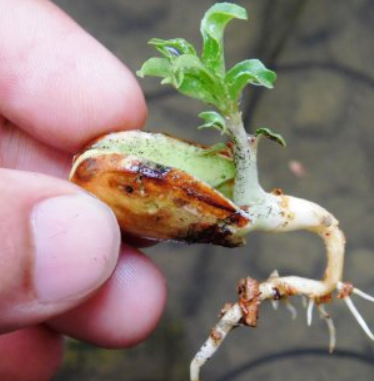
- Check weekly for signs of sprouting (a tiny root emerging).
🌱 Step 2: Planting the Almond Seed
Once your almond seeds have sprouted, it’s time to get them into the soil.
📅 When to Plant
Spring is ideal — after the last frost — to give your seedling the best chance at survival.
🌾 Soil Preparation
- Use well-draining soil with a neutral pH (6.0–7.5).
- Amend soil with compost or aged manure to improve fertility.
- If using containers, choose one that is at least 10–12 inches deep.
🌞 Planting Location
Almond trees thrive in full sun — aim for at least 6–8 hours per day. Space trees 15–20 feet apart if planting multiple.
🌱 Planting Method
- Dig a hole 2–3 inches deep.
- Place the sprouted seed with the root facing down.
- Cover lightly with soil and water thoroughly.
🌿 Step 3: Caring for Your Almond Tree
Almond trees are relatively low-maintenance but need proper care in the early years.
💧 Watering
- Water young trees regularly — about 1–2 times per week depending on rainfall.
- Mature trees need less frequent watering but benefit from consistent moisture.
✂️ Pruning
- In the first 2 years, focus on shaping the tree with a strong central leader and balanced branches.
- Prune annually in late winter to remove deadwood and allow light penetration.
🌱 Fertilizing
- Use a balanced organic fertilizer (such as 10-10-10) during the growing season.
- Apply in early spring and again in mid-summer.
🛡️ Step 4: Protecting the Tree
🐞 Pests and Diseases
Watch out for:
- Aphids and scale insects: Use neem oil or insecticidal soap.
- Fungal infections: Promote airflow with pruning and avoid overhead watering.
❄️ Winter Protection
Young almond trees can suffer from frost damage in cold climates.
- Apply 2–3 inches of mulch around the base (but not touching the trunk).
- Use tree wraps or burlap for added insulation in zones below USDA Zone 7.
📊 Almond Tree Growth & Care Table
| Stage | Action | Timeframe | Notes |
|---|---|---|---|
| Seed Preparation | Stratify almonds in fridge | 4–6 weeks | Use moist paper towel in plastic bag |
| Planting | Plant sprouted seed 2–3 inches deep | Spring | Full sun location, rich soil |
| Watering | Water young tree 1–2x weekly | Year 1–2 | Keep soil moist, not soggy |
| Pruning | Shape and thin branches | Annually | Late winter best time |
| Harvesting | Collect mature almonds | Year 3–6+ | Harvest late summer to early fall |
🌾 Step 5: Harvesting Almonds
📅 When to Expect Nuts
Almond trees typically begin producing nuts in their third or fourth year, with full production around year 5 or 6.
🍂 Signs of Ripeness
- The green hull splits open to reveal the almond shell.
- Shells dry and fall or are easily removed.
🌬️ Drying Your Almonds
- Spread the harvested almonds on a tray in a cool, dry location.
- Allow them to air-dry for 5–7 days before storage.
🍽️ Step 6: Enjoying the Rewards
- Roasting: Toss almonds with a little oil and salt, then roast at 350°F for 10–15 minutes.
- Cooking & Baking: Use your homegrown almonds in granola, desserts, or nut butter recipes.
- Spring Blossoms: Almond trees produce beautiful pink-white blossoms — a visual reward each spring.
🚫 Common Mistakes to Avoid
- ❌ Using pasteurized almonds — they won’t sprout.
- ❌ Overwatering — can cause root rot in seedlings.
- ❌ Planting in shade — almond trees need full sun.
- ❌ Ignoring pruning — leads to disease-prone, tangled branches.
- ❌ Skipping winter protection in cold climates.
❓ 10 FAQs About Growing Almond Trees from Seed
1. Can I grow an almond tree indoors?
Almond trees need full sun and space, so outdoor growing is best. However, young seedlings can start indoors near a sunny window.
2. How long does it take for almonds to produce nuts?
Usually 3–4 years for the first harvest; 5–6 years for full production.
3. Do almond trees need to be pollinated?
Yes, most require cross-pollination, so plant at least two different almond trees for best results.
4. What climate is best for almond trees?
Warm, dry climates (USDA Zones 7–9) are ideal. Avoid overly humid or frosty regions.
5. Can I grow almonds in containers?
Young trees can grow in containers, but mature trees need to be planted in the ground due to their size.
6. How do I protect my almond tree in winter?
Use mulch, wraps, and wind protection for young trees in colder zones.
7. Can I use store-bought almonds to grow a tree?
Only if they’re raw, organic, and unpasteurized — most grocery store almonds won’t germinate.
8. How much water do almond trees need?
Young trees need regular watering; mature trees are drought-tolerant but benefit from deep watering every 1–2 weeks.
9. What fertilizer works best for almond trees?
A balanced organic fertilizer (like 10-10-10) during the growing season is ideal.
10. Are almond blossoms edible?
While the blossoms are not commonly eaten, they are safe and occasionally used for decoration or infusions.
🌟 Final Thoughts: Grow Your Almond Tree with Confidence
Growing an almond tree from seed is a journey of patience and reward. From the delicate pink blossoms in spring to the satisfying crunch of a homegrown nut in fall, each stage offers beauty and purpose. With a bit of care, sunlight, and time, you can turn a humble almond seed into a productive, eye-catching tree that feeds your family and enhances your garden. So grab a raw almond, start the stratification process, and let nature work its magic — one seed at a time.