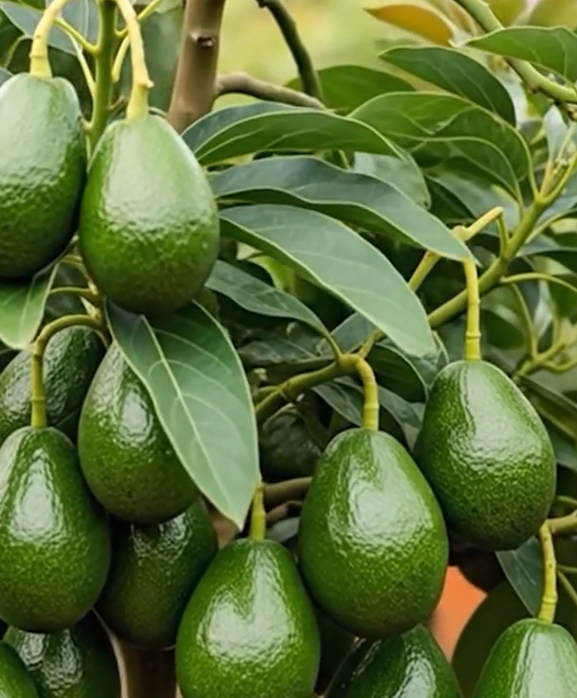
Can You Grow Avocados to Make Thousands of Dollars? A Realistic Home‑Garden & Small‑Orchard Plan 🍈
Dreaming of lush avocado trees in your backyard — or even a small‑scale orchard that could bring income? Avocados are undeniably valuable: tasty, nutritious, and globally in high demand. But transforming that dream into profit takes more than simply planting a pit or a cutting. With the right knowledge, planning, and realistic expectations, it’s possible to grow avocado trees that yield fruit — and, if you expand carefully, even generate a decent return. This article walks you step by step through what works, what’s risky, and how you might build a modest avocado‑growing venture. ⚠️
Why Avocado? Nutrition, Demand & Market Potential
The fruit Avocado (scientific name Persea americana) is celebrated worldwide for its creamy texture, rich flavor, and nutrient‑dense profile. The flesh is high in healthy monounsaturated fats, fiber, vitamins (especially vitamin E, vitamin C, and some B vitamins), minerals like potassium, and antioxidants — making it a staple in health‑conscious diets, vegetarian or not. :contentReference[oaicite:2]{index=2}
From a commercial perspective, demand for avocados has surged globally. Many producers rely on orchards that yield tonnes of fruit per hectare, supplying both domestic and export markets. :contentReference[oaicite:3]{index=3}
If you can cultivate avocado trees successfully — especially high‑quality varieties — you tap into a profitable niche. However, the path from seed or cutting to fruit to income is long, costly, and uncertain. Let’s break it down carefully.
How Avocados Are Normally Propagated — And Why It Matters
Understanding propagation is key to whether your avocado‑growing will succeed or fail.
Seed Propagation
- Growing from seed is the simplest method: plant an avocado pit, germinate it, and grow a seedling. This works fine for personal use or for growing trees as ornamentals or houseplants. :contentReference[oaicite:4]{index=4}
- However: trees from seed often don’t produce fruit for a long time — often 5 to 13+ years after planting. :contentReference[oaicite:5]{index=5}
- Even when they fruit, the offspring may differ from the parent in fruit quality, yield, and other traits — because of genetic variation. :contentReference[oaicite:6]{index=6}
Vegetative Propagation (Cuttings, Grafting, Air‑Layering)
For commercial avocado production and consistent fruit quality, most growers rely not on seeds but on vegetative propagation: cloning a desirable variety so the offspring is genetically identical to the parent. :contentReference[oaicite:7]{index=7}
- Grafting: The most widely used method — a scion (branch) from a fruit‑producing tree is grafted onto a seedling rootstock. This combines a strong root system with the fruiting attributes of the parent. :contentReference[oaicite:8]{index=8}
- Air‑layering or marcotting / layering: A branch is induced to root while still attached to the parent tree, then separated — sometimes used when cuttings/rooting give poor results. :contentReference[oaicite:9]{index=9}
- Cuttings: Directly planting a stem cutting and expecting it to root — the simplest‑sounding method — but for avocado, this method historically has low reliability and is rarely used commercially. :contentReference[oaicite:10]{index=10}
In short: propagation method matters a lot. If you want fruit and especially fruit of reliable quality, seed is slow and variable; cuttings are risky and unreliable; grafting or layering remains the standard among producers. :contentReference[oaicite:11]{index=11}
What the Research & Grower Experience Says About Cuttings vs Grafting
Let’s compare the propagation methods more concretely, based on horticultural research and commercial experience.
Challenges of Cuttings for Avocado
- For many fruit tree species, rooting cuttings works well; but for avocado, the success rate is notoriously low. Many cuttings simply fail to survive or remain too weak to produce healthy trees. :contentReference[oaicite:12]{index=12}
- Even when a cutting roots, the root system tends to be weaker or less well adapted than a seed‑rooted rootstock — which can impact long‑term tree health, stress resistance, and yield. :contentReference[oaicite:13]{index=13}
- Because success is unpredictable, cuttings are rarely used in commercial production or large orchards. :contentReference[oaicite:14]{index=14}
Why Grafting and Layering Are Favored
- Grafting combines a vigorous root system (from seedling rootstock) with a desirable fruit‑producing branch (scion), giving both hardiness and fruit quality. :contentReference[oaicite:15]{index=15}
- A well‑grafted avocado tree can begin producing fruit in 3–4 years after planting (depending on variety, climate, and care) — far faster than seed‑only trees. :contentReference[oaicite:16]{index=16}
- Layering (air‑layering) or marcotting offers another vegetative option: rooting a branch while still attached. This can improve chances relative to free cuttings. :contentReference[oaicite:17]{index=17}
Because of these advantages, almost all commercial avocado orchards worldwide rely on grafted or layered trees, not cuttings. :contentReference[oaicite:18]{index=18}
What to Expect: Timeline, Yield & Profitability if You Start Small
Let’s step through what realistically happens if you start — whether as hobby gardener, small orchard hopeful, or someone eyeing modest profit.
Timeline from Planting to First Harvest
- If you plant a seed (pit): Expect 5 to 13+ years before first fruit — and even then, fruit quality and yield are uncertain. :contentReference[oaicite:19]{index=19}
- If you plant a grafted sapling or layered tree: You could see fruit within 3–4 years under good conditions (sunlight, soil, water, care). :contentReference[oaicite:20]{index=20}
- If you try rooting from cuttings: Many cuttings may fail; if one succeeds, it may take years and the root system may be weak — making fruiting uncertain and likely delayed. There’s no guarantee. :contentReference[oaicite:21]{index=21}
Yield — What’s Realistic (and Risky)
According to a cost‑study of a high‑density orchard setup (430 trees per acre), once trees reach bearing age, yields per acre averaged about 16,220 lbs (≈ 7.35 metric tonnes), with significant annual variation depending on weather and alternate‑bearing cycles. :contentReference[oaicite:22]{index=22}
That kind of yield, if scaled properly and managed carefully, can generate solid returns. The same study estimated after costs a “returns to management” of ~$6,260 per acre — though this depends heavily on yield, price, water costs, labor, and other inputs. :contentReference[oaicite:23]{index=23}
But — important caveats:
- That result assumes a well‑established orchard, optimal irrigation, soil, pest control, and good climatic conditions. Many small growers or hobbyists won’t match those conditions.
- Young orchards (first 3–5 years) often yield little or none. Investment is front‑loaded — time, water, soil preparation, pruning, grafting/layering, etc.
- Water use for avocado is high compared to many crops, and in some areas water scarcity or cost can be a serious limiting factor. :contentReference[oaicite:24]{index=24}
- Market, transport, post-harvest handling, pests/diseases, and inconsistent yield (alternate bearing, climate stress) add risk. :contentReference[oaicite:25]{index=25}
What If You’re Starting at Home — Small Garden or Indoor / Pot Setting
Not everyone wants—or can—to manage an acre orchard. Maybe you just want a few trees for family consumption, or a small backyard orchard. That’s a more modest but often more realistic goal. Here’s what you should know:
- Avocado can be grown in pots or containers, especially when young — ideal for balconies or small yards. :contentReference[oaicite:26]{index=26}
- Growth will be slower, and fruiting may be delayed or may never happen — especially if light, soil, or watering isn’t optimal. :contentReference[oaicite:27]{index=27}
- If your climate is not tropical or Mediterranean (hot, frost‑free, well‑draining soil, consistent sunlight), the chances of fruiting drop significantly. Avocados are sensitive to cold and need good care. :contentReference[oaicite:28]{index=28}
- In a pot or small garden, treat avocado mostly as a decorative / occasional fruit source — not as a business.
What About “All‑Natural” Methods — Cuttings, Home‑Made Rooting Hormones, etc.?
You may have seen many online claims: use red onion, aloe vera, sand, or other home‑made solutions to root avocado cuttings. Sounds appealing: easy, cheap, chemical‑free. But here’s what research and experienced growers actually show:
- While vegetative propagation works for many fruit trees (like figs, olives, etc.), for avocado cuttings the success rate is low and unreliable. Multiple horticultural sources note that cuttings are not commercially viable for avocado. :contentReference[oaicite:29]{index=29}
- Even if a cutting roots, the root system is often weaker than what a properly grafted rootstock gives — which reduces long-term resilience, yield potential, and disease resistance. :contentReference[oaicite:30]{index=30}
- Because of that low reliability, most serious growers and commercial producers avoid cuttings altogether — favoring grafting or air‑layering for consistent, healthy trees. :contentReference[oaicite:31]{index=31}
In short: using “natural rooting stimulants” may work occasionally, but you should treat them as experimental. If your goal is a serious or profitable avocado orchard — don’t count on it.
How You Should Do It — Recommended Method for Home Growers or Small‑Scale Orchardists
If I were starting from scratch — trying to grow avocado trees to eventually harvest fruit (and maybe earn some money) — here is a plan I’d follow. It combines best practices from horticulture with realistic expectations.
- Choose the right propagation method: Get a grafted sapling from a reputable nursery, or use air‑layering / grafting yourself if you have experience. This gives you a strong root system and reliable fruiting potential. Avoid depending on cuttings.
- Start small — a few trees first: Plant maybe 5–10 trees (or even just 1–2) in good soil, with proper drainage, irrigation, and shelter from extreme conditions. Treat this as a long-term investment.
- Ensure optimal conditions: Avocados thrive in well‑draining loamy soil with good aeration; adequate water (but avoid waterlogging); full sun (or at least many hours of sunlight); protection from frost/heat extremes; and regular pruning / care. :contentReference[oaicite:32]{index=32}
- Be patient: Expect 3–4 years (or more) before fruit — maybe longer depending on local climate, care, and cultivar. Don’t expect profits soon.
- Manage orchards properly: If scaling up, pay attention to irrigation cost, pest and disease control (especially root rot caused by pathogens like Phytophthora cinnamomi), soil health, and post‑harvest handling. :contentReference[oaicite:34]{index=34}
- Plan finances conservatively: Budget for establishment costs (saplings, soil preparation, irrigation system, labor), ongoing maintenance (water, fertilisers, pruning, pest control), and delayed return on investment — possibly 4–6 years before net profit. Use yield estimates cautiously.
- Consider scale & market: Unless you have enough land and favorable conditions, treat avocado as a side income or home‑garden benefit — not a quick money‑making scheme. If you scale up, ensure you have access to buyers/market, transport, storage, and compliance with local regulations.
Potential Earnings & What “Thousands of Dollars” Really Means — A Reality Check
Let’s run through a hypothetical scenario — based on data from a high‑density commercial planting — but tuned to a modest, small‑scale plan. 🧮
According to a detailed study of high‑density avocado planting (430 trees per acre), over several years the average yield per acre was ~16,220 lbs (≈ 7.35 tonnes). :contentReference[oaicite:35]{index=35} If the market price is favorable and costs are controlled, the study estimates “returns to management” of around US$6,260 per acre per year (after costs). :contentReference[oaicite:36]{index=36}
But to achieve that — you need:
- High‑density planting with many trees (hundreds per acre).
- Perfect or near‑perfect growing conditions: soil, water, climate, pest/disease control, proper maintenance.
- Market access, good harvest handling, transport, and stable demand.
For a small backyard garden (say 5–10 trees), the numbers scale down dramatically. Suppose each mature tree (optimistically) produces 100–200 avocados per season (this varies wildly), and you manage to sell them. That might give only a modest income — perhaps enough to offset your water/maintenance costs, or a small “side income,” but not likely “thousands of dollars” a year. Especially after factoring in years without yield (while trees mature), the cost of saplings, labor, water, and risks.
Therefore: the “make thousands of dollars” dream is possible — but only under ideal conditions, with scale, and with readiness for delayed results. For most small‑scale growers, avocados remain a long‑term investment rather than a quick profit source. 🎯
Risks & Challenges You Should Be Aware Of
Growing avocado isn’t easy — even for experienced growers. Here are some of the main risks and challenges:
- Water demand & climate stress: Avocado trees require consistent water — drought or water scarcity can dramatically reduce yield. In water‑scarce regions, costs or restrictions may hinder production. :contentReference[oaicite:37]{index=37}
- Soil & disease risk — especially root rot: A major problem in avocado cultivation worldwide is root disease — especially from pathogens like Phytophthora species. Without proper soil drainage and hygiene, trees may fail. :contentReference[oaicite:38]{index=38}
- Long waiting period: From planting to first harvest can take multiple years; returns are not immediate. Patience and long‑term planning are essential.
- Market & price volatility: Global avocado markets fluctuate. Oversupply, transport costs, or poor demand can reduce profits. :contentReference[oaicite:39]{index=39}
- Maintenance cost & labor: Pruning, pest/disease control, irrigation, harvesting — all require work and possibly investment. For small growers, this can eat into profits. :contentReference[oaicite:40]{index=40}
- Environmental & sustainability concerns: In some regions, avocado cultivation has contributed to deforestation, high water use, and stress on local ecosystems — something to consider if aiming for ethical, sustainable farming. :contentReference[oaicite:41]{index=41}
Smart Strategies & Best Practices if You Grow Avocado at Home or Small‑Scale
If you decide to move forward — whether for home use or small orchard ambitions — these strategies can help reduce your risk and improve success rates:
- Use grafted or layered plants: Avoid relying on cuttings; instead start with grafted saplings or layer a healthy branch for better survival and consistent fruit quality.
- Ensure good soil drainage & root health: Plant in well‑draining soil with good aeration; avoid waterlogging; monitor for root diseases (especially if you live in a humid or wet region).
- Irrigate smartly: Provide consistent, adequate water — especially in dry climates — but avoid overwatering. Mulching can help conserve moisture.
- Protect from climatic stress: Young trees may need shade or shelter from extreme heat or cold; consider wind protection and sun‑scald prevention if in a harsh climate.
- Use balanced nutrition & care: Feed the trees with balanced fertilisers if soil is poor; prune properly; manage pests and diseases promptly.
- Scale cautiously: Start small (few trees), learn the practice, optimize your methods; only expand when you feel confident about yield and maintenance.
- Plan financially & temporally: Consider upfront costs (saplings, irrigation, land/space, labor), ongoing costs (water, maintenance), and delayed harvest/returns. Treat it as a multi-year investment.
When Growing from Seed or Cuttings Might Make Sense Anyway
You might wonder: if propagation by cuttings is risky, maybe it’s not worth it. But there are a few scenarios where it **can** make sense — especially for hobby or educational purposes:
- As a learning experiment: If you enjoy gardening and want to experiment, trying cuttings can be educational. Even if most cuttings fail, the experience helps you understand plant propagation.
- For ornamental or indoor use: If you don’t expect fruit, but want avocado trees for greenery or as potted plants — seed‑germinated trees can be fine.
- When scale is small and time is not a concern: If you’re not aiming for commercial yield but simply wish to grow a few trees over years — seed or cutting‑derived plants may do.
But — if your goal is fruit yield, quality, and possible profit — grafting or layering remains the far more reliable route.
Case Study: What Realistic Profit Looks Like (5‑Tree Backyard vs 1 Acre Small Orchard)
| Scenario | Scale | Years to First Harvest | Estimated Annual Yield (after maturity) | Rough Annual Net Income (after costs) | Remarks / Risks |
|---|---|---|---|---|---|
| Backyard / Home‑garden | 5 mature trees | 3–5 years | ~200–800 avocados / year (very approximate) | Modest — enough for household use or local sale; probably not significant profit | High variability, risk of no yield some years, limited scale, high relative costs per tree |
| Small Orchard | 1 acre (~430 trees at high density) | 3–4 years (for grafted trees) | ~7,000–8,000 kg (based on avg yield 7.35 tonnes/acre) :contentReference[oaicite:42]{index=42} | Potentially several thousand USD per year after costs — e.g. ~$6,260/acre (based on a productivity model) :contentReference[oaicite:43]{index=43} | Requires significant investment: land, irrigation, maintenance, marketing; yield variation, water & disease risk, labor inputs. |
Note: These are rough estimates. Actual results will vary widely depending on climate, soil, tree quality, care, market conditions, and scale of operation.
What About Environmental and Ethical Considerations?
It’s important to acknowledge broader sustainability issues when considering avocado farming as a business:
- Water use: Avocados require substantial water compared to many other crops. In water‑scarce regions, intensive irrigation can put stress on local resources. :contentReference[oaicite:44]{index=44}
- Soil & land use: Large‑scale orchards can contribute to soil degradation, especially if not managed properly. In some major producing regions, avocado expansion has been linked to deforestation and environmental pressure. :contentReference[oaicite:45]{index=45}
- Pest & disease risk: Avocado trees are vulnerable to root diseases (e.g. root rot caused by certain pathogens). Without careful soil and hygiene management, entire orchards may suffer. :contentReference[oaicite:46]{index=46}
- Economic volatility: Global demand, price fluctuations, competition — profit is never guaranteed. Small growers may struggle to compete with large commercial orchards with economies of scale.
If you plan to grow avocados for sale — consider adopting sustainable methods: efficient water use (drip irrigation, mulching), soil conservation, balanced fertilization, and ethical land management.
Summary — Is Growing Avocados a “Get‑Rich” Scheme or a Long‑Term Investment?
Here’s the short answer: growing avocados can be rewarding and profitable — but it’s not a “get‑rich‑quick” scheme. It’s a long‑term investment that requires patience, resources, good agronomic practices, and careful planning. For most hobby gardeners or small‑scale growers, avocado trees provide fruit for personal use, occasional sale, or slow‑growing orchard potential. For those willing to invest in proper propagation (grafting or layering), land, irrigation, and care — there is a real path to modest profitability over several years.
If you go in thinking you’ll “make thousands” right away — you’ll likely be disappointed. But if you commit to learning, adapting, and scaling responsibly — avocado farming can be a sustainable venture.
Recommended Action Plan: From Zero to (Potential) Profit
- Decide your goal: household supply, small orchard, or commercial scale.
- Start with 1–5 grafted saplings or layered trees (avoid cuttings). Use quality rootstocks from reliable sources.
- Prepare good soil and irrigation setup. Ensure proper drainage and root health. Mulch soil to conserve moisture.
- Care for trees: watering, fertilizing, pruning, disease prevention, especially root‑rot control if relevant in your area.
- Be patient — expect 3–5 years before the first significant harvest (earlier possible with grafted trees). Use the early years for maintenance and learning.
- Once trees mature, monitor yield, harvest carefully, and decide whether to consume at home or sell. If selling, plan for transport, storage, and market demand.
- If results are promising and manageable, gradually expand — more trees, better care, maybe scale up to small orchard — but always balance scale with sustainability (water, soil, environment).
Conclusion: Avocado Growing Is Possible — But Requires Realism & Commitment 🌱
Yes — you can grow avocado trees at home or on a small orchard. Yes — with time, effort, and a good approach, you may eventually get fruit that’s tasty, nutritious, and possibly sellable. And yes — for a few dedicated growers, there is a real potential to earn income from avocado farming. But you need to go in with open eyes: propagation method matters; time to fruit is long; yield and profit are not guaranteed; water, soil, disease, climate, and market all play big roles.
If you approach it as a long‑term investment, treat early years as learning, and build steadily and sustainably — avocado farming can be a fruitful and rewarding endeavor. But if you expect quick riches — you’ll likely be disappointed. The “thousands of dollars” dream is possible — but only in the right conditions, with patience, work, and smart planning. 💡