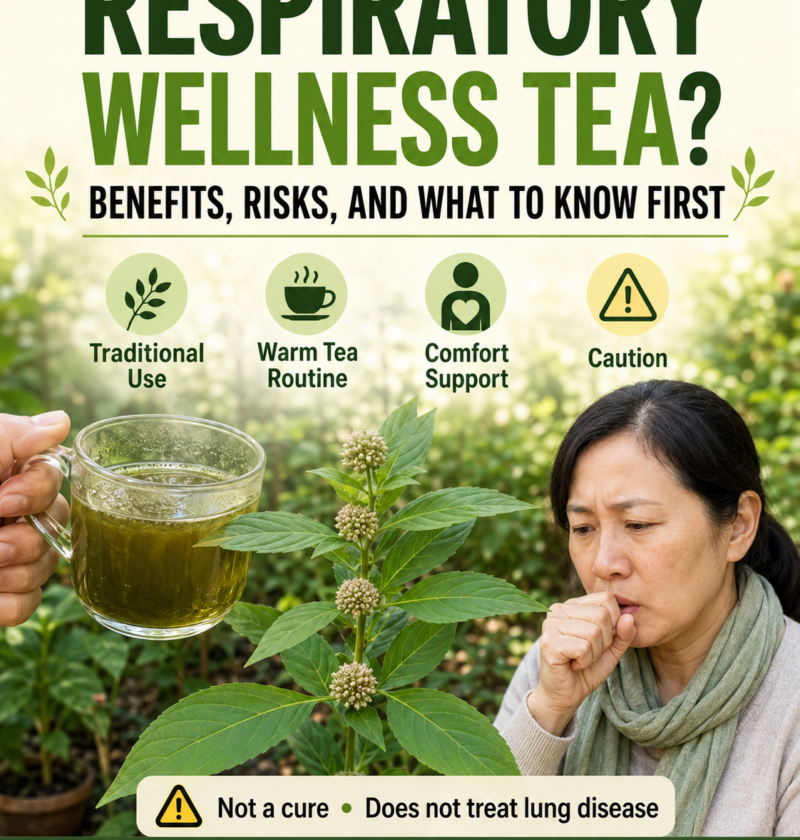
⚡ Respiratory Wellness Tea? Benefits, Risks, and What to Know First
Respiratory wellness teas are becoming popular online.
Some posts show green plants, warm herbal tea, and people coughing.
Others go further and show before-and-after images of lungs.
They suggest that one plant can “clean the lungs,” “repair breathing,” or treat respiratory disease.
That sounds powerful.
But it is not a safe claim.
A warm herbal tea may feel soothing for the throat.
It may support hydration.
It may be part of a calming routine when someone feels mild seasonal discomfort.
But it is not a cure.
It does not treat lung disease.
It does not cure asthma.
It does not treat pneumonia.
It does not replace inhalers, antibiotics, or medical care.
And if the plant is unknown, it may not be safe to drink at all.
Before trying any respiratory wellness tea, here are the benefits, risks, and what to know first.
🌿 Why Respiratory Wellness Teas Became Popular
People often reach for warm tea when they have a cough, dry throat, or seasonal discomfort.
That makes sense.
Warm liquids can feel comforting.
A cup of tea can help someone slow down, drink fluids, and rest.
Herbal plants also look natural and traditional.
This makes them easy to share on Facebook.
But a comforting drink should not be turned into a medical treatment.
The problem starts when posts claim that tea can repair lungs, remove mucus permanently, treat infections, or reverse disease.
Those claims are not responsible.
A tea routine can support comfort.
It cannot replace medical care.
🍵 The Most Realistic Benefit: Warm Comfort
The safest benefit of respiratory wellness tea is comfort.
Warm tea may help soothe a dry throat.
It may encourage hydration.
It may feel relaxing before bed.
It may be easier to drink than cold water when someone feels tired.
But the tea is not treating the cause of a cough.
A cough can come from many things:
A cold
Flu
Allergies
Asthma
Acid reflux
Bronchitis
Pneumonia
Smoke exposure
Medication side effects
Dry air
Postnasal drip
COVID or other infections
Because the causes are different, the right care can also be different.
That is why a single plant tea cannot be promoted as a lung treatment.
⚠️ Common Online Claim / Safer Truth
| Common Online Claim | Safer Truth |
|---|---|
| This plant cleans damaged lungs | No tea can safely “clean” lungs like a before-and-after image |
| It treats respiratory disease | Lung disease needs professional diagnosis and care |
| It cures cough naturally | A cough can have many causes and may need medical advice |
| It replaces medicine | Herbal tea should not replace inhalers, antibiotics, or prescribed treatment |
| The recipe works for everyone | Some people should avoid unknown herbs |
| More tea means better results | Too much can increase side effects or interactions |
| Natural means safe | Natural plants can still cause allergies, toxicity, or medication interactions |
| A viral photo proves it works | Before-and-after lung images can be misleading |
🫁 Why Lung Before-and-After Images Are Misleading
Before-and-after lung images can look dramatic.
They can make people believe a plant can repair lung damage quickly.
But these images are often misleading.
They may be edited.
They may be unrelated.
They may show animal organs.
They may be used without context.
They may not represent a real medical result.
Lungs do not transform like that from one cup of tea.
Real respiratory health depends on many factors:
Air quality
Smoking exposure
Allergies
Infections
Asthma control
Medication use
Medical history
Exercise tolerance
Sleep
Hydration
Doctor guidance
A Facebook image cannot diagnose the lungs.
A tea cannot replace a breathing test, chest exam, or medical treatment.
🚨 When a Cough Needs Medical Attention
A mild cough can happen with a cold.
But some cough symptoms should not be ignored.
The CDC advises seeing a healthcare professional for bronchitis-like symptoms if there is fever lasting more than 5 days, fever of 104°F or higher, bloody mucus, shortness of breath, trouble breathing, symptoms lasting more than 3 weeks, or repeated bronchitis episodes.
Mayo Clinic also advises contacting a healthcare professional if a cough does not go away after a few weeks or comes with thick greenish-yellow phlegm, wheezing, fever, shortness of breath, fainting, ankle swelling, or weight loss.
Get medical help if you have:
Shortness of breath
Chest pain
Wheezing
High fever
Coughing blood
Blue lips
Confusion
Severe weakness
Symptoms lasting weeks
Cough that keeps returning
Swelling in the ankles
Unexplained weight loss
A warm tea can wait.
Breathing problems should not.
🌱 Unknown Plants: The Biggest Safety Problem
One of the biggest risks in viral herbal posts is plant identification.
Many plants look similar.
Some safe plants have toxic look-alikes.
Some plants are safe as food but not safe as medicine.
Some are safe for adults but risky for children, pregnancy, or medication use.
If you do not know the exact plant name, do not drink it.
Do not harvest random leaves.
Do not make tea from a plant just because a picture online looks similar.
Do not use plants from roadsides, polluted areas, or sprayed gardens.
A respiratory tea should only be made from properly identified, food-grade herbs from a trusted source.
Guessing with plants can be dangerous.
💊 Medication Interactions: Ask First
Herbal teas can interact with medications.
This is especially important when the tea is strong, used daily, or made from medicinal plants.
NCCIH warns that dietary supplements may interact with medications or pose risks for people with certain medical problems or those going to surgery, and many have not been tested in pregnant people, nursing mothers, or children.
Ask a doctor or pharmacist first if you take:
Blood thinners
Blood pressure medication
Diabetes medication
Heart medication
Asthma medication
COPD medication
Allergy medication
Immune-suppressing medication
Sedatives
Diuretics
Daily supplements
Herbs may look gentle, but they can still affect the body.
🤰 Pregnancy, Breastfeeding, and Children
Pregnancy and breastfeeding need extra caution.
Children also need extra care.
Many herbal products have not been properly tested in these groups.
That means safety is not always clear.
Pregnant people should not experiment with strong herbal teas.
Breastfeeding people should ask before using medicinal herbs.
Children should not be given strong respiratory teas without medical advice.
Babies should not receive herbal remedies without a pediatrician.
A warm drink may look simple, but the body can react differently depending on age, pregnancy, medication, and health history.