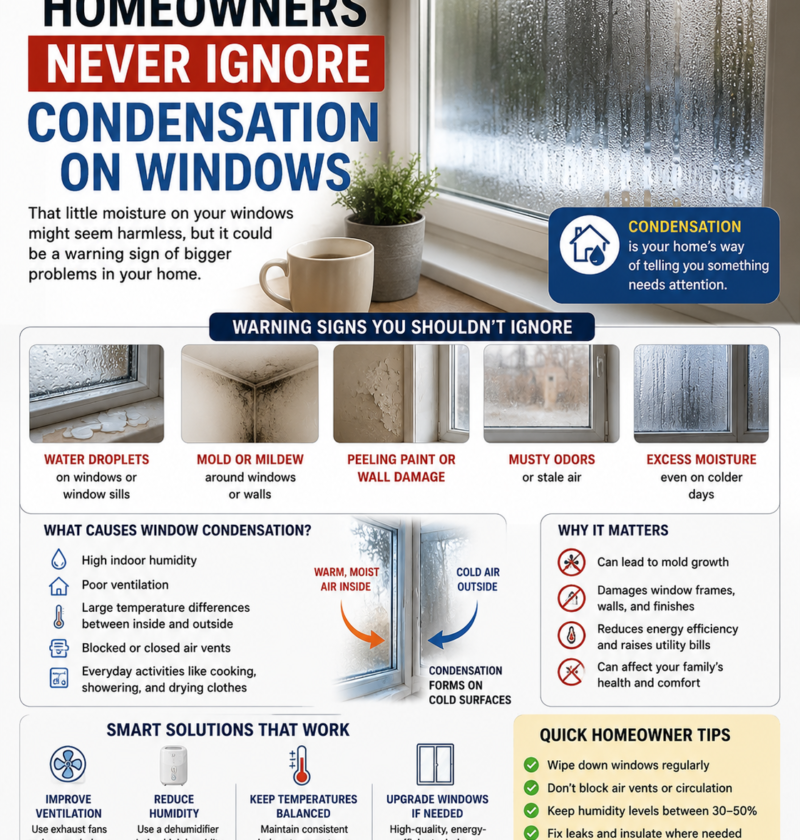
🪟 Why Smart Homeowners Never Ignore Condensation on Windows
Window condensation looks harmless at first.
A little fog on the glass.
Small water droplets near the edges.
A damp window sill on cold mornings.
Most people wipe it once and move on.
But smart homeowners know that repeated condensation can be a warning sign of a bigger moisture problem inside the home.
When warm indoor air meets cold glass, moisture can collect on windows. If this happens often, that extra moisture may affect window frames, walls, paint, air quality, and comfort over time.
💧 Why Condensation Happens
Condensation usually appears when indoor humidity is too high and the window surface is cold.
Common causes include:
✅ cooking without ventilation
✅ long hot showers
✅ drying clothes indoors
✅ poor airflow
✅ blocked vents
✅ cold outdoor temperatures
✅ too much indoor humidity
One foggy window is not always serious.
But if windows stay wet every morning, the home may be holding too much moisture.
⚠️ Warning Signs Smart Homeowners Watch For
Small moisture signs can become bigger if ignored.
Pay attention to:
- water droplets on windows
- damp window sills
- peeling paint
- musty smells
- dark spots around frames
- swollen wood
- moisture between glass panes
- recurring mold near corners
These signs can mean humidity is staying trapped too long.
🦠 Why Mold Can Become a Problem
Mold often grows in damp, poorly ventilated areas.
Windows are common problem spots because moisture collects near edges, corners, curtains, and sills.
If condensation appears daily and surfaces stay damp, mold-friendly conditions can develop.
That’s why smart homeowners wipe moisture quickly and improve airflow before the problem spreads.
🌬️ Why Ventilation Matters
Fresh airflow helps moisture escape.
Simple habits can help:
✅ open windows briefly when weather allows
✅ use kitchen fans while cooking
✅ run bathroom fans after showers
✅ avoid blocking vents
✅ keep furniture away from windows
✅ open curtains during the day
Better airflow helps the whole home feel fresher and drier.
🏡 Why Humidity Control Protects the Home
Too much humidity can make a home feel uncomfortable.
It may also contribute to:
- musty odors
- damp fabrics
- peeling paint
- window frame damage
- wall stains
- mold growth
- higher heating discomfort
Many homeowners try to keep indoor humidity balanced, especially during winter.