🍃 Benefits of Guava Leaves: What They Are For and How to Use Them Correctly
🌿 The Simple Leaf Most People Ignore May Be One of Nature’s Most Useful Gifts
When people think of guava, they usually picture the fruit first. They imagine the sweet scent, the soft pink or white flesh, the tropical freshness, and the reputation guava has as a nourishing fruit packed with vitamin C. But hidden behind the popularity of the fruit is another part of the plant that has quietly earned respect for generations: the leaves.
Guava leaves are one of those traditional remedies that seem almost too ordinary to be impressive. They come from a familiar tree. They are easy to overlook. They do not arrive in expensive packaging or carry the glamour of trendy wellness ingredients. And yet, across many cultures, guava leaves have long been brewed into tea, simmered into rinses, used in home care rituals, and appreciated as a practical natural remedy that supports the body in more ways than most people realize.
That quiet reputation is exactly what makes them so fascinating today. In a world where wellness advice often feels loud, complicated, and commercial, guava leaves represent something refreshingly different. They belong to the older tradition of useful plants. They are affordable, accessible in many tropical and subtropical regions, and easy to turn into simple remedies at home. Most importantly, they fit into daily life without forcing daily life to revolve around them.
More people are now asking about the benefits of guava leaves, what they are for, and how to use them correctly because they want realistic support, not exaggerated promises. They want to know whether guava leaf tea deserves its traditional reputation. They want to know whether guava leaves can be used for digestion, skin care, scalp care, and healthy routines in a way that is sensible and safe. They want to understand the difference between tradition and hype. That is a good instinct, because guava leaves are most valuable when they are approached with curiosity and balance rather than miracle thinking.
The truth is that guava leaves have earned attention for several reasons. They contain plant compounds such as flavonoids, tannins, and antioxidants that make them interesting both in traditional herbal use and in modern research discussions. They are often associated with digestive comfort, soothing tea rituals, scalp rinses, and general wellness support. At the same time, they are not magic. They are best understood as a useful plant ingredient that may support healthier routines when used thoughtfully and consistently.
This article will explore guava leaves in depth. You will learn what guava leaves are, why they have such a strong traditional reputation, what they are commonly used for, the key compounds behind their popularity, and the most talked-about benefits of guava leaves in natural wellness. Then, on the second page, you will discover how to use them correctly, including tea preparation, rinses, routines, common mistakes, safety notes, and frequently asked questions.
If you have ever seen a guava tree and assumed only the fruit mattered, this guide may change the way you look at the plant completely. Sometimes the most powerful remedies are not the most famous parts of a plant. Sometimes they are the parts that stay in the background, quietly waiting for people to notice what generations before them already understood.
🍃 What Are Guava Leaves, Exactly?
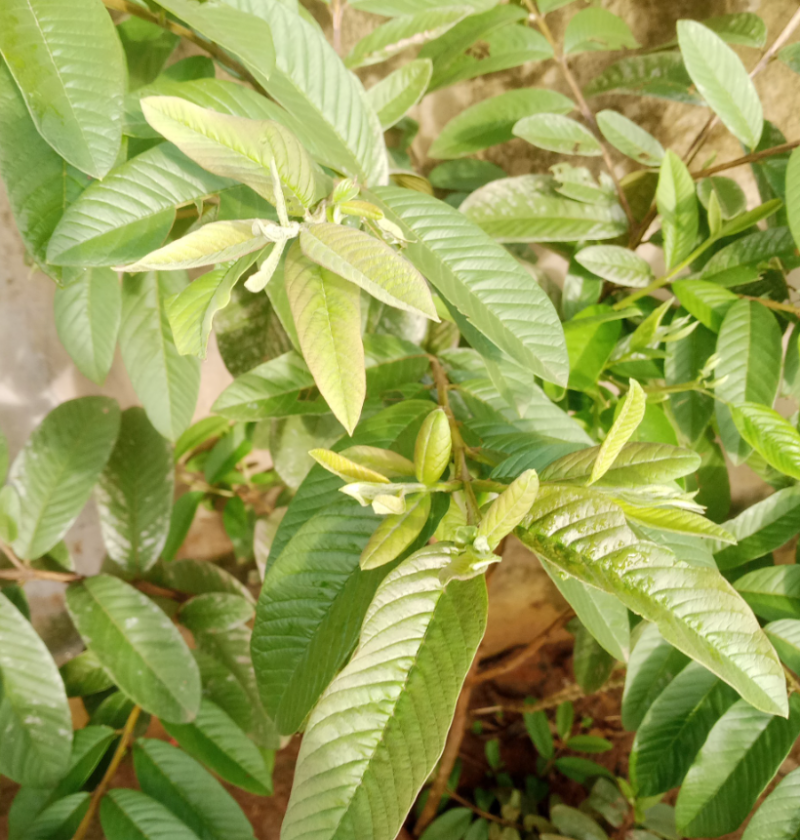
Guava leaves come from the guava tree, most commonly known as Psidium guajava. The tree is widely grown in tropical and subtropical regions and is valued for both its fruit and its leaves. The leaves themselves are oval-shaped, slightly firm, and usually medium to deep green, with visible veins and a faintly aromatic scent when crushed. They are not just decorative foliage. In many traditions, they are treated as a practical part of the plant with everyday wellness value.
Fresh guava leaves can be used directly after proper washing, while dried guava leaves are commonly prepared for teas and herbal-style infusions. Because the leaves are more durable than the fruit, they lend themselves easily to storage and repeated use. This is one reason they became so popular in household remedies. A family with access to a guava tree did not need to wait for fruit season alone. The leaves could be collected, dried, and turned into a tea or rinse as needed.
The taste of guava leaf tea is usually mild to slightly earthy, with a touch of natural astringency. It is not as strong or bitter as some other herbal leaves, which makes it easier for many people to enjoy regularly. That pleasant practicality is part of the reason guava leaves have survived across generations. A remedy does not last long if it is too unpleasant to use. Guava leaves strike a useful balance between noticeable herbal character and everyday drinkability.
From a wellness perspective, they are interesting because they contain a range of plant compounds that have drawn attention over time. Traditional users did not need to name these compounds to value the leaf. They simply observed that guava leaves seemed helpful in certain situations. Modern readers, however, often want to know what might explain that reputation. That is where both tradition and science begin to meet.
📜 Why Guava Leaves Have Been Used for So Long
The long history of guava leaves in traditional wellness is one of the strongest reasons people continue to trust them. In many parts of Asia, Africa, Latin America, and the Caribbean, guava leaves have been used in household remedies for generations. They were often brewed as a tea after meals, taken as part of a digestive routine, or applied externally in simple skin and hair care practices. These uses did not emerge because someone wanted to market a product. They emerged because the leaves were available, affordable, and seemed worth repeating.
Traditional medicine has always relied heavily on leaves. Leaves are abundant, easy to harvest, easy to dry, and easy to prepare. Guava leaves fit naturally into that logic. They could be plucked fresh from the tree, rinsed, simmered, and used without much ceremony. In many families, knowing how to prepare guava leaf tea was just part of ordinary life. It was less a dramatic “treatment” and more a useful household skill.
In some cultures, guava leaves were turned into teas for digestive support. In others, they were used as a rinse for the scalp or skin. The exact uses varied by region, but the pattern remained remarkably consistent: people returned to the leaves again and again because they seemed practical, mild enough for regular use, and versatile. That kind of cross-cultural consistency is often a sign that a plant deserves a closer look.
Today, that historical background matters because it reminds us to see guava leaves in their proper context. They are not a sudden health trend. They are an old remedy entering a new phase of attention. That makes them more interesting, not less. When something has survived across time, geography, and generations, it usually means there is real usefulness behind the tradition.
🔥 Why Guava Leaves Are Becoming Popular Again Today
Modern wellness culture has reached an interesting point. Many people are now skeptical of exaggerated health claims, suspicious of overly processed supplements, and tired of routines that are expensive, complicated, or impossible to sustain. At the same time, there is more interest than ever in simple plant-based remedies. This creates the perfect environment for the return of guava leaves.
People are rediscovering guava leaves because they check several important boxes at once. They feel traditional but still relevant. They are natural without being obscure. They can be used in different ways, from teas to rinses. And they support the kind of gentle, routine-based wellness that feels more realistic than extreme interventions. A person does not need to rebuild their entire life around guava leaves to benefit from them. They can simply add a tea after lunch, a scalp rinse once or twice a week, or a mild herbal routine that feels manageable.
Another reason for the renewed interest is that guava leaves fit neatly into the current focus on daily habits. More readers understand that health is often shaped by what happens every day, not by what happens once in a while. A soothing tea ritual, a simple rinse, or a low-sugar beverage swap may sound modest, but repeated daily or weekly, such habits can become meaningful. Guava leaves work best in that world of repetition and steadiness.
There is also the appeal of the whole plant. Modern readers increasingly love the idea that wellness can come from using more of what nature offers rather than wasting it. Guava is no longer viewed as only a fruit tree. It becomes a fuller source of value. The fruit nourishes. The leaves support. The tree, in a sense, becomes more generous the more closely you look at it.
🧪 The Key Compounds That Make Guava Leaves Interesting
✨ Flavonoids
Guava leaves are rich in flavonoids, a group of plant compounds that appear in many foods associated with general wellness. These compounds are part of what makes colorful and aromatic plants so interesting from a modern nutrition perspective. In guava leaves, flavonoids are often mentioned as one reason the leaves attract attention for antioxidant and supportive uses.
🌱 Tannins
Tannins give guava leaves some of their natural astringency. This matters because astringent plants have long been valued in traditional systems for their tightening, drying, and balancing qualities. Tannins also help explain why guava leaf preparations feel distinct from soft floral teas. They carry a little structure and firmness in flavor and effect.
🍃 Antioxidant Compounds
Like many useful leaves, guava leaves contain antioxidant compounds that contribute to their overall wellness reputation. Antioxidants are often discussed in relation to general resilience and the body’s ability to manage normal oxidative stress. While the term can be overused, in this case it helps explain why guava leaves continue to draw scientific interest.
💧 Natural Plant Acids and Aromatic Compounds
Guava leaves also contain other plant substances that contribute to their aroma, taste, and traditional usefulness. Even when people do not name these compounds specifically, they recognize their effects through experience. The gentle earthiness of guava leaf tea, the fresh sensation of a rinse, and the overall botanical character of the leaf all come from this wider chemical profile.
💪 10 Benefits of Guava Leaves: What They Are Commonly Used For
1. Guava Leaves Are Often Used for Digestive Comfort
One of the most common traditional uses of guava leaves is digestive support. Guava leaf tea is often taken after meals, especially when someone wants a lighter, calmer feeling rather than something overly rich or sweet. The tea itself becomes part of the benefit. It replaces sugary beverages, introduces warmth, and encourages a more mindful end to the meal. Whether people are interested in digestive comfort, less heaviness after eating, or simply a soothing tea ritual, this is one of the main reasons guava leaves remain so respected.
2. They May Support Healthier Post-Meal Routines
Even apart from any direct plant effect, guava leaves can improve routines simply by shaping what happens after a meal. Instead of dessert drinks, packaged juices, or mindless snacking, a cup of guava leaf tea creates a calmer transition. This matters more than many people realize. Better routines often begin with better rituals, and guava leaf tea is an excellent example of a ritual that can shift behavior in a healthier direction.
3. Guava Leaves Are Popular in Blood Sugar-Friendly Wellness Discussions
Guava leaves often appear in conversations about healthy blood sugar support, especially as a tea consumed after eating. It is important to stay realistic here and avoid medical claims, but the leaves have earned a strong reputation in traditional practice and modern curiosity alike. For many people, part of their usefulness comes from how naturally they fit into lower-sugar, more mindful routines. A warm unsweetened tea is already a smarter choice than many alternatives.
4. They Are Used in Scalp and Hair Care Routines
One of the most beloved external uses of guava leaves is as a hair or scalp rinse. Boiled guava leaves are cooled and poured over the hair after washing, or massaged gently into the scalp. This practice remains popular because it feels simple, refreshing, and rooted in tradition. People often turn to guava leaves when they want gentler plant-based scalp care rather than relying entirely on commercial products.
5. Guava Leaves May Help Support a Fresher Scalp Environment
The scalp is skin, and traditional herbal rinses often focus on leaving it feeling cleaner, calmer, and more balanced. Guava leaf rinses are commonly appreciated for exactly that reason. Even when results vary from person to person, the ritual itself is valuable. It encourages gentler hair care, more attention to the scalp, and a connection between botanical support and beauty routines.
6. They Are Sometimes Used in Simple Skin Care Practices
Guava leaf water or cooled infusions are sometimes applied externally in basic skin-care traditions. This is usually done in a gentle, minimal way rather than as an elaborate beauty treatment. The appeal lies in simplicity. A clean plant infusion used with care can feel refreshing and grounded in a way many commercial routines do not.
7. Guava Leaves Bring Antioxidant-Rich Plant Variety Into the Diet
When consumed as a tea, guava leaves offer another source of plant compounds in the day. Modern diets often lack botanical variety, and herbal infusions can help restore some of that diversity. No single tea transforms everything, of course, but the quiet presence of more plants in the daily routine is usually a good thing.
8. They Can Help Reduce Reliance on Sugary Drinks
This may be one of the most practical benefits of all. If guava leaf tea replaces sweet beverages even a few times a week, that is already a meaningful win. The tea has enough herbal character to feel intentional and satisfying, but it remains mild enough to be approachable. In wellness, substitution is often more powerful than addition, and guava leaf tea is a smart substitute.
9. They Encourage Slower, More Mindful Self-Care
Whether as tea or as a rinse, guava leaves invite a slower pace. You have to simmer them, steep them, cool them, and use them with intention. That process matters. It transforms the remedy into a ritual, and rituals often help people care for themselves more consistently. In a rushed world, that alone is a meaningful benefit.
10. Guava Leaves Connect Wellness to Tradition Instead of Hype
Perhaps the greatest benefit of guava leaves is their groundedness. They come from a real plant with real traditional use. They are not a manufactured trend built on fantasy. They remind us that some of the best wellness supports are not dramatic discoveries, but familiar resources used wisely. That sense of authenticity makes them especially appealing in today’s crowded health culture.
🌍 Traditional Uses of Guava Leaves in Different Cultures
Across cultures, guava leaves appear in slightly different forms but with surprisingly similar themes. In parts of Asia, they are commonly brewed into teas after meals and included in household herbal practices. In Latin America, guava leaves may appear in infusions or home remedies passed through families. In parts of Africa and the Caribbean, they are often recognized as useful leaves for general wellness support and personal care preparations.
What changes from place to place is often the style of preparation, not the basic respect for the plant. Some families prefer fresh leaves. Others dry them for later use. Some use the leaves more internally, others externally. Yet everywhere the same pattern appears: the leaves are valued because they are accessible, repeatable, and mild enough to be part of everyday life.
🔬 Why Modern Research Is Interested in Guava Leaves
Modern research into guava leaves often focuses on their antioxidant content, flavonoids, tannins, and broader plant chemistry. Scientists are naturally drawn to plants that combine long traditional use with a plausible profile of active compounds. Guava leaves fit that description well. Researchers are especially interested in their role in digestive wellness discussions, post-meal balance, and external applications linked to plant-based care.
Still, it is important to stay honest about what research can and cannot say. Guava leaves are promising, interesting, and deeply rooted in traditional use, but they are best treated as supportive rather than miraculous. Their greatest strength may be how easily they fit into healthy routines that make sense anyway.
✨ Before Learning How to Use Guava Leaves Correctly, Remember This
The most useful way to think about guava leaves is not as a cure, but as a companion. A companion to calmer digestion. A companion to more thoughtful beverage choices. A companion to gentle scalp care. A companion to the larger idea that wellness is often built through repeated, practical habits rather than one-time intensity.
That is where the second page becomes essential. Because knowing the benefits of guava leaves is only the beginning. The real value appears when you know how to prepare them correctly, how to use them in a safe and practical way, and how to fit them into a daily routine without overdoing them or turning them into hype.
On the next page, you will discover exactly how to prepare guava leaf tea, how to make a guava leaf hair rinse, the best routines for using the leaves, extra wellness benefits, common mistakes to avoid, important safety notes, and answers to the questions most readers ask before trying guava leaves for themselves.