From Dying Orchid to Stunning Blooms — The Simple Natural Trick That Changed Everything
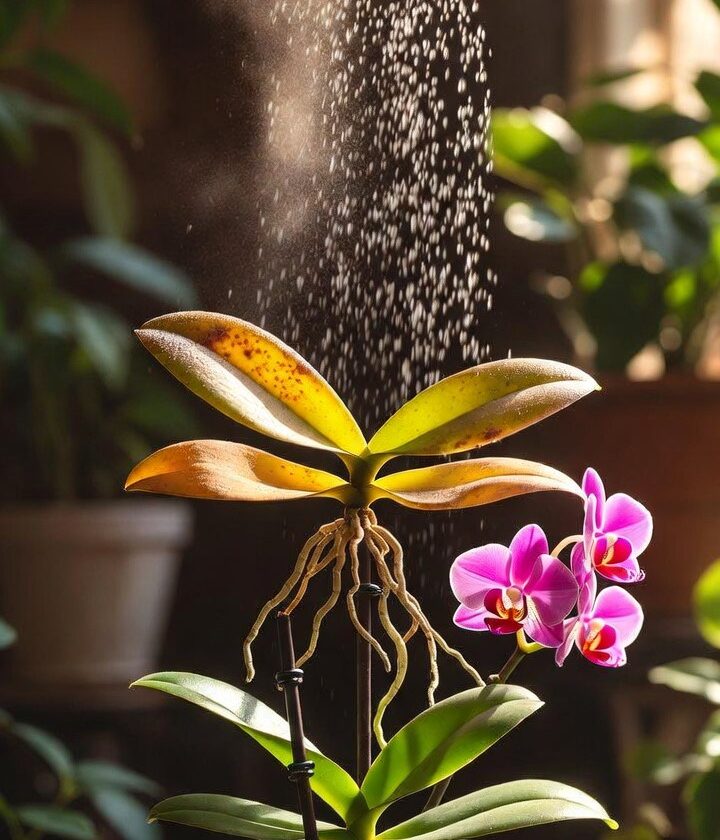
If you’ve ever owned an orchid, you know the heartbreak: the flowers fall, the leaves droop, the roots turn gray and lifeless — and suddenly your once-beautiful plant looks like it’s beyond saving.
But what if the problem wasn’t the plant… but the method?
Many orchids decline not because they are weak — but because they are misunderstood.
The turning point often comes from one simple, natural adjustment that restores root health and triggers new bloom growth.
Why Orchids “Die” (But Aren’t Actually Dead)
Most store-bought orchids are Phalaenopsis varieties.
They bloom beautifully for weeks, then enter a rest phase.
People assume the plant is dying when:
- Flowers drop
- Flower spike turns yellow
- Leaves soften slightly
- Roots look dry or pale
In reality, orchids are epiphytic plants — they grow attached to trees in nature.
Their roots need air as much as water.
Overwatering is the #1 cause of orchid decline.
The Simple Natural Trick That Changed Everything
The breakthrough method is simple:
Switch from soaking the pot… to controlled root hydration using diluted rice mineral water.
This technique supports:
- Root oxygen balance
- Mild nutrient boost
- Microbial stimulation
- Stronger flower spike development
Step 1: Inspect and Rescue the Roots
Healthy orchid roots are:
- Firm
- Green when wet
- Silvery when dry
Remove the orchid from its pot and:
- Trim mushy brown roots with sterilized scissors.
- Keep firm green or white roots.
- Let roots air-dry for 2–3 hours before repotting.
Step 2: Prepare the Natural Rice Mineral Solution
Ingredients:
- 1 cup uncooked rice
- 2 cups room-temperature water
Instructions:
- Rinse lightly and soak rice for 30 minutes.
- Strain cloudy water.
- Let sit 12–24 hours for light fermentation.
- Dilute 1:1 before using.
This creates a mild mineral infusion rich in trace elements without overwhelming the roots.
Engineer Root Recovery Plan
Understanding orchid root structure explains why this method works.
Velamen Layer (Outer Sponge)
-----------------------------
Absorbs water quickly

Root Cortex
-----------------------------
Transfers nutrients

Central Core
-----------------------------
Provides structure
Heavy fertilizers burn the velamen.
Diluted rice water supports it gently.
Step 3: Correct Watering Technique
- Water only when roots turn silvery.
- Allow full drainage.
- Never leave orchid sitting in water.
- Water in morning.
Frequency is usually every 7–10 days depending on humidity.
Light & Humidity Optimization
- Bright indirect sunlight (east-facing window ideal)
- 50–70% humidity
- Air circulation around roots
Low light prevents blooming even if roots are healthy.
What Happened After 6 Weeks
After switching to this natural routine:
- New green root tips appeared
- Leaves became firmer
- A new flower spike emerged
- Blooms lasted longer than previous cycles
The transformation was gradual — but dramatic.
Common Mistakes That Kill Orchids
- Using ice cubes
- Over-fertilizing monthly
- Keeping roots constantly wet
- Low light conditions
- Ignoring airflow
FAQ
Can a leafless orchid recover?
If roots are healthy, recovery is possible.
How long before I see new blooms?
Usually 6–12 weeks depending on plant health.
Is rice water safe long term?
Yes, when diluted and used moderately.
Should I cut the old flower spike?
Trim above a node if still green; remove completely if yellow.
Final Thoughts
Reviving a dying orchid isn’t about magic.
It’s about understanding roots, light, and balance.
With gentle feeding, proper hydration, and patience, orchids reward you with stunning blooms that can last for months.
Sometimes, the simplest natural trick makes the biggest difference.