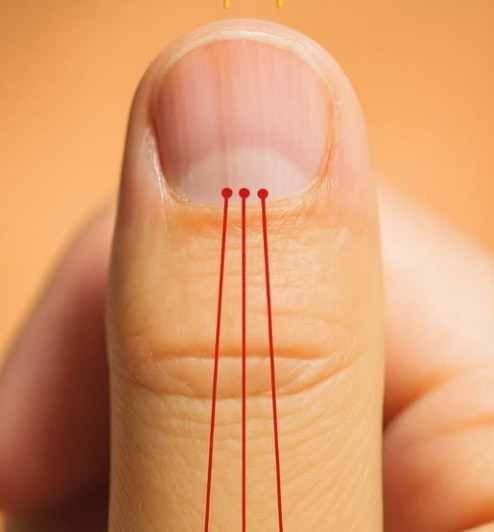
In most cases, they:
- Develop gradually
- Appear on multiple nails
- Are painless
- Do not alter nail color significantly
The Most Common Cause: Natural Aging
The leading cause of vertical ridges is simply aging.
As we grow older:
- Nail growth slows
- Cell turnover decreases
- Natural oil production declines
- Keratin formation becomes slightly less uniform
These small biological shifts can produce subtle textural changes in the nail plate.
Much like fine lines on the skin, vertical ridges are often a normal reflection of time passing.
They may become more noticeable after age 40, though some people see them earlier.
Other Common Contributors
1. Dryness
Nails require moisture to remain smooth and flexible. Frequent handwashing, alcohol-based sanitizers, cold weather, and indoor heating systems can dehydrate nails.
Dry nails are more prone to:
- Visible ridges
- Peeling
- Brittleness
- Splitting
In these cases, hydration can significantly improve appearance.
2. Repeated Minor Trauma
The nail matrix can be subtly affected by repetitive stress, including:
- Aggressive manicures
- Cuticle cutting
- Picking at the nail base
- Frequent acrylic or gel removal
Even small disruptions in matrix activity may influence surface texture.
3. Genetics
Some individuals naturally have more pronounced ridging due to inherited traits.
Less Common Causes to Consider
While rare, certain medical conditions or nutritional issues may influence nail texture.
Nutritional Deficiencies
Deficiencies in nutrients such as:
- Iron
- Vitamin B12
- Protein
may contribute to brittle or irregular nails. However, vertical ridges alone — without other symptoms — are unlikely to indicate deficiency.
Inflammatory Conditions
Skin conditions affecting the nail matrix may occasionally alter nail texture. These are usually accompanied by additional visible nail or skin changes.
When Should You See a Healthcare Provider?
Although vertical ridges are usually harmless, certain signs deserve attention.
Consult a healthcare professional if you notice:
- Sudden deep ridges appearing rapidly
- Discoloration (dark streaks, white bands, yellowing)
- Pain or swelling around the nail
- Significant thickening or thinning
- Changes affecting only one nail dramatically
- Associated symptoms such as fatigue or hair loss
These signs may require evaluation to rule out underlying causes.
Vertical vs. Horizontal Ridges
| Feature | Vertical Ridges | Horizontal Ridges |
|---|---|---|
| Direction | Cuticle to tip | Side to side |
| Most Common Cause | Aging, dryness | Systemic stress or illness |
| Onset | Gradual | May appear suddenly |
| Concern Level | Usually low | May require evaluation |