6. Air Conditioners
Window or portable air conditioners require substantial and consistent power.
- High compressor startup surge
- Continuous heavy draw
- Risk of tripping or overheating strip
Most manufacturers specifically warn against extension cords or power strips.
7. Hair Dryers & Curling Irons
These bathroom appliances can reach 1,500 watts.
They also generate extreme heat.
Using them on a power strip increases:
- Overheating risk
- Circuit overload
- Electrical hazard near water
Always use a properly grounded wall outlet — ideally with GFCI protection.
8. Portable Electric Heaters or Radiant Heaters
Like space heaters, radiant heating devices pull heavy current continuously.
They should never be used with:
- Power strips
- Extension cords
- Multi-outlet adapters
These devices need direct wall connection.
9. Another Power Strip (Daisychaining)
This is one of the most common — and dangerous — mistakes.
Daisychaining:
- Multiplies the load on a single outlet
- Bypasses safety assumptions
- Increases overheating risk
- Often violates fire codes
If you need more outlets, the real solution is installing additional wall outlets — not stacking strips.
What IS Safe to Plug Into a Power Strip?
Low-wattage electronics such as:
- Laptops
- Phone chargers
- Table lamps (LED bulbs)
- Wi-Fi routers
- Small desktop monitors
- Alarm clocks
Even then, avoid exceeding the total wattage rating printed on the strip.
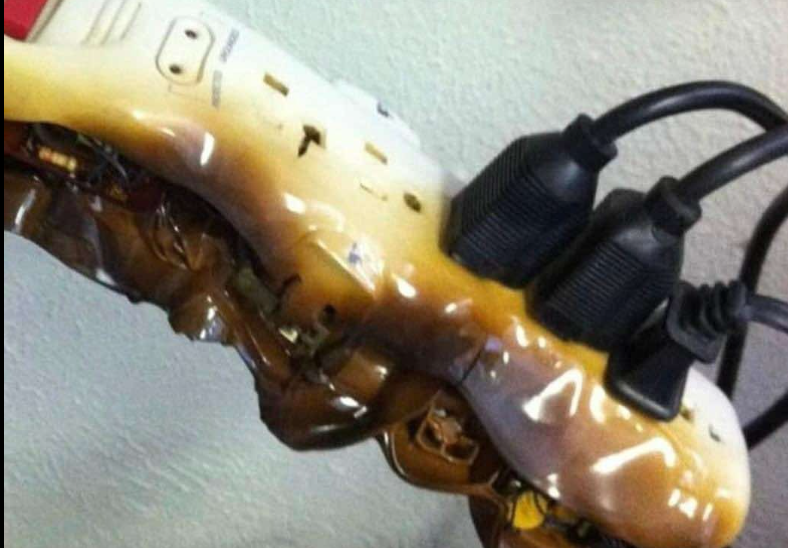
Signs Your Power Strip Is Overloaded
- Warm or hot to the touch
- Burning smell
- Discoloration
- Buzzing sound
- Frequently tripping breaker
If you notice any of these signs, unplug immediately.
Smart Safety Tips
- Use UL-listed or certified power strips.
- Replace damaged or frayed cords.
- Never run cords under rugs or furniture.
- Keep strips in open, ventilated areas.
- Unplug high-wattage appliances when not in use.
Final Thoughts
Power strips are helpful — but they are not built for everything.
The biggest risks come from treating them like permanent, high-capacity power sources.
Remember:
- High heat = high wattage
- High wattage = wall outlet only
- When in doubt, plug directly in
Electrical safety isn’t complicated.
It’s about understanding limits — and respecting them.
Because protecting your home doesn’t start with convenience.
It starts with awareness.