Secret to Year‑Round Blooms: How to Make Your Christmas Cactus Flower Multiple Times a Year 🌸
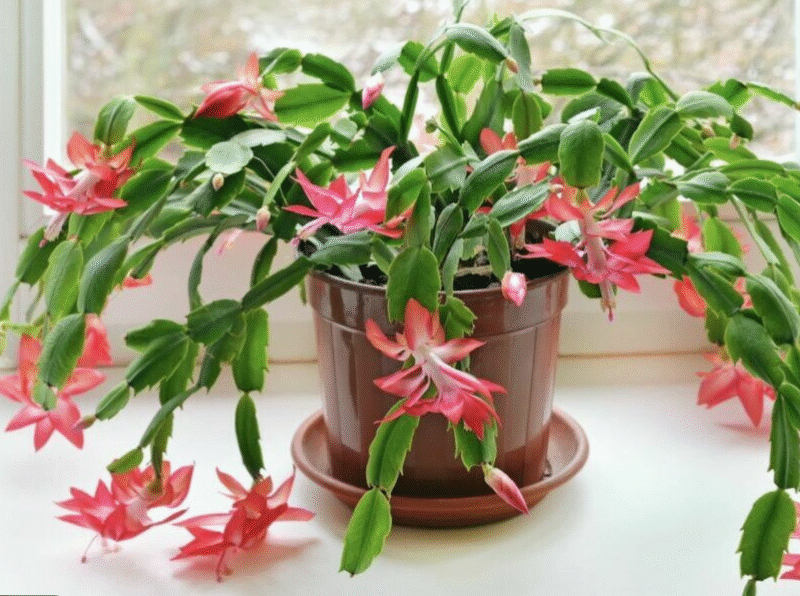
The Christmas Cactus is one of the most beloved houseplants — its cascading green segments and delicate, colorful flowers make it a winter‑favorite. Typically, it blooms during the holiday season (late fall to winter), but with careful attention to light, temperature, water, and care cycles — you can dramatically improve its blooming reliability. Some growers even succeed in coaxing a second bloom under ideal conditions. In this guide, I’ll show you how to understand what triggers bloom, what care cycles to follow, and whether “year‑round blooms” are realistic (or a hopeful experiment). Let’s dive in. 🎄
Understanding Your Christmas Cactus — Origins & Basic Needs
The Christmas Cactus belongs to the genus Schlumbergera, native to tropical rainforests in southeastern Brazil. Yet despite being called a “cactus,” it doesn’t come from deserts — it evolved as an epiphyte, growing in tree crevices or on shady rock ledges. :contentReference[oaicite:2]{index=2}
That origin explains a few key care needs:
- Moist, humus‑rich but well‑drained soil: The cactus expects light, airy substrate — often leaf‑litter or humus, not heavy clay or waterlogged soil. :contentReference[oaicite:3]{index=3}
- Bright, indirect light: Strong enough to allow healthy growth — but not harsh direct sun that can scorch stems. :contentReference[oaicite:4]{index=4}
- Moderate humidity: Unlike desert cacti, it appreciates moisture in the air — reflecting its rainforest heritage. :contentReference[oaicite:5]{index=5}
- Temperature sensitivity and seasonal cues: Flowering is triggered not by drought, but by changes in light duration (photoperiod) and cooler night temperatures — signals that mimic seasonal changes in nature. :contentReference[oaicite:6]{index=6}
Because of these needs, caring for a Christmas Cactus is more like caring for a forest houseplant than a typical dry‑soil cactus. Understanding that foundation helps you unlock its flowering potential. ✅
What Triggers Flowering — The Science Behind the Blooms
To coax blooms, you’re essentially imitating the environmental cues that the plant interprets as “approaching winter/short days.” The key triggers are:
📆 Photoperiod — Long Nights / Short Days
The Christmas Cactus is sensitive to day length. It needs a period of long, uninterrupted darkness to trigger bud formation. Many growers report that a minimum of 12–14 hours of total darkness per night for 4–8 weeks will reliably induce flowering. :contentReference[oaicite:7]{index=7}
Important: “Uninterrupted darkness” means **no artificial light** — even a brief hallway lamp or glow from a nearby TV can interfere. :contentReference[oaicite:8]{index=8}
🌙 Cool Nighttime Temperatures
Alongside darkness, cooler night temperatures act as a second signal. For many Schlumbergera varieties, night temps around **50–60 °F (≈ 10–15 °C)** help trigger bud set. :contentReference[oaicite:9]{index=9}
Daytime can remain mild — around **60–70 °F (15–21 °C)** — to allow normal growth. :contentReference[oaicite:10]{index=10}
Balanced Moisture & Humidity — Without Waterlogging
Since the plant naturally grows in humid tropical forests, it appreciates higher ambient humidity and a substrate that retains moisture yet drains well. Overly dry air or “cactus‑like” neglect can stress it. :contentReference[oaicite:11]{index=11}
Good drainage is equally crucial — waterlogging or standing water often causes root problems and prevents bloom formation. :contentReference[oaicite:12]{index=12}
In short: bright days, dark nights, cool nights, moisture & humidity — that mix triggers the internal “flower now” mechanism in Christmas Cactus.
Can You Encourage Multiple Blooms per Year? What Experience & Experts Say
Many plant lovers wonder if a Christmas Cactus can bloom more than once annually. The answer: Yes — but it’s not a guarantee. It depends heavily on how you manage its cycles and how robust the plant is. Here’s the breakdown.
📈 Why a Second Bloom *Might* Work
- If the plant is healthy and vigorous (good roots, strong foliage), it’s more likely to respond to a second “flowering signal.”
- Because flowering is triggered by environmental cues rather than strict seasonal timing, you can recreate those cues artificially — long night periods + cool nights + correct light and moisture — at other times of year. :contentReference[oaicite:13]{index=13}
- Some growers report “reblooming” or bonus blooms outside the usual season when conditions are near‑ideal. :contentReference[oaicite:14]{index=14}
⚠️ Why It Often Fails or Is Unreliable
- Maintaining ideal conditions (darkness, humidity, temperature) repeatedly is tricky in a typical home environment with changing seasons, heating, and artificial lights — any disturbance can abort buds. :contentReference[oaicite:15]{index=15}
- Plants often need a rest period after blooming — energy for flowers drains resources. Forcing them to bloom again too soon may stress the plant or reduce flowering quality. Many cultivation guides recommend waiting until after reset/growth period before even attempting another bloom. :contentReference[oaicite:16]{index=16}
- Frequent disturbances — potting, moving, temperature swings, over‑watering/under‑watering — during bud formation or bloom greatly increase the risk of bud drop or weak flowers. :contentReference[oaicite:17]{index=17}
- Because each cultivar or hybrid may have slightly different sensitivity thresholds, what works for one plant may not work for another. Consistent success often depends on careful trial and observation over several seasons. :contentReference[oaicite:18]{index=18}
Conclusion on multiple blooms: While “two flowering cycles a year” is possible — especially in favorable conditions — for many owners, one reliable bloom per year (winter/holiday) remains the realistic goal. Think of a second bloom as a rewarding exception rather than an expectation.
Step‑by‑Step Care Plan: How to Try for Year‑Round or Repeat Blooms
Below is a care schedule / cycle you can follow — including “flower induction blocks,” rest phases, and general maintenance. If you follow it carefully and your plant is healthy, you maximize your chances of getting more than one bloom per year.
Phase 1: Main Bloom Induction (Fall → Early Winter)
- By early‑ to mid‑October: begin preparing the plant for bud set. Move it to a slightly cooler location if possible, avoiding rooms with constant heating, drafts, or heater vents. :contentReference[oaicite:19]{index=19}
- Implement long nights: provide at least 12–14 hours of uninterrupted darkness per night for 4–8 weeks. Use a dark closet or cover at night if your home has lights on. :contentReference[oaicite:20]{index=20}
- Maintain cool, stable nights: aim for night temperatures in the range of 50–60 °F (10–15 °C), with daytime temps 60–70 °F (15–21 °C) — mimicking mild but cool seasonal shifts. :contentReference[oaicite:21]{index=21}
- Moderate watering & humidity: water only when the top inch of soil feels dry; ensure the pot drains well, and avoid standing water. Use a humidity tray (pebbles + water) or occasional misting to keep humidity moderate. :contentReference[oaicite:22]{index=22}
- Light during day: give the plant bright, indirect light during the day. Avoid direct afternoon sun through hot windows. A spot near an east- or north‑facing window is ideal. :contentReference[oaicite:23]{index=23}
- Pause heavy fertilizing: if you fertilize, stop or reduce feeding from early‑fall onward. Nutrient-demanding fertilizers (especially nitrogen‑heavy) may encourage leafy growth at the expense of bud formation. :contentReference[oaicite:24]{index=24}
- Once buds form: maintain stable conditions — avoid moving the plant or changing light/temperature drastically, until blooming is complete. :contentReference[oaicite:25]{index=25}
With this, many healthy Christmas Cacti will bloom between late November and January — exactly in time for the holiday season. :contentReference[oaicite:26]{index=26}
Phase 2: Post‑Bloom Care & Rest (Late Winter → Early Spring)
- After flowering: remove faded blooms (deadhead) to keep the plant tidy and promote healthy growth. :contentReference[oaicite:27]{index=27}
- Resume regular watering and moderate light: as new growth appears, return to a steady watering schedule — allow the soil to mostly dry between waterings, and keep in bright, indirect light. :contentReference[oaicite:28]{index=28}
- Fertilize monthly (spring through summer): use a balanced, diluted houseplant fertilizer, especially during the active growth phase. Many gardeners use a half‑strength, balanced (e.g. 10‑10‑10 or 20‑20‑20) fertilizer. :contentReference[oaicite:29]{index=29}
- Prune to encourage branching & fullness: once new growth begins, trim a few stem segments to encourage fuller shape and more branching (which can lead to more blooms next cycle). :contentReference[oaicite:30]{index=30}
- Repot only when needed: Christmas Cactus likes to be somewhat root‑bound, which can even promote bloom. Many plant‑care guides suggest repotting just every 2–4 years — and only in late winter or early spring when it’s not blooming. :contentReference[oaicite:31]{index=31}
Phase 3: Optional Second Bloom Attempt (Late Spring / Summer — Experimental)
If your plant is vigorous, has healthy roots and good foliage, and you have some control over conditions — you can try to replicate the bloom‑trigger environment mid‑year. Understand that success is **less likely** than the main winter bloom, but when it works — it’s a delightful bonus.
- Begin “flower‑induction block”: Choose a 4–6 week window. Early summer or late spring works best if the plant is not too stressed and has had time to recover from previous bloom.
- Provide long nights / darkness: As before, supply 12–14 hours of uninterrupted darkness nightly. If indoor lighting is unavoidable, use a dark closet or cover the plant with a blackout cloth. Note: if daytime temps remain high, you might need 14–15+ hours of darkness. :contentReference[oaicite:32]{index=32}
- Cool night temperatures: Aim for nights around 50–60 °F (10–15 °C). This may require placing the pot in a cooler room or near a window at night. Avoid heat vents or warm rooms. :contentReference[oaicite:33]{index=33}
- Daytime care: During the day keep bright indirect light, moderate humidity, and consistent watering (allow soil to dry top layer before water). Do not overwater. Ensure soil drains well.
- Hold off fertilizing or heavy feeding: Skip fertilizer during this induction — focus on light, darkness, water balance, and stable environment.
- Once buds appear — avoid stress: Like with the main bloom, keep light and temperature stable; avoid moving the pot, repotting, or dramatic environmental changes. If successful, you may get a secondary bloom. If buds abort or drop, don’t force — leave plant to rest and try later or wait for next regular cycle.
Keep in mind: every plant, environment, and household is different — success will vary. For many, this second‑bloom attempt is more of a fun experiment than a guarantee. But with patience and careful care, some plants do respond beautifully. 🌿
Additional Care Tips & Common Mistakes to Avoid
✔️ Maintain Balanced Watering & Humidity
One of the most frequent mistakes is over‑watering. Because Christmas Cactus is not a desert plant, it doesn’t tolerate soggy soil — nor does it thrive in bone‑dry conditions. The trick is balance: water thoroughly, then allow the top layer of soil to dry before watering again. Good drainage is vital; avoid letting water stand in saucers. :contentReference[oaicite:34]{index=34}
Increasing ambient humidity (especially in winter when indoor air is dry) helps — a shallow tray with pebbles and water, or occasional light misting, can keep humidity around 50‑60%, which many experts recommend. :contentReference[oaicite:35]{index=35}
🌞 Light — Bright but Indirect, Avoid Harsh Sun
While the plant needs ample light to build energy, direct hot sun — especially midday — can scorch stems. A bright window with filtered light, or an east‑facing spot, is ideal. :contentReference[oaicite:36]{index=36}
However, too little light leads to weak, leggy growth and often reduces flowering capacity. Striking the balance is key. :contentReference[oaicite:37]{index=37}
🪴 Pot & Soil Considerations — Don’t Over‑Repot
Because the Christmas Cactus prefers to be somewhat root‑bound — which encourages bloom — over‑frequent repotting can inhibit flowering. Most care guides recommend repotting only every 2–4 years, and always outside of bloom or bud induction periods (preferably in late winter/early spring after bloom). :contentReference[oaicite:38]{index=38}
Use a light, well‑draining mix (leaf mould or general potting soil + some sand or grit or a cactus/succulent‑style mix). Avoid heavy soils or compact mixes that retain too much water. :contentReference[oaicite:39]{index=39}
✂️ Pruning & Shaping — For Health and More Future Blooms
Prune gently after flowering to shape the plant, stimulate branching, and improve its fullness — which gives more stems and thus more potential bloom sites in subsequent cycles. :contentReference[oaicite:40]{index=40}
Propagation via stem cuttings (after bloom) is also a good way to multiply plants without harming the parent — but avoid propagation during bud‑set or bloom period. :contentReference[oaicite:41]{index=41}
⚠️ Avoid Stress: Temperature Swings, Drafts, Artificial Light at Night
Sudden changes — such as moving the plant, shifting temperature drastically, or exposure to lights at night — are common causes of bud drop or bloom failure. During induction or bud set, stability is more important than extra care. :contentReference[oaicite:42]{index=42}
Realistic Expectations — What Bloom Frequency to Aim For
Given what we know from horticultural sources and grower experience, here’s a realistic breakdown of what to expect:
- One reliable bloom per year (late fall to winter): For most households and climates — especially where indoor heating, artificial light, and variable schedules make maintaining strict darkness and temperature challenging — this remains the best and most realistic goal.
- Occasional second bloom (rebloom): Possible, if you can recreate the required conditions (dark nights, cooler temps, stable watering and humidity) for a 4–6 week induction period, and provide gentle care. Success here varies widely among plants and households.
- Multiple (stressful) bloom attempts per year: Generally not recommended — repeated bud‑set cycles without proper rest may stress the plant, reduce vigor over time, or lead to poor blooms. It’s better to treat second blooms as occasional bonuses.
In other words: consider your Christmas Cactus more as a “seasonal performer with a possible encore” than as a “year‑round factory.”
Troubleshooting Common Problems — What to Check if It’s Not Blooming
| Issue | Possible Cause(s) | What to Do |
|---|---|---|
| No buds / no bloom at all | • Not enough dark hours at night • Night temperatures too high • Too much direct light or insufficient daylight • Over‑fertilizing or feeding too late into fall • Soil too wet or poor drainage |
• Ensure 12–14 h of darkness nightly for 4–8 weeks • Provide cooler nights (50–60 °F / 10–15 °C) • Provide bright, indirect daylight • Stop fertilizing by early autumn • Check soil drainage; allow soil to dry slightly between waterings |
| Buds form but then drop before opening | • Sudden changes in temperature, light, watering or humidity • Drafts or heating vents nearby • Artificial light at night • Soil waterlogged or too dry |
• Keep environment stable • Avoid moving the plant • Ensure proper darkness every night • Maintain consistent but balanced moisture & humidity |
| Weak, sparse blooms | • Poor light during day • Nutrient deficiency or exhausted soil • Plant too root‑bound or lacking aeration • Past stress or over‑fertilizing |
• Move to brighter spot (indirect light) • Repot (if 2–4 years old) outside of bloom season • Use light, airy, well‑draining soil • Prune and provide regular fertilizing during active periods |
| Leaves turning red/brown or scorched | • Too much direct sun • Hot windowsill or heater exposure • Soil drying out too much |
• Move to indirect light • Avoid hot windy spots or heaters • Maintain regular watering and humidity |
Is Year‑Round Blooming Worth the Effort? — Pros & Cons
✅ Pros of Trying for Multiple Blooms
- You might enjoy more frequent splashes of color and flowers — a pleasant boost to indoor décor and mood.
- It’s a fun experiment for plant lovers, helping you understand and control the plant’s biology and environment.
- If successful, it increases the value (aesthetic and decorative) of your plant — more blooms more often.
⚠️ Cons / Risks to Be Aware Of
- Maintaining ideal conditions repeatedly is labor-intensive — darkness, humidity, temperature control, stable care.
- Risk of stress, bud drop, weak flowers, or gradual weakening of the plant if cycles are repeated without allowing proper rest and recovery.
- Inconsistent results — even experienced growers don’t always get a second bloom; outcomes vary by cultivar, environment, and season. It’s never guaranteed.
If you value reliability and predictability, focusing on a single, beautiful annual bloom might be more rewarding than chasing multiple bloom cycles. But if you enjoy experimenting with plant care — a second bloom is a lovely “bonus if it happens.”
Quick Checklist — What to Do (and What to Avoid)
- **Do** create long-night cycles (12–14 h darkness) and cool nights (50–60 °F) for 4–8 weeks before expected bloom.
- **Do** ensure bright, indirect daylight during the day; avoid harsh direct sun.
- **Do** water moderately — allow top soil layer to dry between waterings; ensure pot drains well.
- **Do** maintain moderate humidity (e.g. tray with pebbles + water, occasional misting), especially when indoor air is dry.
- **Do** stop heavy fertilizing from early autumn until after bloom; resume light feeding in spring/summer. Prune after blooming to encourage fullness and future bloom potential.
- **Do** repot only every 2–4 years — and never just before or during a bloom induction period.
- **Avoid** moving the plant, changing light or temperature drastically, exposing it to heaters or drafts, using strong fertilizers late in season, or leaving soil soggy or waterlogged.
- **If experimenting for a second bloom:** treat it as optional; maintain stable conditions throughout, and be ready to abandon if buds abort — don’t stress the plant.
When You *Shouldn’t* Force Blooms — Common Situations to Skip
Even with ideal conditions, there are times when forcing a new bloom cycle is counterproductive or harmful. Consider waiting if you observe any of the following:
- The plant is weak, has lost many leaves, or shows root‑rot signs — better to let it recover first.
- You just repotted or relocated the plant — stress can inhibit blooms. Wait until next growth cycle.
- The environment doesn’t allow for stable nights (light pollution, heating, humidity fluctuations) — forcing cycles under stress often fails.
- The plant just finished blooming — giving it rest, stable growth, and gentle care may reward you with a stronger bloom next season instead of chasing a quick rebloom.
Conclusion: Treat Your Christmas Cactus With Respect — and Let Nature Lead 🌿
Yes — with knowledge, patience, and careful environment control, you can push your Christmas Cactus to bloom reliably and even attempt a second flowering cycle. But it’s important to approach this plant as what it is — a tropical, forest‑dwelling epiphyte, not a desert cactus. Its rhythms are tied to light cycles, humidity, and subtle temperature signals that echo its natural habitat. When you respect those rhythms, care becomes less about forcing and more about gently guiding.
If you love gardening, enjoy experimenting, and have a space where you can manage darkness, temperature, humidity — go ahead, try for that extra bloom. If not — aim for a spectacular, reliable annual bloom — and enjoy the rest of the year caring for a healthy, happy houseplant.
Either way — given the right conditions and thoughtful care — your Christmas Cactus will reward you with the kind of blooms that brighten winters and warm hearts. 🌸✨