⚡ Green Wellness Drink? Benefits, Risks, and What to Know First
Green wellness drinks are everywhere online.
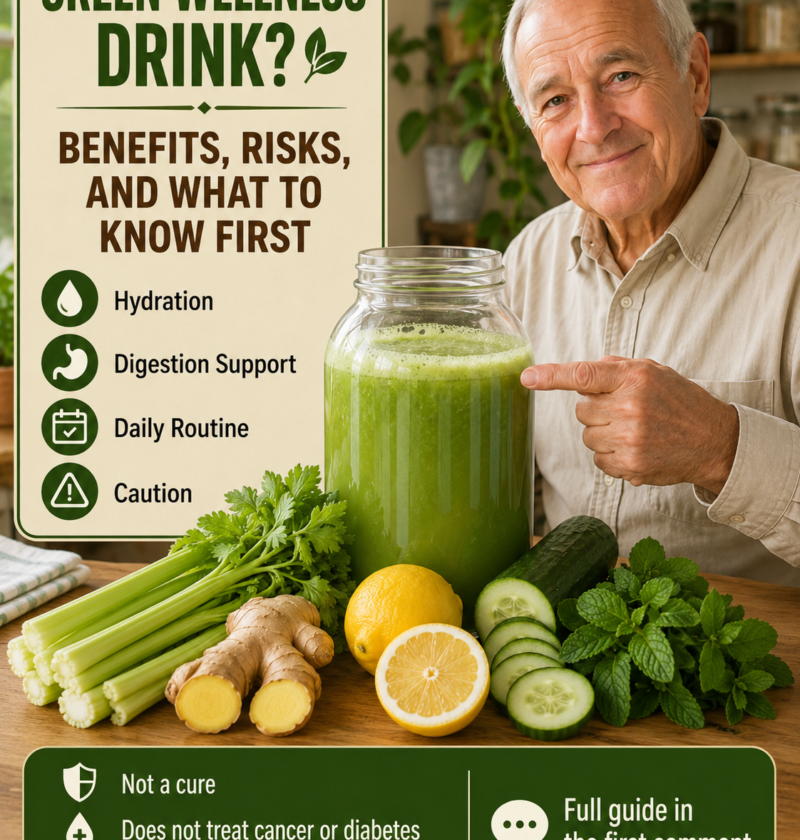
Some posts show a large jar of green juice with celery, cucumber, lemon, ginger, and mint.
Then the claims become very strong.
They say the drink can fight cancer cells.
They say it can balance blood sugar.
They say it detoxifies the body.
They say it gives energy every day.
That sounds exciting.
But it is not safe to say.
A green wellness drink can be part of a healthy routine.
It may support hydration.
It may help some people eat more vegetables.
It may replace sugary drinks.
It may feel refreshing.
But it is not a cure.
It does not treat cancer.
It does not cure diabetes.
It does not replace medication.
It does not detox the body in a medical way.
And it may not be safe for everyone, especially people with diabetes, kidney disease, reflux, allergies, pregnancy, breastfeeding, or daily medications.
Before drinking a green wellness drink every day, here are the benefits, risks, and what to know first.
🌿 Why Green Drinks Became Popular
Green drinks look healthy.
They are bright.
They are fresh.
They are made with ingredients people recognize.
Celery looks clean.
Cucumber looks hydrating.
Lemon feels refreshing.
Ginger feels strong.
Mint smells fresh.
Together, they create a drink that looks like a “reset.”
That is why these drinks spread fast on Facebook.
But a fresh color does not make something a medical treatment.
A green drink can be a food routine.
It should not be promoted as a disease cure.
💧 The Most Realistic Benefit: Hydration
The safest benefit of a green wellness drink is hydration.
Cucumber and celery contain a lot of water.
Lemon and mint can make water taste better.
That may help some people drink more fluids.
If someone replaces soda, sweet tea, or sugary juice with a mostly water-based green drink, that can be a helpful habit.
Mayo Clinic explains that “detox” diets have little evidence behind their promises and that the body already uses the liver, kidneys, and gastrointestinal tract to handle detoxification every day. Drinking water and eating whole foods is a better focus than believing in cleanse claims.
So the safer message is:
Green drinks may help with hydration.
They do not “detox” disease.
🥒 Cucumber: Refreshing, But Not Medicine
Cucumber is light, watery, and easy to add to drinks.
It can help make a beverage feel fresh.
It may be useful for people who do not enjoy plain water.
But cucumber does not treat cancer.
It does not cure blood sugar problems.
It does not repair organs.
It is simply a vegetable that can support a balanced diet.
A safe green drink should treat cucumber as food, not medicine.
🌱 Celery: Useful Food, But Not a Cure
Celery is popular in green juices.
It has a crisp flavor and contains water, fiber when blended, and plant compounds.
But celery juice is often promoted with exaggerated claims.
Some people say it cures diseases or cleans the body.
That is not responsible.
Celery can be part of a healthy diet.
But it is not cancer treatment.
It is not diabetes treatment.
It is not a replacement for blood pressure medication.
Some research has explored celery and blood pressure, but that does not prove a homemade celery drink treats hypertension or replaces medical care. Research findings should never be turned into guaranteed Facebook cures.
🍋 Lemon: Fresh Flavor, But Acidic
Lemon adds flavor and brightness.
It can make the drink more enjoyable.
But lemon is acidic.
For some people, lemon drinks can irritate the stomach or trigger reflux.
Be careful if you have:
Acid reflux
GERD
Gastritis
Ulcers
Sensitive teeth
Stomach burning
If lemon makes your stomach burn, skip it.
A wellness drink should feel gentle, not painful.
🌿 Ginger: Strong Ingredient, Use Carefully
Ginger is commonly used in food and drinks.
Many people like it because it feels warming and strong.
NCCIH says ginger has been used for nausea and other conditions, but safety can depend on the person and the amount. It also advises people considering ginger supplements during pregnancy to consult a healthcare provider.
Ginger in small food amounts may be fine for many people.
But strong ginger drinks or supplements can be different.
Be careful if you take:
Blood thinners
Diabetes medication
Blood pressure medication
Heart medication
Medication before surgery
Strong ginger can also irritate the stomach for some people.
⚠️ Common Online Claim / Safer Truth
| Common Online Claim | Safer Truth |
|---|---|
| Green drinks fight cancer cells | No green drink should be promoted as cancer treatment |
| This drink balances blood sugar | It may affect diet habits, but it does not replace diabetes care |
| It detoxifies the body | The body already has detox systems; cleanse claims are often misleading |
| It strengthens immunity instantly | Immune health depends on sleep, nutrition, vaccines, hygiene, and medical care |
| It gives energy every day | Energy depends on sleep, food, stress, hydration, and health conditions |
| Natural means safe | Natural ingredients can still cause side effects |
| One jar every day is good for everyone | Some people should avoid daily strong green drinks |
| It replaces medication | Never replace prescribed treatment with a drink |
🩸 Blood Sugar Claims: Be Careful
Blood sugar claims are serious.
A green drink should not be promoted as a diabetes cure.
Diabetes needs real care.
This may include food planning, blood sugar monitoring, physical activity, medication, insulin, and regular medical visits.
The CDC provides resources for diabetes prevention and management, including medication and lifestyle support. Diabetes care is not something to replace with a drink.
If a green drink replaces sugary drinks, it may support a healthier routine.
But that is not the same as treating diabetes.
People taking diabetes medication should be careful with major diet changes, juice routines, fasting, or daily concentrated drinks.
Ask a doctor or pharmacist first.
🧬 Cancer Claims Are Not Safe
This is very important.
No celery, cucumber, lemon, ginger, or mint drink should be promoted as a cancer remedy.
Cancer needs medical diagnosis and treatment.
A drink cannot replace oncology care.
A drink cannot replace surgery, chemotherapy, radiation, immunotherapy, targeted therapy, or follow-up care.
Even if ingredients contain vitamins or plant compounds, that does not mean they treat cancer.
Many foods contain plant compounds.
That does not make them cancer medicine.
Responsible content should avoid:
“Goodbye cancer”
“Fights cancer cells”
“Kills tumors”
“Doctors hide this”
“Natural cure”
“Use instead of treatment”
Those claims are dangerous.