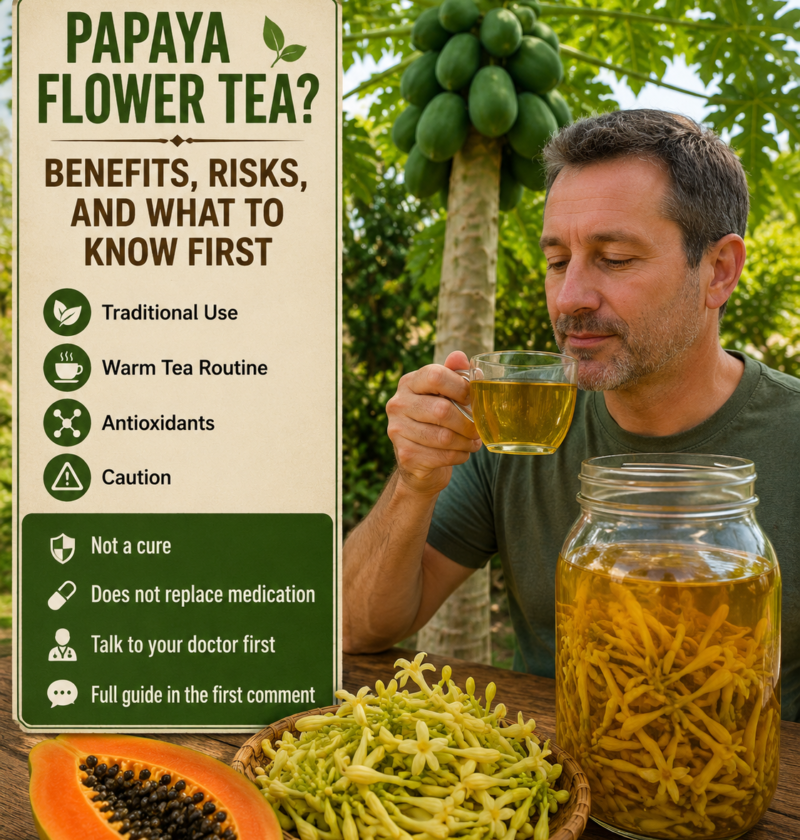
⚡ Papaya Flower Tea? Benefits, Risks, and What to Know First
Papaya flower tea is getting attention online.
Some posts show papaya trees, yellow papaya flowers, jars of tea, and people drinking a homemade recipe.
Other posts go further and show before-and-after lung images.
They suggest papaya flowers or papaya seeds can help with coughing, lung problems, respiratory disease, or breathing discomfort.
That sounds natural.
But it is not a safe claim.
Papaya flower tea may be part of a traditional wellness routine.
A warm tea may feel soothing for the throat.
It may help some people drink more fluids.
Papaya parts may contain plant compounds that people are curious about.
But papaya flower tea is not a cure.
It does not treat lung disease.
It does not replace inhalers, antibiotics, cough medicine, or medical care.
And papaya flowers, seeds, and latex may not be safe for everyone.
Before trying papaya flower tea, here are the benefits, risks, and what to know first.
🌿 Why Papaya Flower Tea Became Popular
Papaya is a familiar tropical plant.
Many people already know the fruit.
The flowers, leaves, and seeds are also used in some traditional routines.
Because the plant looks natural and fresh, people often assume every part of it must be safe.
That is not always true.
Ripe papaya fruit is different from papaya seeds.
Papaya flowers are different from papaya leaves.
Unripe papaya is different from ripe papaya.
Papaya latex is different from a mild tea.
These differences matter.
A fruit can be healthy in normal food amounts while other parts of the plant may need more caution.
🍵 The Most Realistic Benefit: Warm Tea Comfort
The safest benefit of papaya flower tea is warm comfort.
A warm drink may feel soothing when someone has a dry throat.
It may help with hydration.
It may feel calming in the morning or evening.
It may encourage rest.
But comfort is not the same as treatment.
A cough can happen for many reasons.
It may come from a cold, flu, allergies, asthma, reflux, smoke exposure, bronchitis, pneumonia, or other conditions.
A warm tea cannot diagnose the cause.
It cannot safely treat the lungs.
It should only be seen as a comfort routine, not medicine.
⚠️ Common Online Claim / Safer Truth
| Common Online Claim | Safer Truth |
|---|---|
| Papaya flower tea cleans the lungs | No tea can safely “clean” lungs like a before-and-after image |
| It treats cough naturally | Cough has many causes and may need medical care |
| It helps asthma or bronchitis | Asthma and bronchitis need proper guidance |
| It repairs lung damage | There is no safe evidence that papaya flower tea repairs lungs |
| Papaya seeds cure respiratory problems | Papaya seeds are not lung medicine |
| More tea means better results | Stronger use may increase side effects |
| Natural means safe | Natural plant parts can still cause allergy or irritation |
| The recipe replaces medication | Do not replace prescribed treatment with tea |
🫁 Why Lung Before-and-After Images Are Misleading
Before-and-after lung images can be very convincing.
They make people think a plant can repair damaged lungs quickly.
But these images are often misleading.
They may be edited.
They may be unrelated.
They may show animal organs.
They may not represent a real medical result.
They may be used only to create fear and clicks.
Lungs do not change from damaged to healthy because of one herbal drink.
Real respiratory health depends on many factors.
This can include air quality, smoking exposure, allergies, asthma control, infections, medication use, and medical history.
A Facebook image cannot diagnose your lungs.
A tea cannot replace a healthcare professional.
🚨 When a Cough Needs Medical Attention
A mild cough can happen with a cold.
But some cough symptoms should not be ignored.
The CDC says people should see a healthcare professional if they have fever lasting longer than 5 days, fever of 104°F or higher, cough with bloody mucus, shortness of breath, trouble breathing, symptoms lasting more than 3 weeks, or repeated bronchitis episodes.
Mayo Clinic also advises medical care for cough with chest pain, trouble breathing or swallowing, or bloody or pink-tinged phlegm.
Get medical help if you have:
Shortness of breath
Chest pain
Coughing blood
High fever
Wheezing
Blue lips
Severe weakness
Confusion
Symptoms lasting weeks
Cough that keeps coming back
A warm tea may feel comforting.
But breathing problems should not wait.
🌱 Papaya Flowers, Seeds, and Latex: Why Caution Matters
Papaya plant parts are not all the same.
Ripe papaya fruit is commonly eaten.
Papaya seeds are stronger and may bother the stomach.
Papaya flowers may be used traditionally in some places, but safety depends on preparation, amount, and the person using them.
Unripe papaya and papaya latex are especially important to mention.
A PubMed-indexed study reported that unripe or semi-ripe papaya contains higher amounts of latex and could be unsafe in pregnancy because the latex produced marked uterine contractions in animal research.
This does not mean everyone must avoid ripe papaya fruit.
It means strong papaya plant preparations should not be used casually, especially during pregnancy.
🤰 Pregnancy and Breastfeeding Caution
Pregnant people should avoid experimenting with papaya flower tea, papaya seed tea, unripe papaya preparations, or concentrated papaya products unless a healthcare provider says it is safe.
This is especially important because papaya latex has been linked with uterine contraction concerns in animal research.
Breastfeeding people should also ask a healthcare professional before using papaya flower tea or seed products regularly.
Food amounts of ripe papaya fruit are different from medicinal teas or extracts.
A cup of ripe fruit is not the same as a concentrated plant recipe.
🌿 END OF PART 1 🌿
🌿 START OF PART 2 🌿
🤧 Allergy and Latex Sensitivity
Papaya can cause allergic reactions in some people.
This matters especially for people with latex allergy.
Latex-fruit reactions can happen because some fruits share similar proteins with latex.
Allergy & Asthma Network explains that 30 to 50 percent of people with latex allergy may react to certain fruits and vegetables because of similar proteins.
Papaya has also been discussed in latex-papaya allergy reports, and PubMed notes that papaya hypersensitivity may increase anaphylaxis risk in patients with latex allergy.
Possible allergy symptoms may include:
Itching
Hives
Rash
Mouth tingling
Swelling
Nausea
Vomiting
Trouble breathing
If there is trouble breathing or swelling of the face or throat, seek emergency medical help.
🔥 Digestive Side Effects
Papaya flower tea or seed drinks may not feel gentle for everyone.
Some people may experience:
Stomach upset
Nausea
Diarrhea
Cramping
Heartburn
Mouth irritation
Bloating
Papaya seeds can taste strong and peppery.
Strong plant drinks may irritate the stomach, especially on an empty stomach.
People with acid reflux, gastritis, ulcers, IBS, or sensitive digestion should be careful.
If it causes discomfort, stop using it.
Wellness should not hurt.
💊 Medication Interactions: Ask First
Herbal teas and plant supplements can interact with medications.
This is especially important when they are strong, used daily, or used for a health condition.
NCCIH warns that dietary and herbal supplements can interact with medications, may pose risks for people with medical problems or those going to surgery, and many have not been tested in pregnant people, nursing mothers, or children.
Ask a doctor or pharmacist first if you take:
Blood thinners
Diabetes medication
Blood pressure medication
Heart medication
Asthma or COPD medication
Immune-suppressing medication
Liver medication
Kidney medication
Daily supplements
Medication before surgery
A tea may look simple.
But daily herbal use can still matter.
🫁 Asthma, COPD, and Lung Disease: Do Not Replace Treatment
People with asthma, COPD, or other lung disease should be extra careful.
Papaya flower tea cannot replace an inhaler.
It cannot treat an asthma attack.
It cannot treat pneumonia.
It cannot replace antibiotics.
It cannot replace oxygen therapy.
It cannot replace medical monitoring.
If someone has asthma or COPD and symptoms are getting worse, they should follow their medical plan and contact a healthcare professional.
Emergency breathing symptoms need urgent care.
Do not wait for a tea to work.
🛒 What to Look for When Buying Papaya Flower Tea
If someone wants to buy papaya flower tea, quality matters.
Look for:
Food-grade product
Clear ingredient label
Trusted brand
Sealed packaging
Expiration date
No moldy smell
No disease claims
No lung cure claims
No “cleans lungs” language
No fake before-and-after images
No “works better than medicine” marketing
Avoid products that say:
Treats asthma
Cures bronchitis
Cleans damaged lungs
Stops pneumonia
Kills infection
Repairs lung tissue
Cures cough permanently
These are red flags.
A responsible tea should be sold as a tea, not a lung treatment.
🛍️ What to Look for When Buying Papaya Supplements
Papaya products may be sold as capsules, powders, enzymes, seed extracts, leaf extracts, or detox drinks.
These are not the same as ripe papaya fruit.
Before buying, check:
Supplement facts label
Clear dosage
Third-party testing if available
Pregnancy warning
Allergen warning
Medication warning
Exact plant part used
Brand reputation
No miracle claims
No “cure disease” promises
Avoid mystery powders or products that do not clearly say what part of the papaya plant they contain.
A fruit enzyme product, seed powder, flower tea, and leaf extract are different products.
🍵 A Safer Way to Think About Papaya Flower Tea
If you use papaya flower tea, keep it simple.
Use a trusted food-grade product.
Start mild.
Do not make it very strong.
Do not drink it as medicine.
Do not use it to treat lung symptoms.
Do not use it during pregnancy without medical advice.
Do not give it to children without professional guidance.
Do not use unknown flowers from a random tree unless you are sure they are safe and pesticide-free.
And remember:
A warm tea may support comfort.
It is not a respiratory treatment.
🚫 Mistakes to Avoid
Do not use papaya flower tea to treat lung disease.
Do not use it instead of an inhaler.
Do not claim it cures cough.
Do not use before-and-after lung images.
Do not drink unknown papaya plant parts.
Do not use unripe papaya or latex preparations during pregnancy.
Do not ignore chest pain or shortness of breath.
Do not use it with medication without asking a pharmacist.
Do not give strong papaya tea to children.
Do not believe “complete recipe cures lungs” claims.
🧠 The Real Wellness Takeaway
Papaya flower tea may be part of a traditional routine.
It may feel warm and soothing.
It may support hydration.
It may be interesting to people who enjoy herbal teas.
But it is not a cure.
It does not treat lung disease.
It does not replace medical care.
And papaya plant parts may carry risks for people with pregnancy, latex allergy, digestive sensitivity, medication use, or health conditions.
The safest message is simple:
Use food-grade products.
Avoid miracle claims.
Watch for allergies.
Be careful with pregnancy and medication.
Get medical help for serious respiratory symptoms.
✅ Final Answer: Should You Try Papaya Flower Tea?
You may try a mild papaya flower tea if it is food-grade, properly identified, and you tolerate it well.
But do not use it to treat cough, asthma, bronchitis, pneumonia, COPD, lung infection, or breathing problems.
Do not use it during pregnancy or breastfeeding without medical advice.
Do not use it if you have a latex or papaya allergy.
Do not replace medication.
If you have chest pain, shortness of breath, high fever, coughing blood, wheezing, or symptoms lasting more than three weeks, talk to a healthcare professional.
Papaya flower tea can be a comfort routine.
It cannot replace real respiratory care.