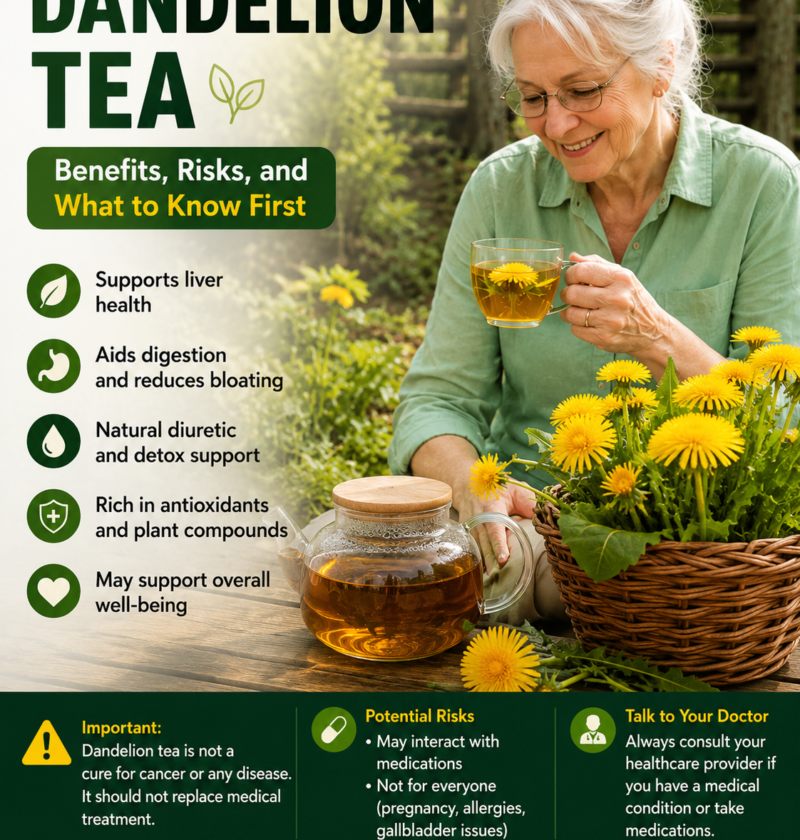
⚡ Dandelion Tea for Wellness? Benefits, Risks, and What to Know First
Dandelion tea is getting attention online again.
Some people drink it for digestion.
Some use it as a natural herbal tea.
Some believe it supports liver health.
Others use it because it feels simple, clean, and natural.
At first, it looks harmless.
A yellow flower.
A warm cup of tea.
A garden plant.
A traditional wellness routine.
But before drinking dandelion tea every day, there is one important thing to understand:
Dandelion may support a wellness routine for some people.
But it is not a cure for cancer.
It is not stronger than chemotherapy.
And it should never replace medical treatment.
🌼 Why Dandelion Became Popular
Dandelion is one of those plants many people recognize.
It grows in yards, gardens, fields, and sidewalks.
Some people see it as a weed.
Others see it as a traditional herb.
For years, people have used dandelion leaves and roots in teas, foods, and herbal products.
That is why it becomes popular online.
It feels natural.
It feels old-fashioned.
It feels like something simple from the garden.
And when people see a warm cup of dandelion tea, they often think about:
- digestion
- bloating
- water balance
- liver support
- antioxidants
- herbal wellness
- natural routines
But natural does not always mean risk-free.
⚠️ The Big Mistake Many People Make
The biggest mistake is believing dandelion tea can treat serious diseases.
Some online posts say dandelion can destroy cancer cells in 48 hours.
Some say it is more powerful than chemotherapy.
Some say doctors hide it.
These claims are not safe.
A plant tea should not be promoted as a cancer treatment.
It should not replace chemotherapy, radiation, surgery, immunotherapy, medication, or a doctor’s care.
The FDA explains that dietary supplements are not intended to diagnose, treat, cure, or prevent disease unless they are regulated as drugs.
So the safer truth is simple:
Dandelion tea may be part of a wellness routine.
But it is not a medical cure.
🍵 Why People Drink Dandelion Tea
Many people drink dandelion tea because it feels light and refreshing.
Some drink it after meals.
Some drink it when they feel bloated.
Some drink it instead of sugary drinks.
Some use it as part of a calm morning or evening routine.
This can be a good habit for some people.
A warm herbal tea may help someone slow down.
It may help them drink more fluids.
It may replace soda or sweet drinks.
It may make a wellness routine feel easier.
But these are lifestyle benefits.
They are not disease cures.
🧪 What Researchers Study in Dandelion
Dandelion contains plant compounds that researchers study.
Some studies look at antioxidants.
Some look at inflammation.
Some look at digestion.
Some look at blood sugar or lipid metabolism.
Some lab studies have looked at dandelion extract and cancer cell lines.
But this is where people get confused.
A lab study is not the same as proving a tea cures cancer in people.
Memorial Sloan Kettering notes that dandelion root extract has shown anticancer effects in some cell-line studies, but that does not mean dandelion tea is a proven cancer treatment for humans.
This difference matters.
A concentrated extract in a lab is not the same as a homemade cup of tea.
A test-tube result is not the same as medical treatment.
A viral post is not the same as clinical proof.
🩺 Can Dandelion Tea Help With Cancer?
Dandelion tea should not be used as a cancer treatment.
It should not be used instead of a doctor’s plan.
It should not be promoted as something that kills cancer cells inside the body.
Cancer is serious.
It needs real medical care.
If someone has cancer or is receiving treatment, they should talk to their oncology team before using herbs or supplements.
Memorial Sloan Kettering advises people to tell healthcare providers about dietary supplements, including herbs, vitamins, minerals, and natural remedies.
This is the safest way to talk about dandelion.
Not fear.
Not miracles.
Just honest caution.
💧 Dandelion and Water Balance
Dandelion is often discussed as a natural diuretic.
That means it may make some people urinate more.
This is one reason people connect dandelion tea with water balance or feeling less bloated.
But this also means caution is needed.
If someone already takes water pills or blood pressure medication, dandelion may not be right for them.
NCCIH says there are theoretical reasons to suspect dandelion may interact with antidiabetes drugs, anticoagulant or antiplatelet drugs, and water pills, among others.
So if someone takes medication every day, they should ask a doctor or pharmacist first.
🍽️ Dandelion and Digestion
Dandelion is often used traditionally for digestion.
Some people drink dandelion tea after meals because it feels bitter and herbal.
Bitter herbs may make the stomach feel more active for some people.
Others may feel more comfortable after a warm tea.
But digestion problems can have many causes.
Bloating, stomach pain, constipation, diarrhea, reflux, or nausea may be connected to:
- food intolerance
- stress
- low fiber
- dehydration
- eating too fast
- medication
- gut conditions
- infection
- gallbladder issues
- liver problems
- acid reflux
So dandelion tea should not be used to ignore ongoing digestive symptoms.
If symptoms continue, the cause needs attention.
🌿 Dandelion Leaves vs Dandelion Root
Dandelion products can come from different parts of the plant.
Some use the leaves.
Some use the roots.
Some use the flowers.
Some use blends.
The effect may depend on the part used.
Dandelion leaf tea may be different from roasted dandelion root tea.
A supplement capsule may be different from a mild tea.
A concentrated extract may be stronger than a cup made at home.
This is why labels matter.
People should not treat all dandelion products as the same.
⚠️ Who Should Be Extra Careful?
Some people should be careful with dandelion tea or supplements.
This includes people who:
- take diabetes medication
- take blood pressure medication
- take water pills
- take blood thinners
- take aspirin regularly
- have kidney disease
- have liver disease
- have gallbladder problems
- have gallstones
- are pregnant
- are breastfeeding
- have allergies to ragweed or related plants
- are preparing for surgery
- are receiving cancer treatment
- take several medications
Dandelion may interact with medicines, and some people can have allergic reactions. NCCIH also notes that dandelion is generally well tolerated but can cause allergic reactions in some people.