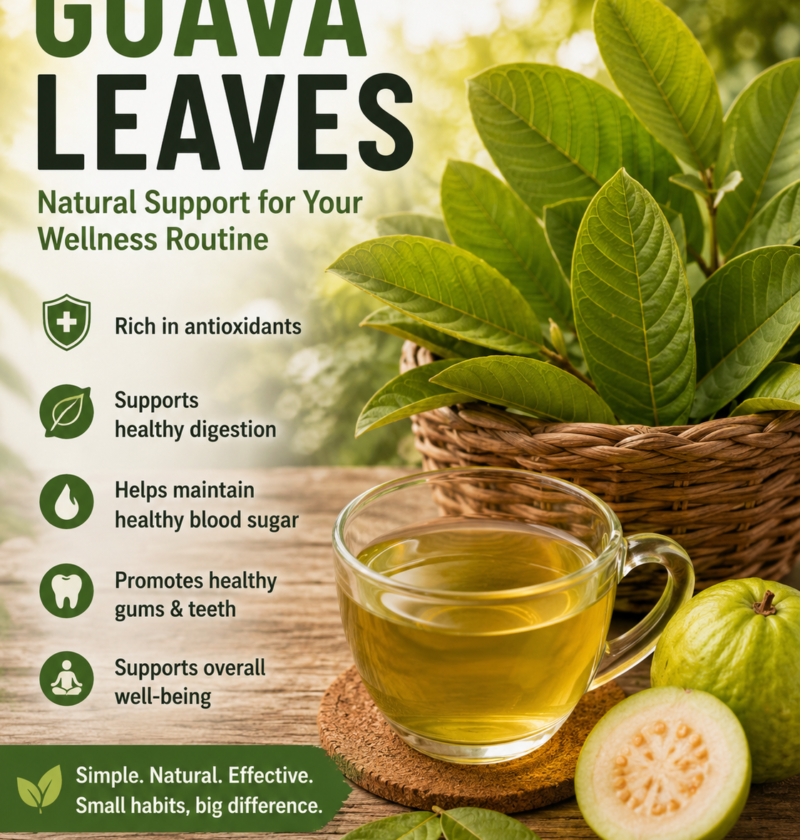
⚡ Guava Leaves for Wellness? Benefits, Risks, and What to Know First
Guava leaves are getting a lot of attention online.
Some people boil them as tea.
Some people use them in traditional home remedies.
Some people believe they support digestion.
Others say they may help the body feel cleaner, lighter, and healthier.
At first, it sounds simple.
Green leaves.
Hot water.
A natural drink.
A family remedy.
But before using guava leaves every day, there is one important thing to understand:
Guava leaves may have interesting plant compounds.
But they should not be treated like a cure for serious diseases.
And they should not replace medical treatment.
🌿 Why Guava Leaves Became Popular
Guava leaves became popular because they feel natural and traditional.
Many families have used plant-based drinks for generations.
A warm cup of guava leaf tea may feel comforting.
It may feel simple.
It may feel healthier than sugary drinks.
And when people see guava fruit and leaves online, they often connect them with wellness, digestion, immunity, and cleansing.
Guava fruit and leaves contain plant compounds that researchers have studied for possible health effects, including antioxidant and metabolic support. A review of guava leaves notes that extracts have been studied for several biological activities, but research findings do not mean guava leaves cure disease in humans. (PMC)
That is why we need balance.
Guava leaves may be interesting.
But they are not magic.
⚠️ The Big Mistake Many People Make
The biggest mistake is believing that guava leaves can fight or cure serious diseases.
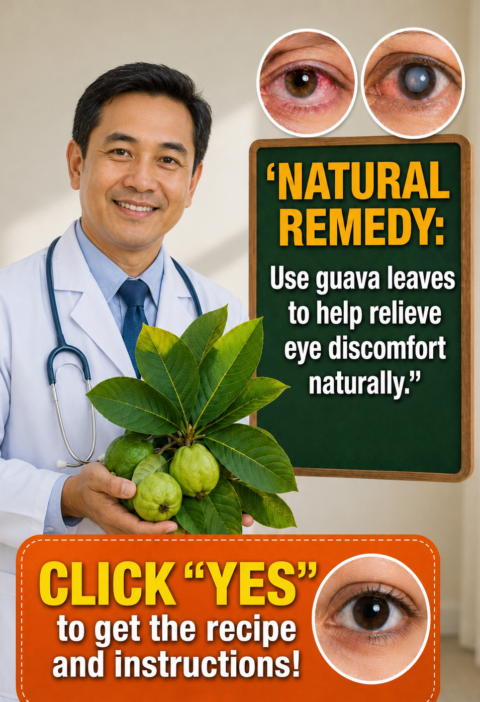
Some online images claim guava leaves help fight many types of cancer.
Others make it look like one simple tea can replace medicine.
That is not safe.
A guava leaf drink should not be promoted as a cancer treatment.
It should not replace prescribed medication.
It should not replace chemotherapy, radiation, surgery, diabetes medication, blood pressure medication, or professional medical care.
The FDA explains that dietary supplements are not legally allowed to claim they diagnose, treat, cure, or prevent disease unless they are regulated as drugs. (U.S. Food and Drug Administration)
So the safer message is simple:
Guava leaves may support a wellness routine for some people.
But they are not a cure.
🍵 Why People Drink Guava Leaf Tea
Many people drink guava leaf tea because it feels gentle and traditional.
They may use it after meals.
They may use it when they want something warm.
They may use it instead of soda or sugary drinks.
Some people like herbal teas because they help them slow down, hydrate, and build a calm routine.
A warm herbal drink can feel comforting.
But comfort is not the same as medical treatment.
A cup of tea may support a healthier lifestyle.
But it should not be used to ignore serious symptoms.
🧪 What Researchers Study in Guava Leaves
Guava leaves contain natural compounds such as polyphenols, flavonoids, and other plant chemicals.
Researchers study these compounds because they may have antioxidant or anti-inflammatory properties.
Some lab studies also look at guava leaf extracts and cancer-related cell lines. But lab results do not mean a homemade guava leaf tea can treat cancer in the human body. A review on guava extracts discusses anticancer potential mostly from experimental research, which is very different from proving that guava leaves cure cancer in people. (PMC)
This difference matters.
A lab extract is not the same as a homemade tea.
A test-tube result is not the same as a medical treatment.
A viral post is not the same as clinical proof.
🩺 Can Guava Leaves Help With Cancer?
This is where we must be very careful.
Guava leaves should not be used as a cancer treatment.
They should not be promoted as something that kills cancer cells in the body.
They should not be used instead of a doctor’s treatment plan.
Cancer is serious.
It needs proper medical care.
Some plant compounds are studied in labs because scientists are always looking for new ideas.
But that does not mean people should drink guava leaf tea and delay medical treatment.
If someone has cancer or is receiving cancer treatment, they should talk to their oncology team before using herbal products.
Memorial Sloan Kettering Cancer Center says people should judge herbs and supplements carefully, including whether they work, whether they interact with cancer medicines, and whether they are safe. (Memorial Sloan Kettering Cancer Center)
That is the responsible way to talk about this topic.
💧 Guava Leaves and Blood Sugar
Guava leaf tea is also discussed online for blood sugar support.
Some studies have looked at guava leaf tea and blood sugar or cholesterol markers.
One older clinical study suggested guava leaf tea may improve some glucose and lipid markers in people with prediabetes or mild diabetes, but this does not mean it replaces diabetes medication or medical monitoring. (PMC)
This is important.
If someone has diabetes, they should not stop their medication because of a tea.
They should not change their treatment without medical advice.
Herbal products can affect people differently.
And blood sugar problems need proper monitoring.
🍽️ Guava Fruit vs Guava Leaves
Guava fruit and guava leaves are not the same thing.
Guava fruit is eaten as food.
It contains vitamin C, fiber, potassium, and other nutrients.
Guava leaves are usually used as tea, extract, or supplement.
A food is easier to understand than a concentrated extract.
That is why eating guava fruit as part of a balanced diet is different from using guava leaf supplements every day.
For a USA audience, this distinction matters.
People may search for:
- guava tea
- guava leaf supplement
- guava extract
- blood sugar support tea
- antioxidant supplements
- immune support products
- herbal wellness drinks
But the article should still keep the message safe and realistic.
⚠️ Who Should Be Careful With Guava Leaves?
Some people should be extra careful with guava leaf tea or supplements.
This includes people who:
- take diabetes medication
- take blood pressure medication
- take blood thinners
- have kidney problems
- have liver problems
- are pregnant
- are breastfeeding
- are preparing for surgery
- have cancer
- are receiving chemotherapy
- have allergies
- take several supplements
- have chronic health conditions
The National Center for Complementary and Integrative Health warns that herbs can interact with medicines and that people should tell healthcare providers about herbs or supplements they use. (NCCIH)
This is why “natural” does not always mean harmless.
🧊 Why Homemade Guava Leaf Tea Needs Care
If someone makes guava leaf tea at home, cleanliness matters.
The leaves should be clean.
The water should be clean.
The pot should be clean.
The cup should be clean.
Do not use leaves sprayed with pesticides.
Do not use leaves from roadsides.
Do not use unknown plants.
Do not keep homemade tea in the fridge for too long.
Do not drink it if it smells strange, looks unusual, or tastes bad.
A natural drink can still spoil.
A green leaf can still carry dirt or chemicals.
Safe preparation matters.
🌿 END OF PART 1 🌿
🌿 START OF PART 2 🌿
✅ A Safer Way to Use Guava Leaves
Guava leaves should be treated like a gentle herbal wellness idea.
Not medicine.
Not a cancer cure.
Not a replacement for treatment.
Not a miracle drink.
If someone wants to try guava leaf tea, the safer approach is simple:
Use food-safe leaves.
Make a mild tea.
Do not drink too much.
Do not mix with many unknown herbs.
Do not use it to replace medication.
And stop if the body reacts badly.
🍵 Step 1: Keep the Tea Mild
More is not always better.
Some people think a stronger tea means stronger benefits.
But with herbs, stronger can also mean more risk.
A mild tea is usually safer than a strong concentrated drink.
Avoid boiling huge amounts of leaves.
Avoid drinking it all day.
Avoid taking concentrated supplements without advice.
A simple routine is better than an extreme routine.
🌱 Step 2: Know the Source of the Leaves
Do not use random leaves.
Do not use leaves from unknown trees.
Do not use leaves from areas sprayed with chemicals.
Do not use leaves from roadsides or polluted places.
Use clean, properly identified guava leaves.
This matters because the safety of the leaf depends on the source.
Natural does not automatically mean clean.
💊 Step 3: Be Careful With Medication
If you take medication, be careful.
This is especially important for people using medication for:
- diabetes
- blood pressure
- blood thinning
- heart problems
- kidney disease
- liver disease
- cancer treatment
Herbs can sometimes change how the body responds to medicine.
They may also increase side effects.
Before using guava leaf tea every day, ask a doctor or pharmacist if you take daily medication.
That is the safest choice.
🩺 Step 4: Do Not Use It Instead of Medical Care
This is the most important rule.
If you have serious symptoms, guava leaves are not enough.
Talk to a healthcare professional if you have:
- unexplained weight loss
- severe fatigue
- ongoing pain
- bleeding
- fever that does not improve
- stomach pain that keeps returning
- blood sugar problems
- lumps or swelling
- changes in bowel habits
- symptoms that keep getting worse
- any cancer diagnosis
A home remedy should never delay proper medical care.
📌 Quick Comparison Table
| Common Online Claim | Safer Truth |
|---|---|
| Guava leaves fight 12 types of cancer | Guava leaves are not proven cancer treatment |
| Guava leaf tea replaces medicine | It should not replace prescribed treatment |
| Natural means safe | Herbs can still cause side effects or interactions |
| Stronger tea means better results | Stronger may increase risk |
| Everyone can drink it daily | Some people need medical advice first |
| Lab studies prove it works in people | Lab research is not the same as human treatment |
| Guava leaves cure diabetes | They do not replace diabetes care or monitoring |
🛒 What to Look for in Guava Leaf Products
This section helps the article attract better USA buyer intent.
If someone wants to buy guava leaf tea or supplements, they should look for:
- clear ingredient label
- no exaggerated disease claims
- third-party testing when possible
- caffeine-free label if needed
- no hidden stimulant blends
- simple ingredient list
- trusted brand
- dosage instructions
- warning label
- country of origin
- organic certification if preferred
Avoid products that claim to cure cancer, diabetes, infections, or serious disease.
Those claims are a red flag.
A responsible product should focus on wellness support, not miracle promises.
🍽️ Better Wellness Habits to Combine With Herbal Tea
Guava leaf tea should not be the whole wellness plan.
A better routine includes:
- balanced meals
- more whole foods
- enough protein
- enough fiber
- regular movement
- good sleep
- stress management
- drinking water
- regular checkups
- following medical advice
Herbal tea can be a small part of a lifestyle.
But the foundation is daily habits.
That is what makes health stronger over time.
🧠 Why This Topic Goes Viral on Facebook
Guava leaf posts go viral because they sound surprising.
People see a simple leaf and think:
Could this really help?
What is the recipe?
Why have I never heard of this?
Is it natural?
Can I make it at home?
The curiosity is strong.
But dangerous claims can mislead people.
That is why the headline should be safe:
Guava Leaves for Wellness? Benefits, Risks, and What to Know First
It still gets attention.
It still feels interesting.
But it does not promise a cure.
🚫 Claims to Avoid
Avoid saying:
- guava leaves cure cancer
- guava leaves kill cancer cells in the body
- guava leaves replace chemotherapy
- guava leaves reverse diabetes
- guava leaves cure infections
- guava leaves clean the liver
- guava leaves fix all diseases
- doctors hide this remedy
- drink this instead of medicine
These claims are unsafe.
They can make people delay treatment.
They can also damage trust.
A better article gives curiosity, but also safety.
🌙 A Simple Guava Leaf Tea Routine
A simple routine can look like this:
- Use clean, properly identified guava leaves.
- Rinse the leaves well.
- Make a mild tea.
- Drink a small amount.
- Do not add many unknown herbs.
- Do not use it instead of medicine.
- Stop if you feel discomfort.
- Ask a professional if you have health conditions.
Simple is safer.
Extreme is risky.
⚠️ When to Stop Using Guava Leaves
Stop using guava leaf tea or supplements if you notice:
- nausea
- stomach pain
- dizziness
- rash
- itching
- swelling
- diarrhea
- low blood sugar symptoms
- unusual tiredness
- breathing discomfort
- symptoms that feel unusual for you
If symptoms are serious, seek medical help.
Do not continue a remedy that makes your body feel worse.
🌿 Final Thoughts
Guava leaves are interesting.
They have traditional use.
They contain plant compounds that researchers study.
And they may be part of a gentle wellness routine for some people.
But they are not a cure for cancer.
They are not a replacement for medicine.
They are not safe for everyone.
And they should not be promoted with miracle claims.
The smartest approach is simple:
Use guava leaves carefully.
Keep the tea mild.
Avoid exaggerated claims.
Talk to a healthcare professional if you take medication or have a health condition.
And remember:
Real wellness is built with safe habits, honest information, and proper medical care when needed.