🧴 Why Smart Homeowners Never Store Cleaning Products Under the Kitchen Sink Anymore
For years, storing cleaning products under the kitchen sink felt completely normal.
Sprays, bleach, sponges, detergents, disinfectants…
Everything gets pushed into the cabinet below the sink because it feels convenient and hidden.
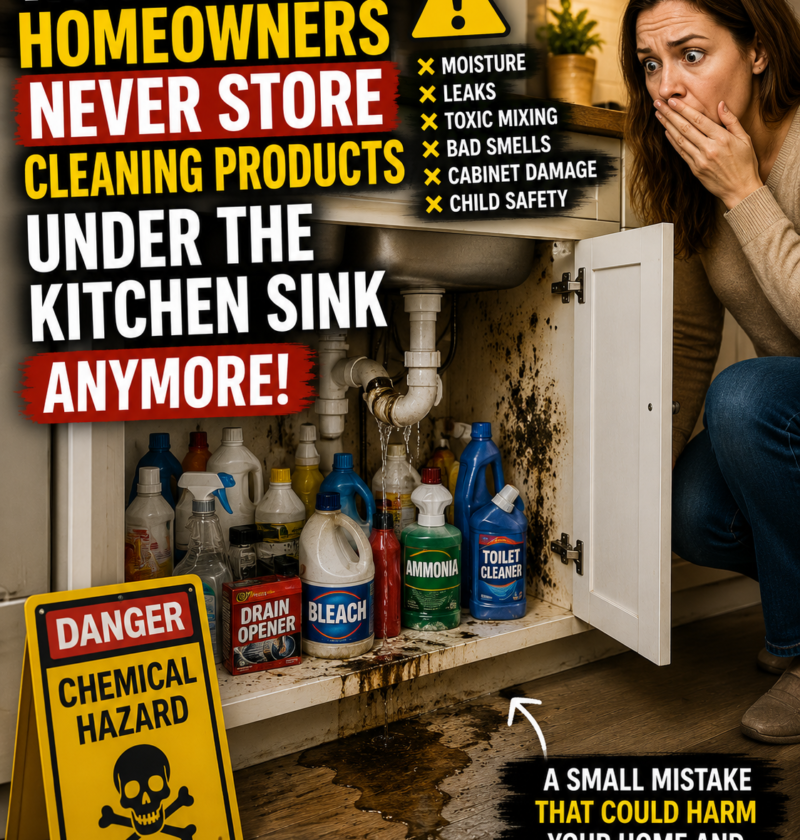
But smart homeowners are starting to rethink this habit after realizing how much moisture, clutter, leaks, odors, and hidden damage can quietly build up inside that small space over time.
And surprisingly, many people only discover the problem after opening the cabinet one day and noticing a strange smell, warped wood, or leaking containers.
🚰 Why the Area Under the Sink Becomes Problematic So Easily
The cabinet under the kitchen sink is one of the dampest areas in many homes.
Even tiny moisture exposure can slowly affect:
- cabinet wood
- cleaning product labels
- cardboard packaging
- metal containers
- shelf surfaces
- nearby pipes
And because the space stays dark and closed most of the time, small problems often go unnoticed much longer.
That’s why many homeowners are paying closer attention to how they organize this area.
💧 Small Leaks Often Stay Hidden Too Long
One major issue is hidden plumbing leaks.
Tiny drips under the sink can continue quietly for weeks or months before anyone notices.
Especially when the cabinet is crowded with bottles and supplies.
Over time, trapped moisture may lead to:
- bad smells
- warped cabinets
- mold-friendly conditions
- damaged storage areas
- sticky residue buildup
That’s why smart homeowners increasingly avoid overstuffing the cabinet completely.
⚠️ Why Mixing Products Accidentally Can Become Dangerous
Another reason homeowners are more careful now is chemical safety.
Some cleaning products should never mix together accidentally.
Especially products containing:
- bleach
- ammonia
- strong acids
- concentrated cleaners
If bottles leak or spill in tight spaces, strong fumes or dangerous chemical reactions may occur.
That’s why many homeowners now separate products carefully instead of throwing everything together randomly under the sink.
👶 Why Families With Children Are More Careful
Under-sink cabinets are often easy for children or pets to reach.
That’s why many families now prioritize:
✅ child safety locks
✅ higher storage shelves
✅ organized containers
✅ separating toxic products
✅ avoiding loose chemical bottles
Especially in busy kitchens where cabinets get opened constantly throughout the day.
🧼 Why Clutter Makes Cleaning Harder
Many under-sink cabinets slowly become “hidden clutter zones.”
Old sponges.
Half-empty bottles.
Leaking products.
Random plastic bags.
Unused cleaners.
Eventually the area becomes difficult to clean and harder to inspect properly.
That’s why many homeowners are simplifying under-sink storage instead of continuously adding more products.
🌬️ Moisture and Airflow Matter More Than People Think
Closed cabinets trap humidity easily.
Especially near:
- dishwashers
- garbage disposals
- hot water lines
- damp sponges
- leaking pipes
Without airflow, moisture can linger much longer inside the cabinet.
That’s why smart homeowners often:
✅ dry the area regularly
✅ avoid soaking-wet sponges inside
✅ inspect pipes occasionally
✅ reduce unnecessary clutter
✅ use simple organizers
Small habits help prevent bigger problems later.
🏡 Why Organized Cabinets Feel More Luxurious
Interestingly, organized hidden spaces often make the entire kitchen feel calmer.
Even if guests never see inside the cabinet.
When homeowners know their storage areas are:
- clean
- dry
- organized
- easy to access
the kitchen often feels easier to maintain overall.
And many people realize they actually need fewer cleaning products than they thought.