🔩🌱 The Viral Nail-in-Soil Trick: Does It Really Help Plants Grow or Harm Them?
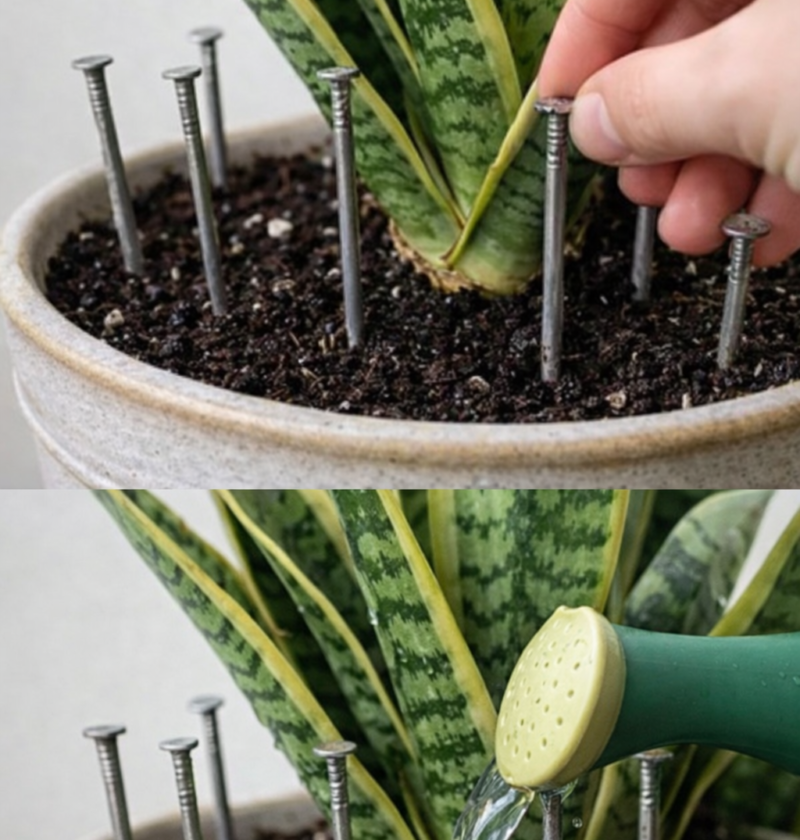
If you spend time on social media, you’ve probably seen it — someone pushes rusty nails into the soil of a plant, waters it, and suddenly the plant appears greener, stronger, and full of life. This “hack” has gone viral, with claims that it boosts growth and even makes plants bloom faster.
At first glance, it sounds simple and almost magical. Nails contain iron, and iron is an essential nutrient for plants. So the idea seems logical: add nails, add iron, get better growth.
But does it actually work? And more importantly — is it safe for your plants?
In this article, we break down the science behind the nail-in-soil trick, what really happens in the soil, and whether you should try it or avoid it.
🌱 Why Plants Need Iron
Iron is a micronutrient that plays a crucial role in plant health. It is involved in chlorophyll production, which helps plants create energy through photosynthesis.
When plants lack iron, they often develop a condition called chlorosis. This causes leaves to turn yellow while the veins remain green.
So yes — plants do need iron. But the key question is how they absorb it.
🔬 The Science Behind the Nail Trick
The idea behind the trick is that nails, especially rusty ones, release iron into the soil over time.
However, the reality is more complex.
⚙️ Slow Breakdown
Metal nails do not dissolve quickly in soil. Even rusty nails release iron very slowly, often too slowly to benefit plants in a meaningful timeframe.
⚗️ Plant-Available Iron
Plants can only absorb iron in specific forms. The iron from nails is not always in a form that roots can easily use.
🧪 Soil Conditions Matter
Soil pH plays a major role. In alkaline soil, iron becomes less available, even if it is present.
This means adding nails does not guarantee better iron absorption.
🌿 Does It Actually Help Plants?
In most cases, the effect of nails in soil is minimal or unnoticeable.
Some plants may appear healthier after the trick, but this is often due to improved watering, lighting, or general care rather than the nails themselves.
There is no strong scientific evidence showing that burying nails significantly improves plant growth.
⚠️ Potential Risks of Using Nails
❗ Soil Imbalance
Metal objects can affect soil chemistry over time in unpredictable ways.
❗ Injury Risk
Sharp objects in soil can be dangerous when repotting or handling plants.
❗ Inconsistent Results
The trick does not provide controlled or measurable nutrients.
Because of these risks, it is not considered a reliable method for plant care.