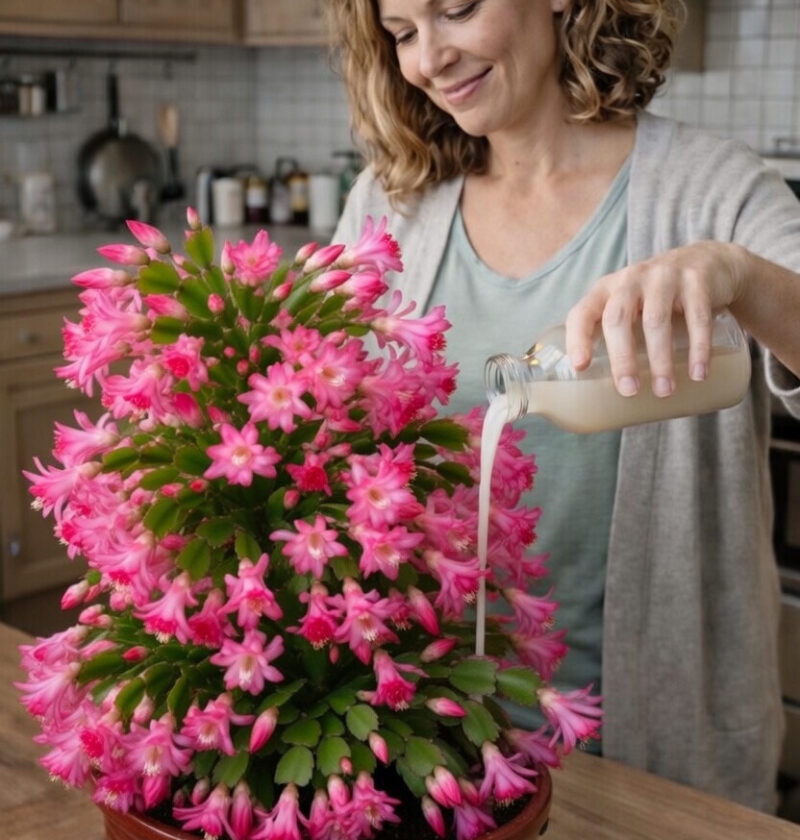
🌸 Why Your Plant Has Buds But No Flowers — The Simple Rice Water Trick That Finally Makes Them Bloom
You check your plant every day and feel that mix of excitement and frustration. The buds are there. They look ready. But days pass… and nothing happens. The buds stay closed, dry out, or fall off before turning into real flowers.
This is one of the most common problems for indoor gardeners. A plant full of buds that refuses to bloom can feel like a mystery. But in most cases, it is not a mystery at all. It is simply a signal that something in the plant’s environment is slightly out of balance.
Flowering requires energy, stable conditions, and proper nutrition. If one of these elements is missing, the plant may form buds but not have enough strength to open them.
One gentle and popular method many gardeners use to support blooming is diluted rice water — a simple kitchen-based solution that helps improve soil conditions and support plant health.
When combined with proper care, this trick can help plants move from “almost blooming” to full, vibrant flowers.
🌱 Why Plants Form Buds But Fail to Bloom
Buds are the plant’s promise of flowers — but they are also a test. If conditions are not right, the plant may stop the process before the bloom opens.
There are several common reasons for this issue.
💡 Insufficient Light
Light provides the energy needed for flowering. Without enough light, buds may form but lack the strength to open.
💧 Inconsistent Watering
Too much or too little water can stress the plant and cause buds to drop.
🌱 Nutrient Imbalance
Plants need balanced nutrients to support blooming. Poor soil conditions can prevent proper development.
🌡️ Environmental Stress
Temperature changes, dry air, or drafts can interrupt the blooming process.
🌿 The Simple Rice Water Trick Explained
Rice water is the cloudy liquid left after rinsing rice. It contains small amounts of starch, minerals, and organic compounds.
When diluted and used occasionally, it can support soil microorganisms and improve nutrient availability.
This does not force blooming instantly, but it helps create better conditions for the plant to complete its natural flowering cycle.
🌿 Why This Trick Can Help Blooming
1️⃣ Supports Soil Life
Healthy soil microorganisms help roots absorb nutrients more efficiently.
2️⃣ Provides Gentle Nutrients
The nutrients are mild and safe for most plants.
3️⃣ Encourages Root Strength
Strong roots support the energy needed for blooming.
4️⃣ Reduces Plant Stress
A balanced soil environment helps stabilize plant growth.
However, the key is using it correctly and combining it with proper plant care.