🌿 The Simple Sprinkle Trick That Makes Houseplants Bloom Faster and Grow Healthier
Houseplants have a special way of transforming indoor spaces. A quiet corner becomes more alive with a peace lily. A windowsill feels brighter with African violets. A shelf looks more inviting with pothos, jade, or flowering kalanchoe. For many people, indoor plants are not just decoration. They are part of the atmosphere of the home. They bring softness, freshness, color, and a daily sense of care.
Yet even the most loved houseplants can sometimes become frustrating. They survive, but they do not thrive. Leaves stay small. New growth appears slowly. Flower buds take forever to form. Blooming plants may produce one weak flower and then stop for months. The plant is alive, but it does not have that lush, vigorous look gardeners hope for.
In many cases, the issue is not dramatic disease, severe neglect, or poor genetics. It is something much simpler. The soil in the pot has become tired. The plant has used the nutrients available in the potting mix, watering has slowly washed minerals downward, and the root zone no longer has the same richness it had when the plant was first potted.
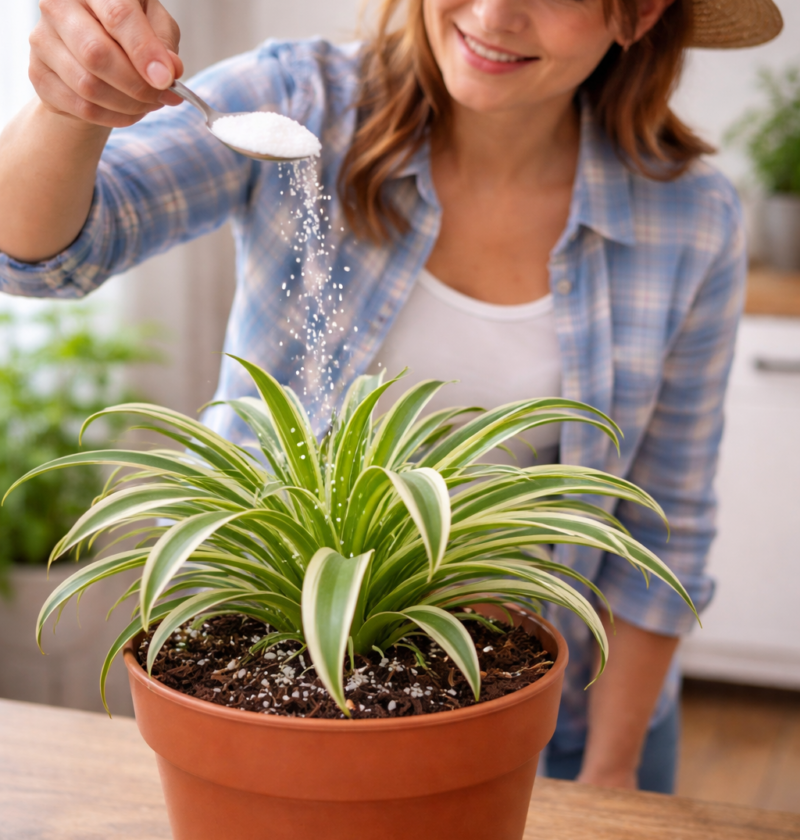
This is why experienced indoor gardeners often rely on one very simple method: a gentle top-dressing sprinkle. Instead of pouring strong liquid fertilizers into the pot every week, they lightly sprinkle a natural nutrient-rich material over the soil surface. With regular watering, those nutrients gradually move downward into the root zone. The plant receives a slow, steady feed instead of a sudden chemical rush.
Among all the top-dressing methods used for houseplants, one of the simplest and most effective is a light sprinkle of worm castings. This natural material, produced by composting worms, is one of the gentlest soil boosters available. It supports healthier roots, richer soil biology, greener leaves, and for flowering houseplants, more consistent blooming over time.
The trick sounds almost too simple to matter. You sprinkle a small amount on top of the soil, water as usual, and let nature do the rest. But that simplicity is exactly what makes it so useful. It is easy for beginners, safe for most houseplants, and effective because it improves the soil rather than forcing the plant.
🌱 Why Houseplants Often Stop Growing Well Indoors
Houseplants live in a very different world from outdoor plants. In nature, roots can spread wide and deep. They can search for nutrients, follow moisture, interact with fungi and microorganisms, and benefit from the constant breakdown of organic matter. Fallen leaves, small insect remains, composting plant debris, and natural soil life create a living environment that continually renews itself.
In a pot, things are much more limited. A plant depends entirely on the soil inside that container. Every nutrient, every bit of moisture, and every pocket of air available to the roots comes from that small volume of potting mix. Over time, the plant consumes what is there. Watering leaches minerals downward. Organic matter breaks down. The potting mix becomes less active and less fertile.
This is why a houseplant can look good for months after repotting and then slowly begin to lose energy. Growth becomes smaller. Leaf color dulls. Blooming slows. The plant is not necessarily dying. It is simply running on a weaker soil system.
Another common problem is that many houseplant owners are afraid of fertilizing. They either do too little, which leaves the plant underfed, or they do too much, which can burn the roots with concentrated salts. Strong synthetic fertilizers may produce a temporary burst of growth, but they can also create long-term stress if overused. Sensitive plants may react with brown tips, salt buildup, or weak, stretched growth.
This is where gentle top-dressing becomes valuable. Instead of shocking the plant, it rebuilds the soil slowly. Instead of demanding that the roots absorb a high concentration of nutrients all at once, it creates a more natural feeding rhythm.
🪴 What the “Simple Sprinkle Trick” Really Is
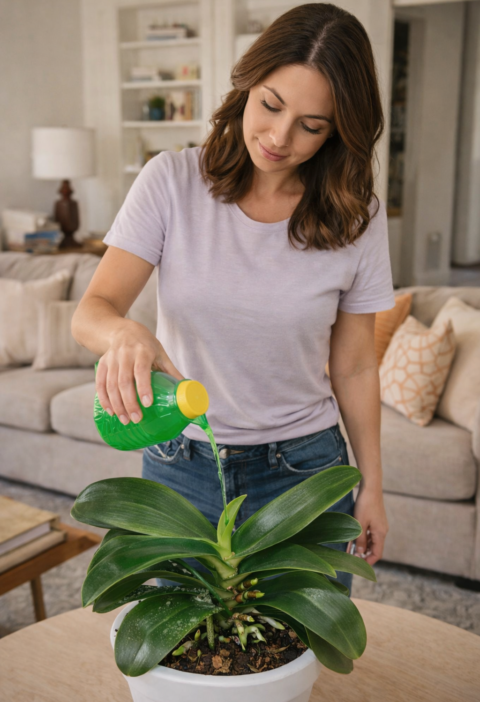
The simple sprinkle trick is the practice of applying a thin layer of nutrient-rich organic matter over the top of your houseplant soil. With each watering, tiny amounts of nutrition wash into the pot. Microorganisms also begin working on the surface layer, gradually incorporating it into the soil system below.
For this method, one of the best materials is worm castings. Worm castings are essentially worm compost: finely processed organic matter that has passed through composting worms. The result is dark, crumbly, earthy material filled with plant-available nutrients and beneficial microbes.
Unlike harsh fertilizers, worm castings are mild. They do not usually burn roots when used in reasonable amounts. They also improve soil texture and biological activity rather than feeding the plant in a purely chemical way.
That is why many indoor gardeners use them not just as a fertilizer, but as a soil conditioner. The sprinkle itself may look small, but over time it can have a noticeable effect on the overall health of the plant.
🌿 Why Worm Castings Work So Well
1️⃣ They provide gentle nutrition
Worm castings contain small amounts of key nutrients such as nitrogen, phosphorus, potassium, calcium, and trace minerals. These nutrients are not delivered in an aggressive surge. Instead, they are released gradually, which is much safer for most indoor plants.
Flowering plants benefit especially from this slow release because blooming is not just about one nutrient. It depends on balanced overall plant health. A plant with strong roots, healthy leaves, and stable nutrition is more likely to form buds and maintain flowers for longer.
2️⃣ They improve soil life
Healthy soil is not just dirt. It is a living environment. Worm castings often contain beneficial microorganisms that help break down organic matter and make nutrients easier for roots to absorb. In a pot, where soil biology is limited, even a small boost in microbial activity can make the root zone more dynamic and productive.
This matters because a biologically active potting mix usually supports steadier growth than sterile, exhausted soil.
3️⃣ They support root development
Roots are the foundation of every healthy houseplant. If the roots are weak, compacted, stressed, or undernourished, the leaves and flowers above will never reach their full potential. Worm castings help create a root-friendly environment by improving nutrient access and supporting a more balanced soil system.
Plants with healthier roots often show stronger leaf production, fuller shape, and better resistance to stress.
4️⃣ They are hard to misuse
One of the biggest reasons this trick is so helpful is that it is forgiving. Many beginners damage plants with overly strong fertilizer schedules. Worm castings, when sprinkled lightly, are far less risky than concentrated synthetic feeds. That makes them ideal for peace lilies, pothos, spider plants, African violets, begonias, orchids in suitable media, and many flowering tropical houseplants.
🌸 How This Sprinkle Trick Can Help Blooming Plants
When people hear “bloom faster,” they often imagine a miracle powder that forces flowers to appear overnight. Real plant growth does not work that way. Blooming is the result of good conditions over time. The plant needs enough light, enough energy from photosynthesis, healthy roots, balanced moisture, and adequate nutrients.
The sprinkle trick helps with one part of that equation: nutrition and soil vitality. It does not replace light or proper watering. But if your flowering plant already gets decent light and reasonable care, improving the soil can make a visible difference.
Plants like peace lilies, African violets, anthuriums, Christmas cacti, kalanchoe, and flowering begonias often bloom better when they are not struggling nutritionally. They may develop stronger buds, hold flowers longer, and maintain healthier foliage while blooming.
For foliage plants that rarely bloom indoors, the effect is usually seen more in leaf health than flowers. Snake plants, pothos, philodendrons, and ZZ plants may not suddenly become flower machines, but they can grow more steadily and produce stronger leaves.
🍃 Signs Your Houseplants May Need a Gentle Top-Dressing
Not every slow-growing plant is nutrient-starved. Sometimes the issue is poor light, overwatering, root crowding, or seasonal dormancy. Still, there are several signs that your plant may benefit from a simple sprinkle feeding method.
One sign is pale or dull foliage. If the leaves are smaller or less vibrant than they used to be, nutrition may be part of the problem. Another sign is weak new growth. If fresh leaves emerge but remain tiny, thin, or underdeveloped, the plant may not be getting what it needs from the potting mix.
For flowering plants, reduced blooming is another clue. If a plant that previously bloomed well now produces fewer flowers, shorter bloom cycles, or weak buds, tired soil could be contributing. A crusty soil surface, repeated watering through the same exhausted mix, and no recent fertilization history also point in that direction.
When several of these signs appear together, a gentle organic top-dressing can be a smart first step before moving to stronger interventions.
🌼 Which Houseplants Respond Best to This Trick
Most houseplants can benefit from a mild top-dressing, but some respond especially well.
🌿 Peace lilies
Peace lilies love steady moisture and rich soil. They often respond to worm castings with greener leaves and more reliable blooming, especially during active growing months.
🌺 African violets
African violets are sensitive to fertilizer burn, so a gentle method suits them well. Used lightly, worm castings can support healthier foliage and bud formation.
🌱 Spider plants
Spider plants grow quickly when their roots and soil are healthy. A light sprinkle can help maintain strong green growth without overfeeding.
🌿 Pothos and philodendrons
These foliage favorites often respond with fuller vines, better color, and steadier new growth.
🌸 Flowering tropicals
Anthuriums, begonias, kalanchoe, and Christmas cacti may all benefit from improved soil vitality, especially if they are grown in containers for long periods.
Before we get to the exact method, the most important thing to understand is that success comes from moderation. This is not a “more is better” trick. It works because it is light, simple, and regular.
And the best part is that the application takes less than two minutes — but the way you apply it makes all the difference.