🥬 The Rain Gutter Garden Trick: Grow 40 Lettuce Plants on One Fence With Zero Ground Space
Many gardeners believe they need large garden beds or wide rows of soil to grow fresh vegetables. Traditional gardening often involves digging, bending, weeding, and protecting crops from pests that live close to the ground. But a simple trick using rain gutters can completely change the way leafy greens are grown.
With nothing more than a few sections of vinyl rain gutter mounted to a sunny fence, it is possible to grow dozens of lettuce plants in a very small space. This vertical gardening method creates a wall of fresh salad greens that remain clean, easy to harvest, and protected from common garden pests.
Unlike traditional garden rows, rain gutter gardens lift plants off the ground. The leaves stay clean because they never touch muddy soil, and pests like slugs and snails struggle to reach them. Harvesting becomes easier as well because the plants grow at comfortable picking height.
What makes this technique even more impressive is how productive it can be. A single fence panel can hold multiple rows of gutters, creating space for dozens of lettuce plants in an area that would normally hold only a few.
This simple idea demonstrates how creative vertical gardening can transform even the smallest outdoor spaces into productive food gardens.
🌱 Why Lettuce Grows Perfectly in Rain Gutters
The success of rain gutter gardening comes from understanding how lettuce plants grow. Unlike deep-rooted vegetables such as tomatoes or peppers, lettuce has a very shallow root system.
Most lettuce varieties require only two to three inches of soil depth to produce healthy leaves. Because of this, the typical four-inch depth of a rain gutter actually provides more soil space than the plant truly needs.
This means lettuce plants can thrive in gutters without any difficulty. As long as they receive adequate sunlight, water, and nutrients, the plants grow exactly as they would in a traditional garden bed.
The plant itself does not “know” it is growing in a gutter attached to a fence instead of in the ground.
🥬 The Advantage of Vertical Salad Gardening
Growing lettuce vertically provides several important advantages over ground-level planting.
First, it maximizes space. Instead of using valuable ground area, plants grow upward along fences or walls.
Second, vertical placement protects lettuce from many soil-dwelling pests such as slugs.
Third, harvesting becomes far more convenient. Gardeners can pick leaves while standing upright rather than bending down.
🧱 Building the Rain Gutter Garden
Creating a rain gutter garden is surprisingly simple and requires only a few inexpensive materials that can be found at most hardware stores.
The main components include vinyl rain gutters, mounting brackets, end caps, and basic tools for installation.
Start by selecting a fence that receives plenty of sunlight. A south-facing or east-facing fence usually provides the best conditions for leafy greens.
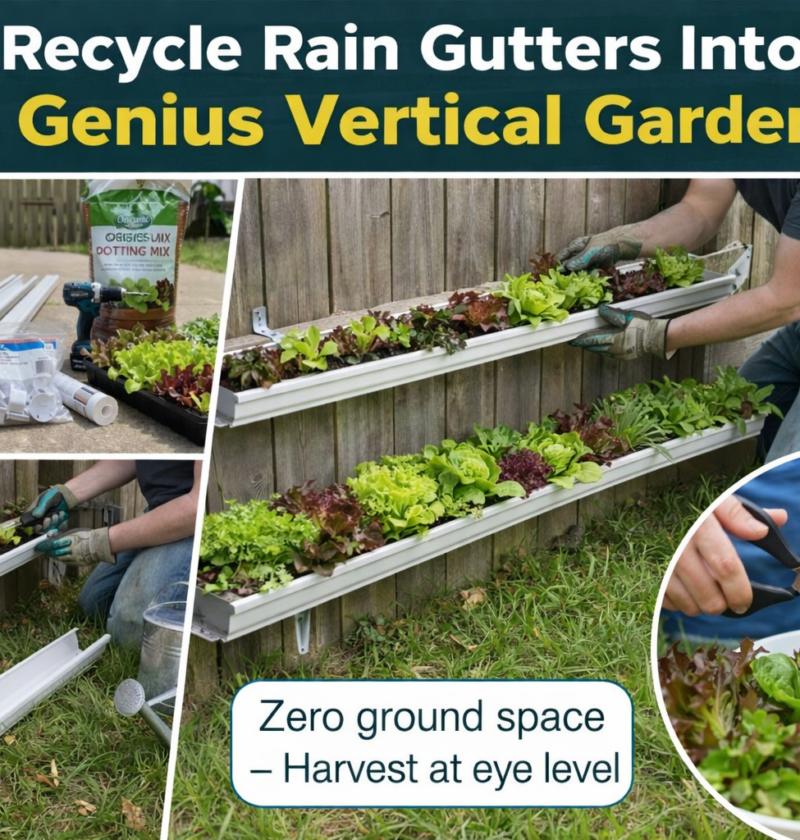
Mount the gutters horizontally across the fence at staggered heights. Leaving about eighteen inches of vertical space between rows helps ensure that upper rows do not shade the lower ones.
🔧 Installing the Gutters Securely
Gutters should be attached to the fence using standard gutter brackets. Installing brackets every two feet helps support the weight of soil and plants.
Once the brackets are in place, snap the gutter sections into position and secure end caps on both sides.
To prevent water buildup, drill small drainage holes along the bottom of the gutter every six inches.
These holes allow excess water to drain away so plant roots do not become waterlogged.
🌿 Choosing the Best Soil Mix
Because rain gutters hold a relatively small amount of soil, using a high-quality potting mix is essential.
A lightweight potting mix blended with perlite works particularly well. Perlite improves drainage and prevents soil from compacting.
This type of soil mixture allows lettuce roots to spread easily while maintaining consistent moisture levels.
🥬 The Best Lettuce Varieties for Gutter Gardens
Loose-leaf lettuce varieties are especially well suited for rain gutter systems.
Unlike head lettuce, which forms a single compact head, loose-leaf varieties allow gardeners to harvest outer leaves continuously while the plant keeps growing from the center.
This means a single plant can produce fresh leaves for several months.
Excellent varieties for gutter gardens include Red Sails, Black Seeded Simpson, and Oak Leaf lettuce.
🌱 Planting Your Gutter Garden
Plant lettuce seedlings or seeds about six inches apart along the length of the gutter.
This spacing allows each plant enough room to develop while maximizing the number of plants per row.
Within a few weeks, the gutters begin filling with lush green leaves.
🌿 Mixing Herbs Into the Garden
One of the best features of rain gutter gardening is the ability to combine multiple plants in the same row.
Many herbs thrive in the same shallow soil depth as lettuce.
Cilantro, chives, parsley, and compact basil varieties grow particularly well in these systems.
Mixing herbs among lettuce plants creates a complete salad garden in one vertical space.
💧 The Gravity Watering Trick
One clever feature of vertical gutter systems is gravity-fed watering.
A drip line or soaker hose can be installed along the top row of gutters.
As water flows through the top gutter, excess moisture drains into the middle row and eventually into the bottom row.
This simple setup allows a single water source to irrigate the entire vertical garden.
🌱 Fast Harvests and Continuous Production
Lettuce grows quickly, especially in well-watered vertical systems. The first harvest usually arrives three to four weeks after planting.
By harvesting outer leaves regularly, the plants continue producing fresh greens throughout the season.
This continuous harvesting method allows gardeners to enjoy fresh salads for months.
A single eight-foot fence panel can support three gutter rows holding nearly forty plants.
Forty lettuce plants growing in zero ground space demonstrates the incredible efficiency of this simple gardening trick.