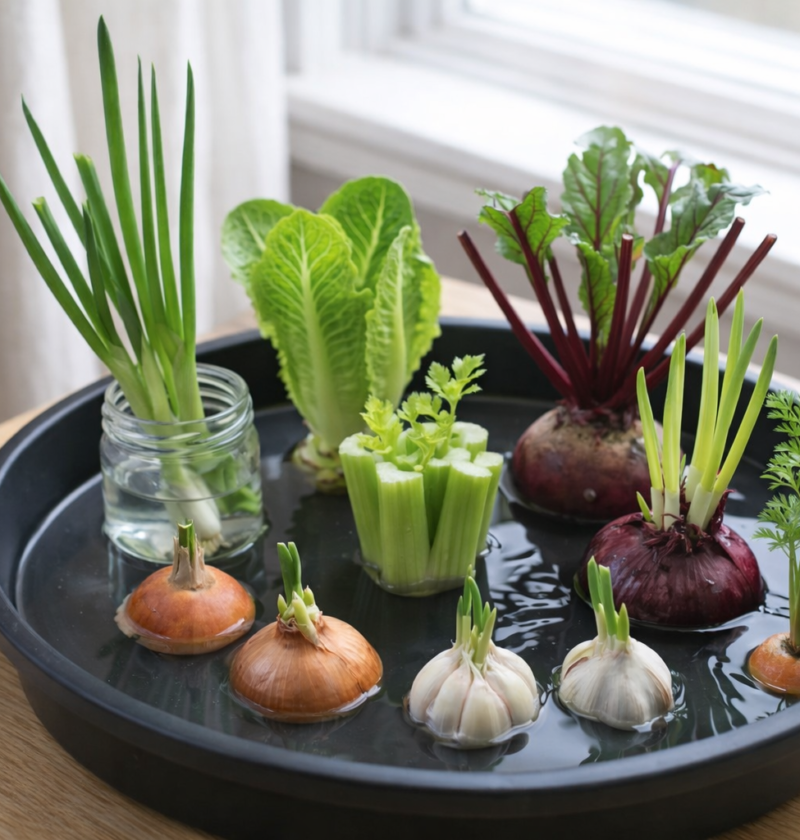
🌱 Stop Throwing Away Free Food: How to Turn Kitchen Scraps Into an Infinite Indoor Garden
Every day, people around the world throw away parts of fruits and vegetables that could actually grow into new plants. Onion bases, lettuce stems, carrot tops, garlic cloves, and even potato eyes often end up in the trash without a second thought. What many people don’t realize is that these simple kitchen scraps still contain living plant tissue capable of growing again.
With a little creativity and basic gardening knowledge, these scraps can be transformed into a small indoor garden that produces fresh greens and herbs again and again. This method not only reduces food waste but also allows you to grow fresh ingredients without spending extra money.
The concept of regrowing vegetables from scraps has become increasingly popular among home gardeners, especially those living in apartments or small homes without outdoor garden space. By using containers, sunlight, and water, you can create a productive indoor garden right on your kitchen windowsill.
This approach turns everyday food waste into an opportunity for sustainable living. Instead of discarding vegetable leftovers, you can give them a second life and enjoy the satisfaction of growing your own food indoors.
🌿 Why Kitchen Scrap Gardening Works
Many vegetables we eat are actually parts of plants that contain growing points. These growing points include buds or tissues capable of developing into new shoots and roots.
For example, the base of a green onion contains roots that can regrow new leaves. A potato eye contains buds that can sprout into an entirely new potato plant.
Because of these natural growth points, many vegetables can be restarted simply by placing them in water or soil.
This ability allows gardeners to reuse food scraps and produce new plants without purchasing seeds or seedlings.
🌱 The Power of Regrowth
Plants have evolved to survive and reproduce even after being partially harvested or damaged. When the right conditions are provided, they can continue growing.
Indoor scrap gardening takes advantage of this natural ability, turning leftover vegetable pieces into productive plants.
🥬 Vegetables That Easily Regrow From Scraps
Some vegetables regrow extremely well indoors. These are ideal for beginners who want quick results.
🌿 Green Onions
Green onions are one of the easiest vegetables to regrow. Simply place the white root ends in a small glass of water and set them near a sunny window.
Within a few days, new green shoots will begin growing upward.
🥬 Lettuce
The base of a lettuce head can produce new leaves when placed in shallow water. While it may not produce a full head again, it can provide several harvests of fresh leaves.
🌿 Celery
Celery bases regrow easily when placed in water. Over time, new stalks begin emerging from the center of the plant.
🥕 Carrot Tops
Although carrot roots will not regrow fully, carrot tops can produce leafy greens that are edible and useful for garnishes.
🌞 Creating the Perfect Indoor Growing Environment
For kitchen scraps to regrow successfully, they need a few essential conditions.
First, they require sunlight. Most regrowing vegetables thrive when placed near a bright window where they receive several hours of light each day.
Second, they need consistent moisture. Some scraps grow best in water, while others eventually need soil once roots develop.
Finally, temperature matters. Most vegetables grow best at normal indoor room temperatures.
💧 Water vs Soil: Which Is Better?
Many scraps start growing well in water because roots can develop easily. However, plants that remain in water too long may eventually weaken due to limited nutrients.
Once roots appear, transferring the plant into a small container of soil often helps it grow stronger.
Soil provides additional nutrients that support long-term plant growth.
🌿 Containers for Indoor Scrap Gardening
You don’t need expensive pots to start an indoor garden. Many household containers work perfectly.
- Glass jars
- Recycled food containers
- Small bowls
- Old mugs
- Plastic cups
Using recycled containers makes scrap gardening even more sustainable.
🌱 Building an Infinite Indoor Garden
Once you begin regrowing vegetables from scraps, it becomes easy to expand your indoor garden.
Each time you cook vegetables, save the regrowable parts and place them in water.
Over time, your kitchen window can fill with small growing plants that continually produce fresh greens.
This simple practice transforms everyday food waste into an endless cycle of fresh food production.
🌿 The Beginning of a Sustainable Kitchen Garden
Turning kitchen scraps into new plants is more than just a gardening trick. It represents a shift toward a more sustainable lifestyle.
By regrowing vegetables instead of discarding them, households reduce food waste and gain access to fresh ingredients.
With minimal effort, a simple windowsill can become a productive mini garden that continues growing new food throughout the year.