🥔 Grow a Tower of Potatoes in a Tiny Space — Harvest Baskets From One Crate
Growing potatoes is often associated with large gardens, long rows of soil, and plenty of outdoor space. Traditionally, potatoes are planted directly in the ground where the plants spread and produce tubers beneath the soil. But what if you could grow an abundant harvest of potatoes in a very small space? Surprisingly, with a simple technique known as a potato tower, it is possible to grow baskets of potatoes using nothing more than a crate or container.
Potato towers have become increasingly popular among urban gardeners, homesteaders, and people with limited space. Instead of planting potatoes in wide garden beds, this method uses vertical layering to produce multiple levels of tubers within a single container. The result is a compact but highly productive growing system that can transform a small corner of a yard, balcony, or patio into a thriving food garden.
This approach is especially attractive for beginner gardeners because it requires minimal materials and simple maintenance. With proper soil, sunlight, and watering, a potato tower can produce an impressive harvest from a surprisingly small footprint.
In this guide, you will learn how to build a potato tower using a crate or container, why this technique works so well, and how you can enjoy a rich harvest even if you only have a tiny growing space.
🌱 Why Grow Potatoes in a Vertical Tower
Potatoes naturally grow underground along the stems of the plant. As the plant grows taller, new tubers can form along the buried portion of the stem. Gardeners have long taken advantage of this characteristic by gradually adding soil around growing potato plants.
A potato tower uses the same principle but in a vertical container. By repeatedly adding layers of soil as the plant grows, the buried stems can produce additional potatoes along their length.
This technique allows gardeners to produce more potatoes within a smaller area compared to traditional ground planting.
Another advantage of potato towers is improved soil control. Because the plants grow in a container, gardeners can create the perfect soil mixture for optimal potato growth.
🌿 Ideal for Small Gardens and Urban Spaces
Many people living in cities or apartments believe they cannot grow their own food because they lack garden space. Potato towers offer a practical solution to this problem.
A single crate can hold several layers of soil and plants, making it possible to grow potatoes vertically rather than horizontally. This means a productive potato garden can fit into a small patio, balcony, or even a sunny corner of a yard.
Because of this efficiency, potato towers are widely used in container gardening and urban agriculture projects.
🧺 Choosing the Right Crate or Container
The container used for a potato tower plays an important role in the success of the project. Many gardeners choose wooden crates because they are sturdy, breathable, and easy to work with.
Plastic storage bins, large buckets, wire cages lined with fabric, or even stacked wooden pallets can also work well.
The container should be at least 18 to 24 inches wide and deep enough to allow multiple soil layers. Adequate drainage is essential because potatoes do not tolerate waterlogged soil.
If using a wooden crate, ensure that the wood is untreated or heat-treated rather than chemically treated. This helps avoid unwanted chemicals entering the soil.
🌿 Preparing the Perfect Soil Mix
Potatoes thrive in loose, well-draining soil that allows tubers to expand easily. Heavy compacted soil can restrict growth and reduce yields.
A good soil mixture for potato towers often includes garden soil, compost, and organic matter such as straw or coconut coir.
This combination creates a light structure that retains moisture while still allowing excess water to drain away.
Adding compost also provides nutrients that support healthy plant development throughout the growing season.
🥔 Selecting the Best Potatoes for Towers
Not all potatoes perform equally in container systems. Seed potatoes are the best choice for growing because they are specifically prepared for planting.
These potatoes contain “eyes,” which are the small buds that develop into new plants.
Popular varieties for container growing include Yukon Gold, Red Pontiac, and Russet potatoes. Many gardeners also enjoy experimenting with colorful heirloom varieties.
Before planting, seed potatoes can be cut into pieces as long as each piece contains at least one or two eyes.
🌱 Planting the First Layer
Begin by filling the bottom of the crate with about 6 to 8 inches of prepared soil. Place the seed potatoes evenly across the surface, leaving space between each piece.
Cover the potatoes with another few inches of soil and water lightly.
Within a few weeks, green shoots will begin emerging from the soil. Once the plants reach about 6 inches tall, it is time to add another layer of soil.
🧱 Building the Tower Layer by Layer
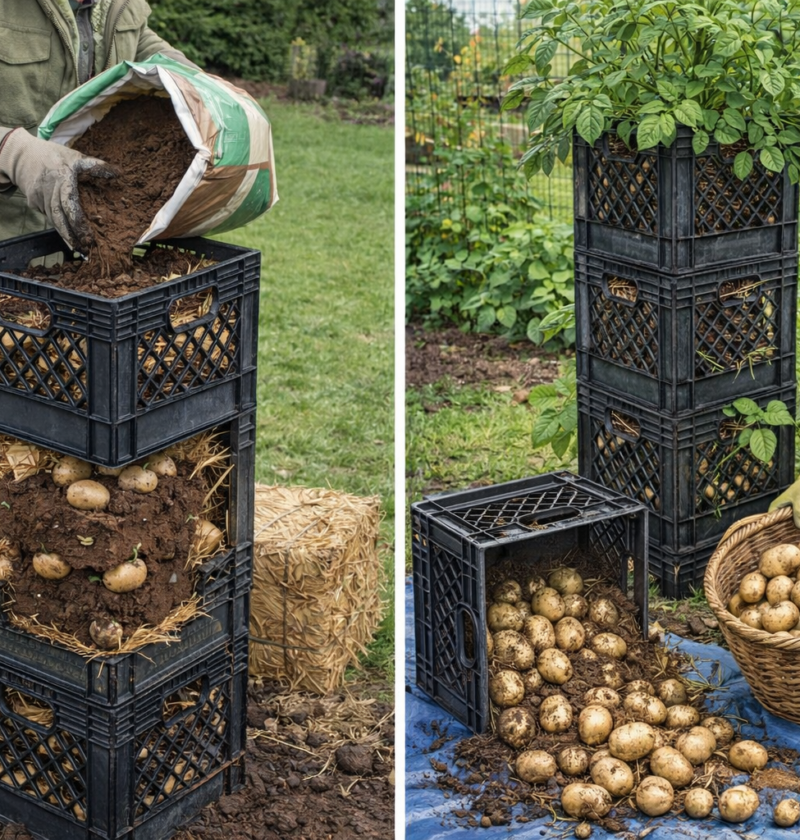
As the potato plants grow taller, gradually add more soil around the stems while leaving the top leaves exposed.
This process is sometimes called “hilling.” Each time soil is added, additional portions of the stem become buried and capable of producing new potatoes.
By repeating this process several times during the growing season, the container gradually fills with layers of developing tubers.
The result is a vertical tower of potatoes growing inside the crate.
💧 Watering and Sunlight Needs
Potatoes require consistent moisture to develop properly. However, the soil should not remain overly wet.
Water the tower regularly, especially during warm weather. Containers dry out faster than ground soil, so checking moisture levels frequently is important.
Potato plants also require full sunlight. Ideally, the tower should receive at least six hours of sunlight per day.
🌼 Signs Your Potato Tower Is Thriving
Healthy potato plants will produce strong green foliage and thick stems. As the plants mature, small white or purple flowers may appear on the tops.
These flowers are often a sign that tubers are forming beneath the soil.
With proper care, the tower will continue producing potatoes throughout the growing season.
🥔 Harvesting Your Potato Tower
One of the most exciting parts of growing a potato tower is harvest time. When the plants begin turning yellow and dying back, the potatoes are ready to harvest.
Simply tip the crate over or remove layers of soil to reveal the hidden crop beneath.
Gardeners are often surprised by how many potatoes can come from a single container.
With careful planting and proper layering, a small tower can produce baskets of fresh potatoes.
This simple yet powerful gardening technique proves that even a tiny space can produce an impressive food harvest.