The Lethal Charm of Datura: Beauty, History, and Serious Hidden Risks
Few plants capture attention quite like Datura. With its large trumpet-shaped flowers, intoxicating fragrance, and dramatic appearance, this plant has fascinated gardeners, herbalists, and storytellers for centuries. In many regions, Datura grows wild along roadsides, in gardens, and even in disturbed soil near homes. Its beauty can make it appear harmless — even inviting.
Yet behind this striking appearance lies one of the most dangerous plants found in many parts of the world. Throughout history, Datura has been associated with powerful cultural legends, ritual practices, and cautionary tales. Traditional healers sometimes referenced it in historical texts, but its use has always required extreme caution due to the plant’s potent chemical compounds.
Modern science confirms that Datura contains strong naturally occurring substances known as tropane alkaloids. These compounds can have profound effects on the human nervous system, making accidental exposure or misuse extremely dangerous. Because of these risks, most health authorities strongly discourage any attempt to consume or experiment with the plant.
Understanding the plant’s history, appearance, and risks is important for gardeners, nature enthusiasts, and anyone who may encounter it outdoors. This article explores the fascinating story of Datura — its beauty, its place in cultural history, and the serious safety concerns that make awareness essential.
🌿 Why Datura Continues to Fascinate People
Datura plants are visually striking. Their large, trumpet-like flowers often bloom in white, purple, or pale lavender shades and can release a strong fragrance at night. Because of these characteristics, they have sometimes been cultivated as ornamental plants.
- Large, dramatic trumpet-shaped flowers
- Fragrant blooms that often open in the evening
- Ability to grow in a wide range of climates
- Long cultural history in folklore and mythology
- Often mistaken for harmless ornamental plants
✔️ Key takeaways:
- Datura is visually appealing but highly toxic.
- It has appeared in many cultural traditions and legends.
- Its natural compounds can affect the nervous system.
- Awareness and caution are essential when encountering the plant.
✨ What Research & Experts Say
Botanists and toxicologists have studied Datura extensively because of the powerful chemicals present in its leaves, seeds, flowers, and roots. These chemicals — including atropine, scopolamine, and hyoscyamine — belong to a class of substances known as tropane alkaloids.
These compounds can interfere with normal nerve signaling in the body, which is why the plant is considered toxic.
Dr. Leila Nour, a plant science researcher, explains: “Datura contains potent alkaloids that can significantly affect the nervous system. Because of this, the plant should be handled with caution and never consumed.”
Prof. Mark Benson, who studies toxic plants, notes: “Many plants with strong biological compounds have historically appeared in folklore and traditional practices, but their toxicity makes them unsuitable for casual use.”
Nutritionist Sarah Coleman adds from a safety perspective: “Unlike culinary herbs or edible plants, Datura should not be used in food or wellness routines. Education about toxic plants is important for public safety.”
These expert insights reinforce the importance of understanding that Datura is not a safe plant for consumption.
🥄 Recognizing Datura in Nature
Learning to identify Datura can help people avoid accidental exposure.
Common Characteristics
- Large trumpet-shaped flowers pointing upward or outward.
- Flowers that may appear white, purple, or pale yellow.
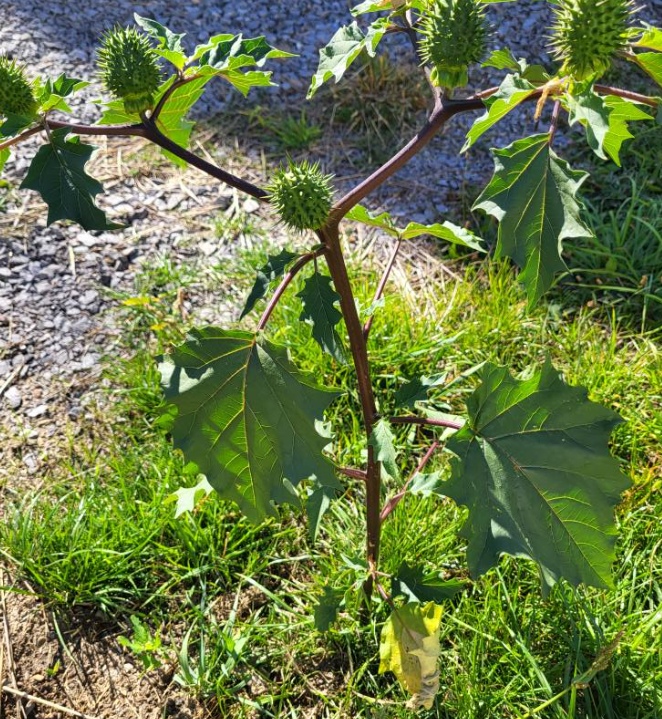
- Broad green leaves with irregular edges.
- Spiky seed pods that resemble small thorn-covered balls.
- Plants typically grow between 2 and 5 feet tall.
- Strong scent from flowers, especially at night.
Safety Guidance
- Avoid touching the plant unnecessarily.
- Never ingest any part of the plant.
- Keep children and pets away from Datura plants.
- Wear gloves if removing it from a garden.
Situations where extra caution is important:
- Homes with young children
- Gardens where pets roam freely
- Public parks or natural areas where the plant grows wild
- Areas where similar ornamental plants are cultivated
📊 Plant Characteristics & Safety Overview
| Feature | Description | Location on Plant | Safety Note |
|---|---|---|---|
| Trumpet-shaped flowers | Large white or purple blooms | Top of plant | Attractive but not edible |
| Spiky seed pods | Round thorn-covered capsules | After flowering | Contain toxic seeds |
| Broad leaves | Large green leaves with uneven edges | Throughout plant | Contain toxic compounds |
| Alkaloid compounds | Naturally occurring chemicals | All plant parts | Responsible for toxicity |
⚖️ Ornamental Plant vs Hidden Risk
Datura’s beauty sometimes leads gardeners to grow it as an ornamental plant. However, its risks must always be considered carefully.
Reasons Some People Grow It
- Large decorative flowers
- Night-blooming fragrance
- Unusual botanical appearance
Potential Concerns:
- Toxicity to humans and animals
- Risk of accidental exposure
- Confusion with edible plants
Because of these factors, many gardeners choose safer ornamental plants instead.
🚫 Common Mistakes to Avoid
- Assuming beautiful plants are safe – Some of the most attractive plants can also be toxic.
- Experimenting with unknown plants – Wild plants should never be consumed without expert identification.
- Allowing children to handle unfamiliar plants – Supervision is essential in gardens.
- Confusing Datura with similar-looking plants – Proper identification is important.
- Ignoring plant safety education – Awareness prevents accidents.