Proven Tricks to Make Your Wandering Jew Bloom Indoors
The Wandering Jew plant (Tradescantia) is loved for its striking purple, silver, and green foliage. While most people grow it for its vibrant leaves, few realize that under the right indoor conditions, it can produce delicate pink, white, or lavender blooms. The challenge? Indoor environments don’t always naturally support flowering.
With the right balance of light, feeding, pruning, and seasonal adjustments, you can encourage your Tradescantia to bloom indoors without stressing the plant. Let’s explore practical, proven techniques that help trigger flowering while keeping the roots and foliage healthy.
🌿 Why Wandering Jew Plants Rarely Bloom Indoors
Tradescantia plants prioritize foliage growth over flowering when light or nutrient levels are insufficient. Indoor conditions often provide lower light intensity compared to their natural habitat.
- Low light reduces flower production
- Excess nitrogen promotes leaves instead of blooms
- Overwatering weakens root systems
- Lack of pruning limits energy redirection
Blooming improves when you:
- ✔️ Increase bright indirect light
- ✔️ Use balanced feeding
- ✔️ Prune regularly
- ✔️ Maintain proper drainage
According to Professor Mark Benson, “Flowering in Tradescantia is strongly influenced by light intensity and nutrient balance. Indoor growers must recreate those triggers carefully.”
✨ Optimize Lighting for Bloom Production
Light is the single most important factor for indoor flowering.
- • Place near a bright east or south-facing window
- • Provide 6–8 hours of bright indirect light
- • Supplement with grow lights if needed
- • Avoid harsh direct afternoon sun
Bright, consistent light encourages bud formation rather than just leaf growth.
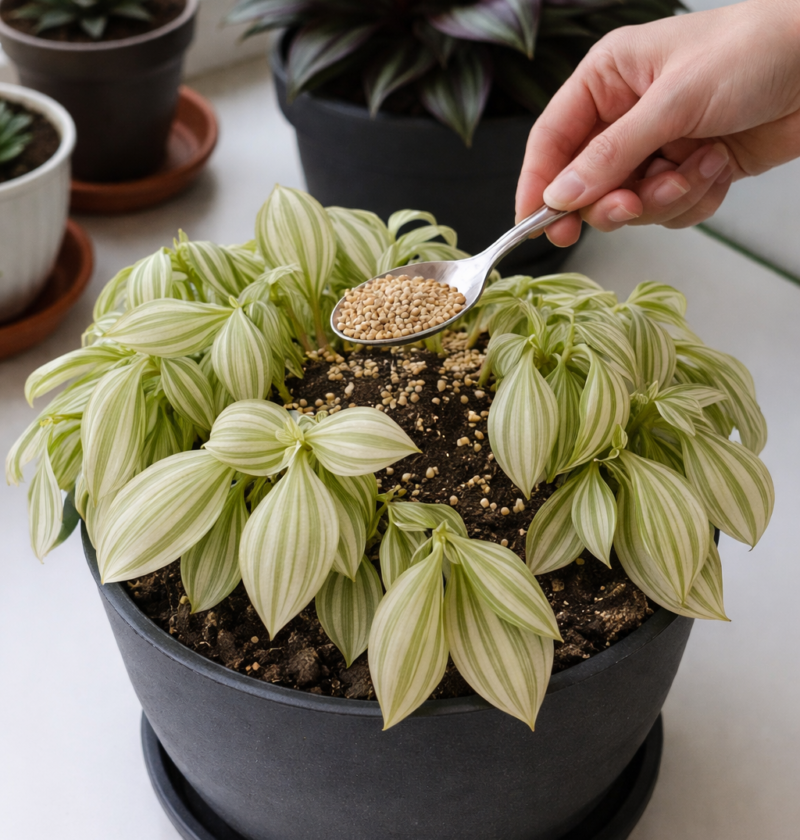
🥄 Step-by-Step Bloom-Boosting Routine
1. Improve Light Exposure
Move the plant to the brightest indirect light available.
2. Adjust Fertilizer Type
Switch to a balanced fertilizer (10-10-10) at half strength.
3. Reduce Nitrogen Overload
Avoid high-nitrogen formulas that favor leaf growth.
4. Prune Regularly
Trim leggy stems to redirect energy toward new growth and buds.
5. Allow Slight Drying Between Waterings
Keep soil moist but never soggy.
6. Maintain Warm Temperatures
Ideal range: 65–75°F.
📊 Ideal Bloom Conditions Table
| Factor | Ideal Condition | Why It Matters |
|---|---|---|
| Light | Bright, indirect | Triggers bud development |
| Watering | Moderate | Prevents root stress |
| Fertilizer | Balanced, diluted | Encourages flowering |
| Temperature | 65–75°F | Supports steady growth |
⚖️ Balanced Feeding vs Overfeeding
Balanced Feeding
- Supports both roots and blooms
- Prevents leaf burn
- Encourages steady flowering
Overfeeding
- Causes excessive foliage
- Increases salt buildup
- Reduces bloom potential
Dr. Leila Nour explains, “Excess nutrients often push vegetative growth at the expense of flowers. Moderation is key.”
🚫 Common Mistakes That Prevent Blooming
- Keeping the plant in low light corners
- Using high-nitrogen fertilizer
- Overwatering consistently
- Never pruning trailing stems
- Allowing roots to stay waterlogged
❓ Wandering Jew Bloom FAQ
- How long does it take to bloom indoors?
Several weeks after improving light and feeding conditions. - Do all varieties bloom?
Most Tradescantia varieties can bloom under proper care. - Should I repot before flowering?
Only if rootbound; stress can delay blooms. - Does pruning help?
Yes, pruning encourages fuller growth and bud development. - Can I use bloom booster fertilizer?
Use cautiously and dilute properly. - Is direct sunlight necessary?
Bright indirect light works best. - Why are my stems leggy?
Likely insufficient light. - How often should I fertilize?
Every 4–6 weeks during active growth. - Can humidity affect blooms?
Moderate humidity supports healthier growth. - Does pot size matter?
Yes, slightly snug pots can promote flowering.