Root Growth in Real Time: Pineapple Water Propagation Explained
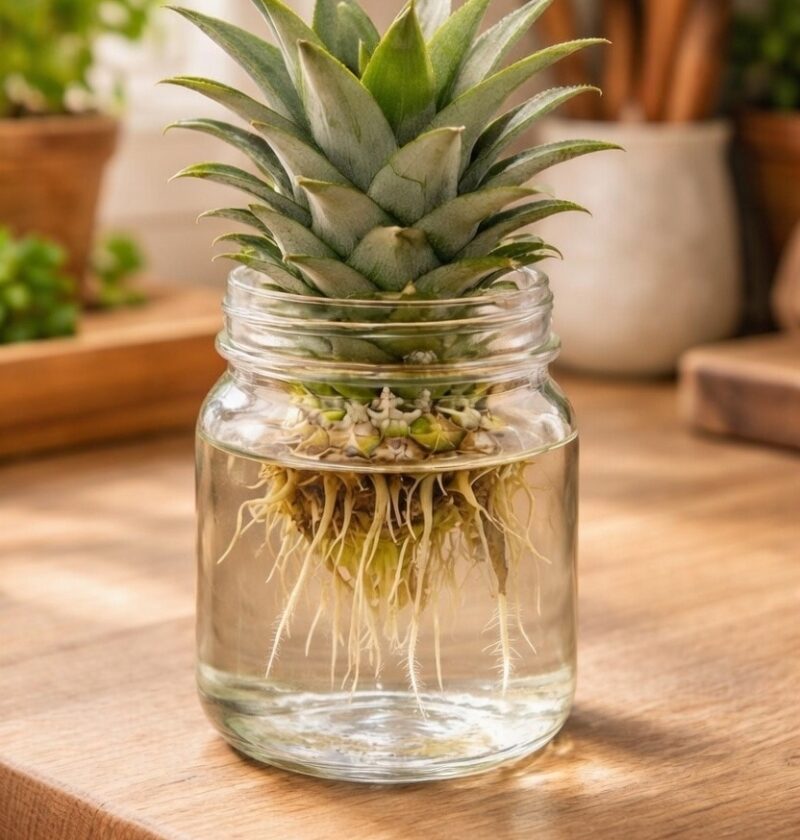
Watching roots form in water is one of the most satisfying experiences in indoor gardening. Pineapple propagation, in particular, offers a clear, visible example of how new roots develop from a healthy plant crown. With patience and proper preparation, you can observe root growth in real time — from tiny nubs to fully developed strands ready for soil.
Pineapple plants grow from the leafy top (crown) of the fruit. When separated and placed in water under the right conditions, the crown activates dormant root points at its base. The process is simple, but small mistakes — excess moisture, rot, or poor light — can interrupt development. Understanding each stage helps ensure success.
⸻
🌿 Why Pineapple Crowns Can Regrow Roots
The pineapple crown contains dormant root tissue at its base. Once removed from the fruit and allowed to dry slightly, those tissues can regenerate when exposed to moisture and warmth.
Healthy propagation depends on:
✔️ A firm, green crown
✔️ Removal of excess fruit flesh
✔️ Drying the base before water placement
✔️ Clean water
✔️ Bright indirect light
Preparation is more important than speed.
⸻
✨ What Most People Get Wrong
The biggest issue with pineapple water propagation is rot. The crown base must be clean and dry before touching water. Leaving fruit flesh attached encourages decay.
Common mistakes include:
• Submerging too much of the crown
• Skipping the drying period
• Using cloudy water
• Placing in low light
• Ignoring temperature
Roots need warmth and oxygen — not constant saturation.
⸻
🥄 Step-by-Step Pineapple Water Propagation Routine
1. Twist Off the Crown
Hold the fruit firmly and twist the leafy top until it separates cleanly.
2. Remove Lower Leaves
Peel away 1–2 inches of bottom leaves to expose the stem base.
3. Trim Excess Fruit Flesh
Cut away any remaining fruit attached to prevent rot.
4. Allow to Dry
Let the crown dry upright for 24–48 hours. This calluses the base.
5. Place in Water
Suspend the crown so only the bottom stem touches water. Do not submerge leaves.
6. Change Water Regularly
Refresh water every 2–3 days to keep it clear and oxygenated.
7. Provide Bright Indirect Light
Place near a sunny window without harsh direct sun.
Within 7–14 days, small root points begin to form. Over the next few weeks, roots lengthen visibly.
⸻
📊 Plant Care Table — Pineapple Propagation Conditions
Factor | Ideal Setup | Why It Helps
Light | Bright, indirect | Encourages root activation
Water Level | Stem only | Prevents crown rot
Temperature | 70–85°F | Supports tropical growth
Water Changes | Every 2–3 days | Maintains oxygen
Drying Time | 24–48 hours | Prevents decay
Transfer to Soil | Roots 2–3 inches long | Ensures stability
Patience during the first two weeks is essential.
⸻
❓ Plant Care FAQ (Garden Section)
1. How long until roots appear?
Usually 1–2 weeks.
2. Can I plant directly in soil?
Yes, but water propagation allows visibility.
3. Why is my crown turning brown?
Likely rot from excess moisture.
4. Should leaves touch water?
No, only the base stem.
5. Can I use tap water?
Yes, if changed frequently.
6. When should I move to soil?
When roots reach 2–3 inches.
7. Do all crowns root?
Healthy crowns root best.
8. Can I propagate in winter?
Yes, with warm indoor conditions.
9. Does sunlight speed rooting?
Bright indirect light helps.
10. Will it produce fruit again?
With time and maturity, yes.
⸻
🌿 Premium Indoor Styling Transition
Water propagation isn’t just functional — it can become a design feature. Watching roots develop in a clear glass jar adds movement and life to interior spaces. The process itself becomes part of the decor.