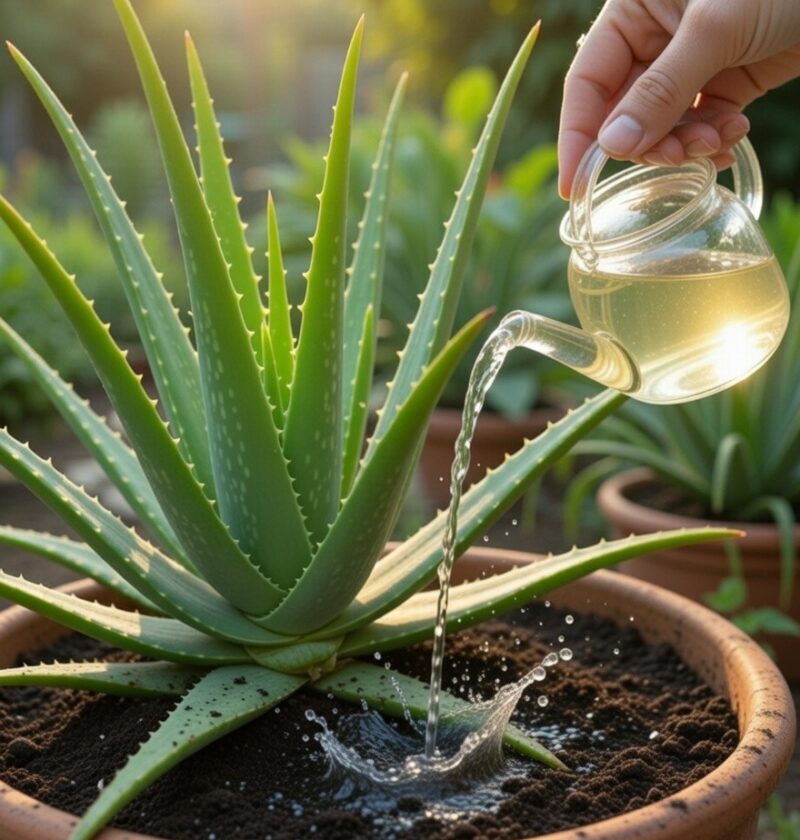
She Used This Natural Fertilizer on Her Aloe Vera… And It Bloomed Beautifully!
Aloe vera is known for its sculptural leaves and resilience, but many indoor gardeners never see it bloom. While the plant is easy to maintain, flowering requires something more than occasional watering. It demands balance — proper light, drainage, and gentle feeding.
Natural fertilizers have quietly returned to popularity among plant lovers who prefer steady, sustainable growth over heavy chemical feeding. When applied thoughtfully, certain mild organic supplements can support stronger roots and improve the conditions that encourage aloe vera to bloom. The result isn’t instant — but over time, the transformation can be remarkable.
⸻
🌿 Why Aloe Vera Rarely Blooms Indoors
Aloe vera flowers when it feels slightly stressed but still healthy. Too much water, low light, or excess fertilizer often prevents blooming.
Healthy blooming conditions include:
✔️ Bright, indirect sunlight
✔️ Excellent drainage
✔️ Slightly dry soil between watering
✔️ Mature plant (at least 3–4 years old)
✔️ Moderate feeding during growing season
Flowering is a sign of balanced care, not overfeeding.
⸻
✨ A Gentle Natural Fertilizer That Supports Blooming
One traditional approach involves diluted banana peel water — a mild source of potassium and trace minerals. Potassium plays a role in overall plant strength and flowering support.
To prepare safely:
• Soak banana peels in water for 24 hours
• Strain the liquid
• Dilute with equal parts fresh water
• Use only during spring or summer
• Apply once a month
This method works best when paired with proper sunlight and soil conditions.
⸻
🥄 Step-by-Step Routine for Bloom-Ready Aloe Vera
1. Improve Light Exposure
Place aloe near a bright window with several hours of indirect light daily. South or west-facing windows work well.
2. Check Drainage
Use a cactus or succulent mix in a pot with drainage holes to prevent root rot.
3. Water Correctly
Allow soil to dry completely before watering deeply. Overwatering is the biggest bloom blocker.
4. Apply Diluted Natural Fertilizer
Use banana peel water or another mild organic supplement once monthly during active growth.
5. Avoid Heavy Nitrogen
Too much nitrogen promotes leaf growth but suppresses flowering.
6. Be Patient
Aloe blooms on mature plants under stable conditions. Consistency matters more than intensity.
Gentle, steady care creates the environment aloe needs to flower.
⸻
📊 Plant Care Table — Ideal Conditions for Blooming Aloe Vera
Factor | Ideal Setup | Why It Helps
Sunlight | Bright, indirect | Encourages flower stalk formation
Soil | Sandy, well-draining | Prevents root stress
Watering | Infrequent but deep | Avoids rot
Fertilizer | Mild, monthly (spring/summer) | Supports balanced growth
Pot Size | Slightly snug | Encourages maturity
Temperature | 65–80°F | Ideal growth range
Blooming happens when roots are healthy and stable.
⸻
❓ Plant Care FAQ (Garden Section)
1. How old must aloe be to bloom?
Usually 3–4 years or older.
2. Can aloe bloom indoors?
Yes, with bright light and proper care.
3. Does fertilizer guarantee flowers?
No, it only supports healthy conditions.
4. Why are my leaves soft?
Likely overwatering.
5. Should I repot before blooming?
Only if roots are overcrowded.
6. Is direct sun harmful?
Strong direct sun can scorch leaves.
7. How long do aloe flowers last?
Several weeks under good conditions.
8. Can small plants bloom?
Rarely — maturity is important.
9. Should I prune flower stalks?
After blooms fade, trim the stalk.
10. Does aloe bloom yearly?
Not always — it depends on conditions.
⸻
🌿 Premium Indoor Styling Transition
When aloe vera blooms, it shifts from a simple succulent to a sculptural focal point. The tall flower stalk adds height and elegance, enhancing both plant health and interior aesthetics. Healthy growth naturally elevates the visual tone of a space.