🥚 Never Toss Your Eggshells Again: 7 Smart, Safe & Science-Backed Ways to Reuse Them
They look like kitchen scraps.
They sound like trash when they hit the bin.
But eggshells are far more useful than most people realize.
Each shell is made up of roughly 95% calcium carbonate — the same mineral found in agricultural lime and even some antacids. Alongside calcium, eggshells contain trace amounts of magnesium, potassium, phosphorus, and small proteins embedded within the shell matrix.
Instead of throwing them away, you can repurpose eggshells in ways that benefit your garden, your chickens, your cleaning routine, and even your skincare — if done properly.
But here’s the important part:
Not every viral “hack” works as promised.
This guide explores seven popular ways to reuse eggshells — what science supports, what needs tweaking, and what’s better skipped.
Why Eggshells Are So Valuable
Eggshells are primarily composed of:
- Calcium carbonate (about 95%)
- Magnesium carbonate
- Calcium phosphate
- Organic proteins
Calcium is essential for:
- Strong plant cell walls
- Preventing blossom end rot in vegetables
- Strengthening chicken eggs
- Maintaining bone health (in controlled supplement form)
However, calcium in eggshells is not instantly bioavailable. It must break down first — which takes time.
Understanding this is key to using shells effectively.
Step One: How to Prepare Eggshells Safely
Before reusing eggshells for anything, prepare them properly:
- Rinse shells thoroughly to remove egg residue.
- Allow them to dry completely.
- Bake at 225–250°F (105–120°C) for 10–15 minutes to kill bacteria.
- Crush or grind depending on intended use.
Dry shells grind much more easily — and baking improves sanitation.
🌱 1. Garden Gold — Improving Soil Calcium
This is one of the most common uses — and one of the most misunderstood.
Does It Work?
Yes — but slowly.
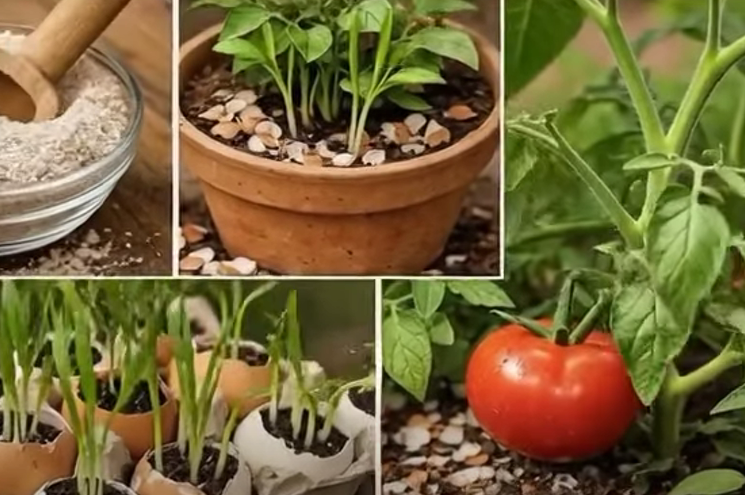
Eggshells release calcium as they decompose. Large chunks may take months to a year to fully break down. Finely ground powder works much faster.
Best Practice
- Grind shells into a fine powder using a coffee grinder.
- Mix directly into garden soil before planting.
- Add to compost where microbes speed breakdown.
Important Note
Blossom end rot in tomatoes is often caused by inconsistent watering — not just low calcium. Eggshells can help long-term soil health but are not an instant fix.
🐌 2. Pest Patrol — Slug & Snail Deterrent
Many gardeners scatter crushed shells around plants to deter slugs and snails.
Reality Check
- Sharp edges may discourage some pests.
- Rain softens edges quickly.
- Slugs can crawl over shells if motivated.
Eggshells may provide mild protection, but they are not a guaranteed solution. Diatomaceous earth is often more effective.
🐔 3. Hen Helper — Feeding Back to Chickens
Chickens require high calcium intake to produce strong eggshells. Recycling baked, crushed eggshells into feed can help supplement calcium.
Why Baking Matters
- Kills bacteria like salmonella.
- Prevents chickens from associating whole eggs with food.
How to Do It
- Bake shells until dry and brittle.
- Crush into small flakes (not powder).
- Mix into feed or offer separately.
This is a safe and practical reuse method for backyard flocks.
🌿 4. Seed Starters — Biodegradable Mini Pots
Half eggshells can act as tiny seed-starting containers.
Benefits
- Biodegradable
- Provides trace minerals
- Reduces plastic waste
How to Use
- Fill half-shell with potting soil.
- Plant seed.
- When ready, gently crush bottom and plant shell directly into soil.
This works best for small seedlings like herbs.
🧖 5. Beauty Boost — Gentle Exfoliation
Finely powdered eggshells can act as a mild physical exfoliant.
How to Prepare
- Grind into extremely fine powder.
- Mix with yogurt, honey, or aloe.
- Apply gently — avoid aggressive scrubbing.
Important: Coarse particles can cause microtears in the skin. Always grind thoroughly.
🍳 6. Scrub Magic — Natural Cleaner
Crushed eggshells combined with baking soda create a gentle abrasive cleaner.
Works Well For:
- Stainless steel pans
- Stuck-on residue
- Non-delicate surfaces
Avoid using on delicate finishes or nonstick coatings.