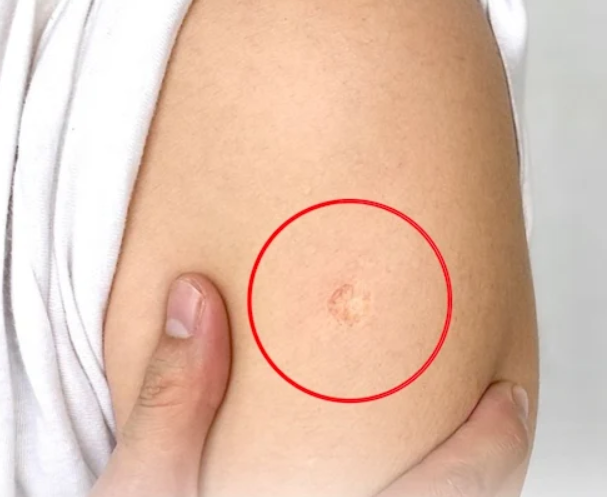
The Small Round Scar on Your Arm: The Real Story Behind the BCG Vaccine Mark
If you grew up in Asia, Africa, Latin America, or parts of Eastern Europe, you might have a small, round scar on your upper arm. It’s about the size of a pencil eraser, slightly indented, and sometimes lighter than the surrounding skin.
For years, you may not have thought much about it. Then one day someone asked about it. Or you noticed it in a photo. Or you found yourself wondering quietly:
“Where did this come from?”
Some people assume it was a childhood injury. Others feel oddly self-conscious about it. But the truth is simple — and shared by millions of people around the world.
That small round scar is most likely from the BCG vaccine, given to protect against tuberculosis (TB).
Let’s explore what it is, why it leaves a mark, who received it, and what it actually means for your health today.
What Is the BCG Vaccine?
The BCG vaccine stands for Bacillus Calmette-Guérin. It’s a vaccine developed in the early 20th century to protect against tuberculosis, a serious bacterial infection that primarily affects the lungs.
According to infectious disease specialist Dr. Leila Nour:
“Before widespread TB control programs, tuberculosis was one of the leading causes of death worldwide. The BCG vaccine played a critical role in reducing severe childhood TB cases.”
It has been administered to billions of people globally and remains part of routine childhood immunization schedules in many countries.
Why Does the BCG Vaccine Leave a Scar?
The scar exists because of how the vaccine was administered.
Intradermal Injection Method
Unlike many vaccines that are injected into muscle, the BCG vaccine is given intradermally — directly into the top layer of the skin.
This method intentionally creates a small localized immune reaction.
What Typically Happens After the Shot
- A small raised bump appears within 1–3 weeks
- The bump may turn into a tiny blister or pustule
- It dries, crusts over, and heals naturally
- A small, round scar remains
This visible reaction was traditionally considered a sign that the vaccine “took,” meaning the immune system responded.
Public health professor Prof. Mark Benson explains:
“The scar formation is a normal outcome of intradermal BCG administration. It is not a complication — it’s simply the expected healing process.”
Who Received the BCG Vaccine?
The vaccine was commonly given to:
- Children born before the mid-2000s in many countries
- Newborns in regions with higher TB prevalence
- Individuals living in densely populated areas
It has been widely used in:
- Asia
- Africa
- Latin America
- Eastern Europe
In contrast, countries with lower TB rates, such as the United States, did not routinely administer BCG to all newborns.
How Common Is the BCG Scar?
Very common.
In countries where the vaccine was universal, a large percentage of adults have this small upper-arm scar. In fact, for many people, it became an almost invisible cultural marker — something shared by classmates, siblings, and neighbors.
The scar typically measures:
- 5–10 millimeters in diameter
- Round or slightly oval
- Lightened or slightly indented
Some individuals have little to no visible scar. That variation is normal.
BCG Vaccine Overview Table
| Category | Details | Typical Measurement | Practical Purpose |
|---|---|---|---|
| Vaccine Name | Bacillus Calmette-Guérin (BCG) | Single dose (newborn) | Protection against severe forms of tuberculosis |
| Injection Method | Intradermal (into upper skin layer) | Small surface injection | Stimulates localized immune response |
| Common Scar Size | Round, slightly indented mark | 5–10 mm diameter | Normal healing result after immune reaction |
| Age Administered | Typically at birth or early infancy | Within first year of life | Early protection in high-risk regions |
Does the Scar Mean You’re Still Protected?
This is a common question.
The presence of a scar does not necessarily indicate current immunity levels. Protection from BCG can vary and may decrease over time.
Dr. Leila Nour clarifies:
“The scar confirms that an immune reaction occurred in infancy. However, immunity to tuberculosis depends on many factors, including exposure and overall health.”
If you have concerns about TB exposure or travel to high-risk regions, consult a healthcare professional for personalized guidance.