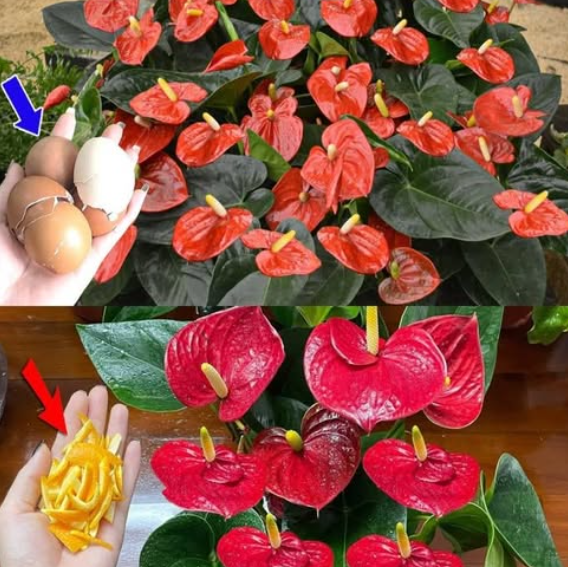
Speed Up Anthurium Blooms 🌺 Expert Tips for Faster, Healthier Flowering
Anthuriums are famous for their glossy leaves and long-lasting, waxy flowers—but they can be frustratingly slow to bloom. Many plant lovers provide what seems like perfect care, yet the plant produces leaf after leaf with no sign of flowers.
The good news? Anthuriums are not difficult—they are simply precise. Faster flowering doesn’t come from heavy feeding or constant watering, but from creating the exact conditions these tropical plants evolved to thrive in.
In this expert-backed guide, we’ll break down the 10 most effective, practical ways to speed up anthurium blooms, explain why each one works, compare common care mistakes, and answer the most asked questions growers have before their plant finally flowers.
Why Anthuriums Take So Long to Bloom
Anthuriums are slow, deliberate growers. In the wild, they live under forest canopies, receiving filtered light, warm temperatures, and nutrients in very small doses.
According to Dr. Leila Nour, a tropical plant physiologist, “Anthuriums prioritize survival over reproduction. They bloom only when their environment feels stable and balanced.”
That means flowering is not about force—it’s about consistency.
1️⃣ Monitor Watering Carefully (The #1 Bloom Factor)
Overwatering is the most common reason anthuriums fail to flower.
Best practice: Water only when the top inch of soil feels dry to the touch.
- Too much water suffocates roots
- Constant moisture promotes root stress
- Stressed roots = no blooms
Use room-temperature water and always water slowly until excess drains out.
2️⃣ Ensure Proper Drainage at All Times
Anthuriums are extremely sensitive to standing water.
To improve drainage:
- Use pots with multiple drainage holes
- Add a thin layer of pebbles at the bottom
- Never let pots sit in collected runoff
Prof. Mark Benson, horticulture educator, notes: “Healthy drainage allows oxygen to reach the roots, which is critical for flower production.”
3️⃣ Use an Airy, Chunky Soil Mix 🌱
Standard potting soil is often too dense for anthuriums.
An ideal mix includes:
- Peat moss or coco coir (moisture retention)
- Compost (gentle nutrients)
- Perlite or pumice (airflow)
- Gravel or orchid bark (drainage)
This mimics their natural epiphytic environment and supports root health.
4️⃣ Provide Bright, Indirect Light ☀️
Light is a major bloom trigger.
- Too little light = leafy growth only
- Direct sun = leaf burn and stress
Place your anthurium near an east- or north-facing window, or several feet back from a bright south-facing window.
5️⃣ Maintain High Humidity (Often Overlooked)
Anthuriums prefer humidity levels above 60%.
Ways to increase humidity:
- Mist lightly in the morning
- Use a pebble tray with water
- Group plants together
- Run a humidifier if needed
Nutritionist Sarah Coleman explains, “Humidity supports nutrient transport inside the plant, which indirectly affects flowering.”
6️⃣ Keep Temperatures Warm and Stable 🌡️
Anthuriums thrive in warmth.
Ideal range: 70–85°F (21–29°C)
- Avoid cold drafts
- Keep away from air conditioners
- Prevent nighttime temperature drops
Cold stress can delay blooms for months.
7️⃣ Trim Dead Blooms and Yellowing Leaves ✂️
Deadheading redirects energy toward new growth.
- Cut faded flowers at the base
- Remove yellow or damaged leaves
- Use clean, sharp scissors
This signals the plant to focus on fresh flower production.
8️⃣ Fertilize Lightly with the Right Balance
Anthuriums need very little fertilizer.
Choose a fertilizer that is:
- Diluted to ¼ strength
- Low in nitrogen
- Slightly higher in phosphorus
Apply once every 4–6 weeks during active growth.
9️⃣ Rinse the Soil to Remove Salt Buildup 🚿
Fertilizer salts accumulate over time and block nutrient uptake.
Every 2–3 months:
- Flush the pot thoroughly with clean water
- Allow excess water to drain completely
This simple step often triggers improved flowering.
🔟 Repot Only When Necessary
Anthuriums like being slightly root-bound.
Repot only when:
- Roots circle the pot densely
- Water drains too quickly
- The plant becomes unstable
Choose a pot just one size larger.
Care Breakdown for Faster Blooms
| Care Element | Best Practice | Frequency | Practical Benefit |
|---|---|---|---|
| Watering | When top inch is dry | As needed | Prevents root stress |
| Fertilizing | Diluted, phosphorus-lean | Every 4–6 weeks | Supports flowering |
| Humidity | 60%+ | Consistent | Improves nutrient transport |
| Light | Bright, indirect | Daily | Triggers bloom cycles |
Common Mistakes That Delay Anthurium Flowers ❌
- Overwatering “just in case”
- Using strong fertilizer
- Keeping plants in low light
- Ignoring humidity
- Repotting too often
With anthuriums, restraint leads to results.
10 Frequently Asked Questions
1. How long does it take for anthuriums to bloom?
Typically every 2–3 months under ideal conditions.
2. Can anthuriums bloom year-round?
Yes, indoors with stable care.
3. Should I mist daily?
Light misting is fine; avoid soaking leaves.
4. Is low light okay?
Low light slows or stops flowering.
5. Do anthuriums like root-bound pots?
Slightly—yes.
6. Can I use banana peel or rice water?
Yes, but only diluted and sparingly.
7. Why do flowers turn green?
This is normal aging, not a problem.
8. Should I cut old flowers?
Yes, once they fade.
9. Does cold air affect blooming?
Yes—cold stress delays flowers.
10. Is patience really required?
Absolutely. Stability is the secret.
Related Indoor Plant & Natural Care Ideas
If you enjoy gentle, sustainable plant care methods, explore more practical gardening inspiration at go.gentplu.com, where everyday habits lead to healthier plants.
Final Thoughts: Let Balance Do the Work 🌿
Anthuriums don’t respond to force—they respond to comfort.
By mastering watering, light, humidity, and gentle feeding, you create the exact environment your plant needs to bloom faster and more consistently. When conditions are right, flowers follow naturally.