Plants to Grow Under Cucumbers for Massive Harvest
Cucumbers are one of the most rewarding summer vegetables, but maximizing their yield requires more than just regular watering and sunlight. Strategic planting — also known as companion planting — can enhance growth, reduce pests, and even improve soil fertility. Choosing the right plants to grow under or around cucumbers can lead to a massive harvest while keeping your garden healthy and sustainable.
Why Companion Planting Works
Companion planting is based on natural interactions between plants. Some plants help cucumbers by:
- Repelling pests naturally
- Providing ground cover to retain soil moisture
- Adding nutrients to the soil through root systems or leaf litter
- Improving airflow and reducing disease risk
When you grow the right companions under cucumbers, you create a mini ecosystem that supports robust, healthy vines.
Best Plants to Grow Under Cucumbers
Cucumbers are vine plants that need space, but their lower canopy is often underutilized. Here are the top choices for plants to grow underneath:
1. Lettuce
- Benefits: Provides natural ground cover, suppresses weeds, retains soil moisture
- Planting Tip: Sow seeds in the shade of cucumber vines; harvest young leaves continuously
- Additional Benefit: Cool-season crop that matures quickly, giving you multiple harvests
2. Radishes
- Benefits: Breaks up compacted soil, reduces pests like cucumber beetles
- Planting Tip: Sow seeds directly around cucumber plants; thin seedlings to avoid overcrowding
- Additional Benefit: Quick-growing root crop adds diversity
3. Spinach
- Benefits: Thrives in partial shade provided by cucumber vines, adds ground cover
- Planting Tip: Sow seeds along the base; spinach grows quickly and can be harvested before cucumbers need full sunlight
4. Beans (Bush or Pole Varieties)
- Benefits: Fixes nitrogen in the soil, promoting cucumber growth
- Planting Tip: Plant beans slightly apart; avoid direct competition with cucumber roots
- Additional Benefit: Beans can climb trellises alongside cucumbers, saving space
5. Herbs (Dill, Oregano, Basil)
- Benefits: Repel common cucumber pests like aphids, spider mites, and cucumber beetles
- Planting Tip: Scatter herb plants under the vines or in the corners of your cucumber bed
- Additional Benefit: Harvest fresh herbs while protecting your cucumbers naturally
6. Nasturtiums
- Benefits: Act as a trap crop, attracting aphids away from cucumbers; improves overall soil health
- Planting Tip: Plant along the edges or beneath the cucumber canopy
- Additional Benefit: Edible flowers add color and flavor to your garden
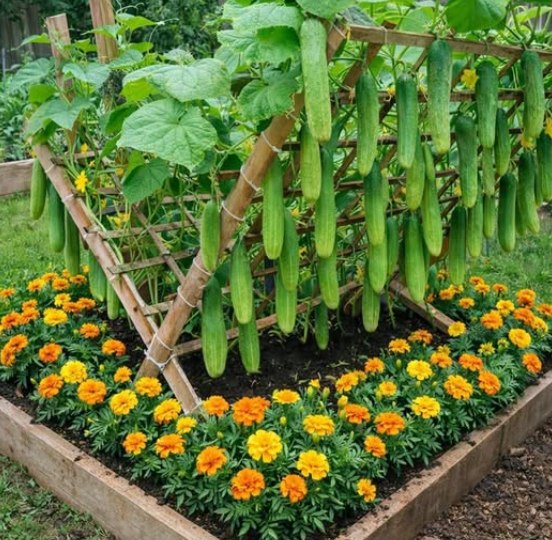
7. Marigolds
- Benefits: Repel nematodes and some fungal diseases; attract beneficial insects
- Planting Tip: Plant under or around cucumbers for both beauty and protection
Tips for Successful Underplanting
To make the most of underplanting with cucumbers, follow these practical tips:
- Spacing: Avoid overcrowding. Keep at least 6–8 inches between small companion plants.
- Soil Preparation: Enrich soil with compost or organic matter before planting both cucumbers and companions.
- Watering: Drip irrigation works best to prevent wet leaves and disease.
- Timing: Plant fast-growing companions early so they establish before cucumber vines spread fully.
- Mulching: Use organic mulch to retain moisture and further suppress weeds.
Seasonal Planning
Maximizing cucumber harvest with companion plants requires planning according to seasons:
- Spring: Start fast-growing companions like lettuce, radishes, and spinach with cucumber seeds indoors or in a greenhouse.
- Early Summer: Transplant cucumbers outdoors along with herbs and marigolds.
- Mid Summer: Sow a second round of lettuce or spinach beneath cucumber canopy for continuous harvest.
- Fall: Remove exhausted cucumber plants and allow soil-restoring crops like beans or cover crops to enrich the soil for next season.